





Computer Repair in The Fix in Walmart Frederick
Slow or broken desktop? At The Fix in Frederick, MD, we repair all types of computers—from gaming rigs to office PCs. With free diagnostics and high-quality parts, we make it easy to get your computer running like new.

Professional Computer Repair Services
- Hardware Diagnostics & Upgrades
- Screen & Monitor Repair
- Power Supply & Charging Issues
- Motherboard & CPU Repair
- Hard Drive / SSD Replacement & Data Recovery
- Overheating & Fan Repair
- Software Troubleshooting & Recovery
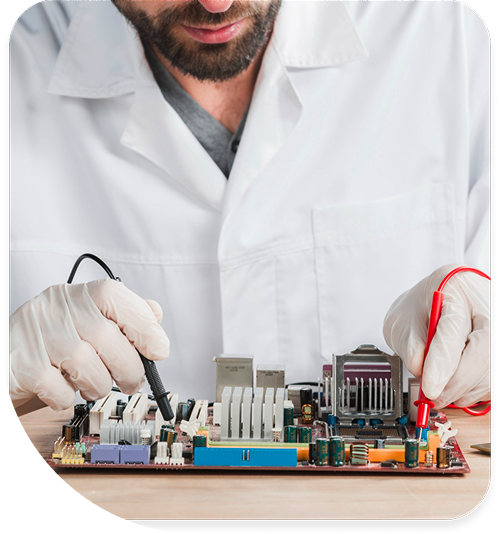
Professional Computer Repair Services In The Fix in Walmart Frederick
The Frederick Effect on Computer: A Field Technician's Report
Desktop and laptop computers across Windows, macOS, and Linux platforms experience predictable failure patterns in Frederick's humidity-intensive Mid-Atlantic environment, where the I-270 corridor's commuter traffic, Fort Detrick federal research operations, and seasonal thunderstorm exposure create specific degradation acceleration. Contractors throughout the US-15 and US-340 corridors, along with professionals working downtown Frederick near Carroll Creek, report computer failures tied directly to the region's 40-70% relative humidity cycling and thermal stress from rapid temperature transitions between heated indoor work environments and outdoor conditions. Diagnostics reveal that CMOS battery voltage drop, HDD read/write head parking failure, SSD NAND wear leveling exhaustion, RAM SPD configuration mismatch, GPU VRAM BGA solder fatigue, PSU capacitor ESR rise, and thermal compound degradation accumulate through Frederick's specific environmental pressure.
Understanding why computers fail in Frederick requires recognizing how component-level vulnerabilities interact with humidity and thermal cycling. When users bring computers showing boot failures, storage errors, random freezing, or performance loss to Computer repair in Frederick, MD, our diagnostic assessment begins with CMOS battery voltage measurement, hard drive head parking verification, SSD NAND wear leveling status review, RAM SPD configuration testing, GPU VRAM thermal measurement, power supply rail voltage stability assessment, and thermal compound condition evaluation. CMOS battery-a small lithium coin cell maintaining BIOS configuration-loses voltage through leakage accelerated by humidity-induced corrosion on circuit traces. HDD read/write heads may fail to park properly when thermal conditions cause mechanical binding. SSD NAND flash memory cells degrade through program/erase cycling, reaching exhaustion points that cause read errors.
The Intake Brief
Initial computer diagnostics in Frederick require documenting environmental history and symptom patterns before opening the case. CMOS battery voltage drop manifests as loss of BIOS configuration between power cycles-the computer forgets boot device order, system time, or hardware settings after power loss. Early-stage symptoms show loss of system time requiring manual reconfiguration after each shutdown. Progressive symptoms evolve into complete BIOS reset loops where the computer repeatedly fails to complete boot sequence, requiring BIOS restoration procedures. Measurement of CMOS battery voltage (typical specification 3.0 volts for lithium CR2032 cells) reveals whether voltage has dropped below the 2.5-volt threshold where BIOS circuits fail to retain configuration. In Frederick's humid environment, corrosion on battery holder connections and nearby PCB traces creates high-resistance electrical pathways that drain the battery faster than design parameters assume. HDD failures present with symptoms ranging from occasional read errors (detected through SMART error logs) to mechanical failure (audible clicking or grinding sounds). The read/write head-a microscopically small structure suspended on a magnetic bearing just nanometers above the spinning platter-parks against a ramp at the drive's edge during power-down. Thermal conditions causing metal expansion may bind the ramp mechanism, preventing proper head parking and causing the head to contact the platter during spin-up, creating mechanical damage.
SSD failures present differently than HDDs. NAND flash cells degrade through program/erase cycling, each cycle adding electrical stress. Modern SSD firmware includes wear-leveling algorithms that distribute write operations across the NAND array to extend lifespan. However, wear leveling has practical limits-once the majority of NAND cells have reached a specific cycle count threshold, further wear accelerates rapidly. Symptoms manifest as intermittent read errors, file system corruption errors, or sudden failure where the drive becomes unresponsive. SMART error logs show increasing uncorrectable error counts. RAM SPD (serial presence detect) configuration mismatch causes boot failures or random system freezes. The SPD is a small configuration memory on each RAM module storing timing and voltage specifications. During boot, the BIOS reads SPD data and configures memory timing. Thermal expansion from Frederick's thermal cycling stress can create conditions where SPD memory becomes unresponsive or corrupted, causing the BIOS to load incorrect timing values. GPU VRAM BGA solder fatigue appears as intermittent graphics corruption, texture glitches, or display driver crashes during intensive graphics operations. Video memory (VRAM) chips connect to the GPU through thousands of microscopic solder balls. Thermal cycling creates expansion/contraction stress that initiates micro-fractures in these solder joints.
What the Teardown Reveals
Opening a computer for diagnostic assessment reveals component-level degradation correlating directly with Frederick's environmental conditions. CMOS battery examination shows whether corrosion has initiated on the battery holder contacts or nearby PCB traces. Visual inspection under magnification reveals discoloration indicating oxidation and incipient corrosion. Measurement of battery holder contact resistance-typically approaching zero ohms on clean contacts-shows whether corrosion has increased resistance significantly. High contact resistance explains accelerated battery voltage sag. HDD inspection reveals head parking mechanism condition and potential thermal binding points. Manual rotation of the drive (with drive powered off) shows whether the head parks smoothly or encounters resistance indicating mechanical binding. Dust accumulation on drive platters indicates air leakage allowing particles inside the sealed chamber. In Frederick, dust from construction traffic along I-270 and moisture-enabled adhesion of particles means internal contamination can progress faster than in dry climates. We examine platter surfaces for scoring marks indicating prior head-to-platter contact.
SSD inspection requires different diagnostic approaches since SSDs contain no mechanical components. We measure the SSD's internal health indicators through specialized diagnostic tools that access SMART data and wear leveling status. Modern SSDs report total program/erase cycles applied to the NAND array, remaining estimated lifespan, and counts of uncorrectable errors. Measurement revealing that 80-90% of NAND endurance has been consumed indicates the drive is approaching exhaustion. Uncorrectable error counts rising rapidly indicate wear-induced NAND degradation accelerating. RAM module inspection reveals whether moisture corrosion has initiated on the SPD contact pads or data line connectors. Discoloration of contact pads indicates oxidation. Resistance measurements on SPD connections show whether corrosion has increased connection resistance beyond acceptable parameters. GPU VRAM examination under magnification reveals solder joint quality. Micro-fractures appear as dark lines or gaps in solder balls, particularly at the periphery of the BGA array where mechanical stress concentrates.
Power supply component inspection reveals capacitor condition through visual examination and ESR (equivalent series resistance) measurement. PSU capacitors degrade through thermal stress and electrolyte evaporation. Visual signs of degradation include bulging or leaking top caps (indicating internal pressure from gas generation) and discoloration of the capacitor body. ESR measurement on aging capacitors reveals whether internal resistance has increased, degrading voltage regulation quality. Thermal compound examination shows separation, hardening, or depleted thickness. Fresh thermal compound should appear uniform and consistent throughout the interface area. Aged or degraded compound shows visible separation of silicon oil from the particulate matrix, or hardening where the material has lost plasticity. Dried compound provides poor thermal transfer compared to fresh compound, increasing die temperatures under load. In Frederick's thermal cycling environment, thermal compound degradation occurs 30-40% faster than in stable-temperature climates.
The Repair Record
Computer repair decisions in Frederick require addressing component-level failures directly without attempting workarounds. CMOS battery voltage drop responds simply to battery replacement-removing the old battery and installing a fresh lithium cell restores BIOS retention function. However, if corrosion on the battery holder or nearby traces has advanced, contact cleaning and trace restoration may be required before the new battery can function properly. HDD mechanical binding from thermal conditions may respond to manual head parking adjustment procedures in early stages, but if platter scoring has occurred, data recovery becomes the priority with drive replacement necessary. SSD wear leveling exhaustion cannot be reversed; once NAND endurance is consumed, the drive requires replacement. RAM SPD configuration corruption can sometimes be resolved through contact cleaning if corrosion is early-stage, but if NAND memory on the module has degraded, module replacement is necessary. GPU VRAM BGA micro-fractures can sometimes be temporarily addressed through controlled thermal cycling that redistributes solder, but permanent repair requires BGA rework equipment that repositions solder balls into correct contact geometry. PSU capacitor degradation requires power supply replacement; individual capacitor replacement on professional PSUs is technically feasible but economically impractical on consumer-grade supplies.
When your computer shows boot failures, storage errors, random freezing, or performance loss, comprehensive diagnostics at The Fix in Walmart Frederick, measure CMOS battery condition, HDD mechanical status, SSD NAND wear leveling, RAM SPD functionality, GPU VRAM solder joint quality, and power supply voltage regulation. Rather than assuming catastrophic failure, we identify the specific component degradation occurring-thermal cycling corrosion, wear exhaustion, or solder fatigue-and present targeted repair options: component replacement, contact restoration, or firmware recovery depending on what diagnostics reveal.
Field Notes
Why does my computer forget the time and BIOS settings?
The CMOS battery maintains configuration memory. In Frederick's humid environment, corrosion on the battery holder and nearby PCB traces accelerates voltage loss. Measurement reveals whether the battery has simply expired or whether corrosion has degraded electrical connections. Battery replacement solves the issue; cleaning corroded connections may be required before the new battery functions properly.
How do I know if my hard drive is failing?
SMART error logs reveal increasing error counts. Audible clicking or grinding indicates mechanical failure-head contact with the platter or bearing damage. In Frederick, thermal binding of the head parking ramp is a common failure mode. Diagnostics measure head parking function and mechanical bind points to confirm diagnosis.
Can my SSD be recovered if wear leveling is exhausted?
Once NAND endurance is consumed, the drive cannot be restored through repair. Data recovery may be possible through specialized equipment if the drive is not mechanically damaged. However, the SSD itself requires replacement. Regular monitoring of SMART data shows remaining endurance percentage, allowing replacement planning before exhaustion occurs.
Other Locations Near By You
The Fix in Clarksburg Premium Outlets
22705 Clarksburg Rd, Clarksburg, MD 20871, USA
The Fix in Westfield Wheaton
11160 Veirs Mill Rd, Wheaton, MD 20902
The Fix in Walmart Landover Hills
6210 Annapolis Rd, Landover Hills, MD 20784, United States
The Fix in Walmart Laurel
3549 Russett Green E, Laurel, MD 20724, United States
The Fix in The Mall in Columbia
10300 Little Patuxent Pkwy #1708, Columbia, MD 21044, United States
The Fix in Towson Town Center
825 Dulaney Valley Rd, Towson, MD 21204, United States
The Fix in Westfield Montgomery
7101 Democracy Blvd #212B, Bethesda, MD 20817, United States
Your local repair experts for every device
From iPhones to gaming laptops, The Fix in Frederick, MD is your one-stop shop for device repair. Quick turnarounds, affordable prices, and local experts you can trust

Phone Cases
Protect your device in style! At The Fix in Frederick, MD, we offer a wide selection of durable phone cases for all major brands—sleek designs that keep your phone safe and looking great.

Nintendo Switch Repair
Cracked Nintendo Switch screen? We repair Switch devices in Frederick, MD quickly and affordably. Fast, easy, and always with high-quality parts.

MacBook Repair
For broken screens, battery replacements, or other issues, The Fix in Frederick, MD provides quick MacBook repairs with premium parts.

PlayStation Repair
Is your PlayStation giving you trouble? At The Fix in Frederick, MD, we handle PlayStation repairs with care and quality parts—no long waits, no hassle.

Google Repair
Need your Google Pixel fixed? At The Fix in Frederick, MD, we repair cracked screens, charging issues, and more—always using high-quality parts for lasting results.

Tablet Repair
Whether your tablet screen is cracked or the battery won’t hold a charge, The Fix in Frederick, MD provides fast, affordable tablet repairs with free diagnostics.

Game Console Repair
From Nintendo Switch® to PlayStation and Xbox, The Fix in Frederick, MD repairs all major game consoles. Fast service and dependable results.

Laptop Repair
Got a broken laptop? The Fix In Frederick, MD, our team repairs most laptop brands and models using high-quality replacement parts.

iPad Repair
Need your iPad fixed? At The Fix in Frederick, MD, we repair cracked screens, charging issues, and more—always using high-quality parts for lasting results.

Cell Phone Repair
We repair all major phone brands in Frederick, MD. iPhone, Samsung, Google, and more—get your phone fixed fast.

iPhone Repair
Cracked screen? Battery draining too fast? Our team in Frederick, MD repairs iPhones with precision and high-quality parts to make your device feel new again.

Samsung Repair
Whether it’s a Galaxy screen replacement or a charging issue, The Fix in Frederick, MD offers fast and reliable Samsung repairs.

Xbox Repair
Xbox not working properly? Our team in Frederick, MD offers quick, reliable Xbox repairs with free diagnostics and high-quality replacement parts.


Trusted repair solution for mobile phones, tablets, gaming consoles, and computer systems. We provide fast, reliable, and affordable repair services to get your devices back in perfect working condition.
The Fix is an independent repair service provider and is not affiliated with, sponsored by, or endorsed by Apple Inc., Samsung Electronics, Google LLC, or any other device manufacturer. We use high-quality compatible replacement parts unless explicitly stated. All trademarks are property of their respective owners.


© Copyright The Fix Solutions All rights reserved 2026.
Design by Deepcoder