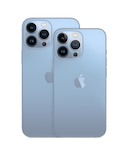





iPhone Repair in The Fix in Walmart Frederick
Need iPhone repair in Frederick, MD? Our technicians provide quick fixes for screens, batteries, and more.

Professional iPhone Repair Services
- Battery Health Check & Replacement
- Water Damage Repair
- Face ID & Touch ID Repair
- Camera & Speaker Repair
- Screen Replacement
- iCloud Unlock Assistance
- iOS Troubleshooting & Recovery
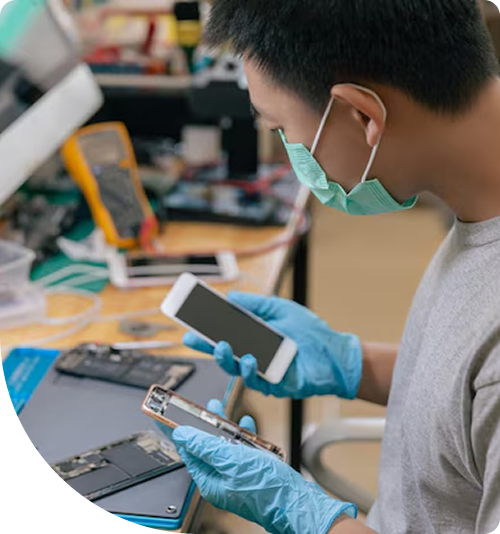
Professional iPhone Repair Services In The Fix in Walmart Frederick
iPhone Repair in Frederick, MD: What You're Actually Replacing (and What You're Not)
iPhone repair decisions in Frederick often trap owners between immediate replacement and attempting risky self-service repairs without understanding what is actually broken. When an iPhone's display exhibits color shifts, the Face ID system fails intermittently, or battery performance degrades, the instinct is complete device replacement. Yet these specific failures trace to discrete component issues that preserve the bulk of the device's value and functionality. True Tone calibration data loss affects color accuracy after non-paired screen swap, a failure that is purely informational rather than hardware degradation. Face ID dot projector flood illuminator misalignment cascades from display replacement procedures but remains entirely addressable through recalibration. The serialized parts pairing architecture—where battery health reporting, screen brightness adaptation, and Face ID functionality depend on cryptographic pairing between components—creates a distinctive failure pattern that separates iPhone from non-paired devices.
Understanding the distinction between component replacement and actual hardware failure saves thousands in unnecessary upgrades. Most Frederick iPhone owners assume that any malfunction signals the end of device life. When you need professional assessment of iPhone repair in Frederick, MD display, Face ID, and battery issues, diagnostic expertise that understands Apple's serialized component architecture can identify what is actually irreparably damaged versus what simply requires recalibration or targeted component swapping.
The Replacement Reflex
True Tone calibration data loss represents a perfect example of the misdiagnosis problem affecting iPhone repair decisions. Modern iPhones include True Tone display technology that measures ambient light color temperature and adjusts display color to match. This technology includes a calibration routine that stores specific calibration data in persistent memory on the main processor. When a display is replaced with a non-paired replacement screen, the processor still contains the initial phone's calibration data, but that data was calibrated for the initial display's specific color characteristics. The new display has slightly different color response in the blue and red channels. The old calibration data produces incorrect color rendering on the new display—whites appear slightly warm or cool, colors shift unpredictably. Users perceive this as display color failure and immediately suspect either the new display is defective or the processor color management has failed. The actual problem is purely informational—the calibration data simply needs recalibration to the new display. True Tone recalibration procedures walk through color matching steps where the user compares displayed colors to reference colors. The processor records new calibration coefficients for the new display. Color rendering immediately returns to normal. No hardware repair was necessary—only calibration data required updating. Face ID dot projector flood illuminator misalignment represents another frequently misdiagnosed failure. The Face ID system projects 30,000+ infrared dots onto the user's face, creating a 3D depth map. A flood illuminator provides ambient IR illumination to improve detection reliability in low-light conditions. If the illuminator becomes misaligned after display replacement or module reseating, the illumination pattern drifts from the designed geometry.
The system still functions, detecting the user's face, but performance degrades in low-light conditions or at extreme viewing angles. Users perceive this degradation as Face ID failure and assume the Face ID hardware module itself has failed. Careful optical realignment of the flood illuminator restores full performance. The module itself remains fully functional—only alignment requires correction. OLED micro-crack propagation from corner impact represents a different failure category—micro-fractures in the organic display layers. An iPhone dropped on a corner experiences concentrated impact force. The OLED materials are brittle organic compounds under the glass cover. The impact stress exceeds the organic material's elastic limit, initiating micro-fractures. These fractures don't immediately cause visible display damage—the fractures are so tiny that light still propagates through them mostly unaffected. Over time, thermal cycling during normal device use applies thermal expansion stress to the micro-cracked region. The fractures propagate deeper into the OLED layer. After weeks of thermal cycling, the cracks extend sufficiently to cause visible distortion—colors shift, pixels lose brightness, or display artifacts emerge. Users perceive this as display degradation from the initial drop, unaware that their continued normal device use is progressively worsening the display condition. Camera OIS magnet suspension fatigue affects optical image stabilization. The main camera includes magnets that position the optical lens element to compensate for hand shake. The magnet suspension—mechanical structures flexing to position the magnet—experiences repeated motion millions of times during normal phone use.
The Serialized Parts Pairing Architecture
iPhone serialization creates dependencies between components that don't exist in non-paired devices. Battery health reporting depends on cryptographic pairing between the battery cell and the processor. Apple stores battery cycle count, rated capacity, and health status in persistent memory on the main logic board. The processor controls the display brightness curve, adjusting brightness based on battery health status—a degraded battery can only safely provide reduced charging current, so display power consumption must be reduced to ensure consistent runtime despite lower available power. When a battery is replaced, the new battery has its own cycle count and health status. The processor still references the old battery's health data, potentially showing battery health as degraded when the replacement battery is actually new. Users believe the replacement battery is itself defective when the issue is purely pairing-related. Recalibration procedures update battery health data to match the new battery, restoring accurate health reporting. Screen brightness adaptation similarly depends on pairing data. The processor adjusts maximum brightness based on internal temperature and battery health. If these parameters become mismatched from the pairing perspective, brightness behavior becomes erratic—the system may limit brightness unnecessarily or allow excessive brightness that accelerates battery drain. The processor cannot be easily field-updated to remove this pairing dependency—Apple's security architecture treats component pairing as a fundamental trust mechanism.
Face ID serialization creates the most complex pairing architecture. Each Face ID camera module includes a dot projector and flood illuminator powered by dedicated control circuits. The main processor stores a face template—a mathematical representation of the user's face geometry—in secure enclave storage. This template is cryptographically tied to the specific Face ID hardware that captured it. If the Face ID module is replaced, the processor still contains the initial face template, but the new hardware module was never enrolled with that template. Face ID authentication fails because the new module cannot generate a mathematically compatible face template from the user's face. Face ID must be completely re-enrolled, deleting the old template and creating a new one specific to the replacement hardware. This serialization requirement prevents casual Face ID module swapping that would work on non-paired devices. OLED micro-crack propagation demonstrates the distinction between environment-driven failure and component degradation. The initial impact doesn't cause immediately visible damage, so users don't seek repair. Continued thermal cycling during normal use causes crack propagation that appears as delayed failure. The display doesn't fail from the impact itself—the impact initiates damage that progresses slowly through environmental stress. Pentalobe fastener thread stripping affects iPhone case integrity. iPhones use proprietary pentalobe fasteners rather than standard screw head geometries, requiring specialized tools for opening. If screws are tightened excessively or loosened repeatedly with improper tools, the thread in the aluminum case can strip. The fastener no longer grips securely, and the case cannot be properly closed. Unlike battery or display replacement, fastener thread damage requires careful intervention—the stripped hole must be repaired through insertion of a threaded insert or redrilling to accept an oversized fastener.
Camera OIS magnet suspension fatigue develops from mechanical stress accumulated through millions of use cycles. The optical stabilization system includes a suspended magnet element positioned by flexing mechanical arms. Each time the camera adjusts for hand shake compensation, the suspension flexes. Over years of normal use, this flexure cycles through millions of repetitions. The mechanical material fatigues—the strength properties degrade through repeated stress cycling. Eventually, the suspension becomes so fatigued that it fails to hold the magnet in correct position. The optical element drifts, and image stabilization no longer functions. The camera still captures images, but video exhibits visible shake that stabilization normally prevents. The failure appears as lost functionality, yet the image sensor, lens, and processor all remain fully operational—only the mechanical suspension requires replacement. Color shift from corner impacts represents OLED organic layer damage that cascades over weeks. A drop impacting the corner concentrates stress on the OLED organic materials. The stress initiates micro-fractures invisible to casual inspection. The device continues functioning normally immediately after the drop. However, thermal cycling—heating from processor operation followed by cooling when idle—applies expansion stress to the micro-fractured region. The fractures propagate deeper into the organic layer with each thermal cycle. After sufficient thermal cycles, cracks reach the light-emitting layer and cause visible color shift or pixel dimming in the impacted corner region. Users typically don't connect this delayed symptom to the initial drop, attributing it instead to known failure pattern or spontaneous display failure.
The Distinction Between Replacement and Restoration
Understanding whether a failure is truly irreparable or simply requires recalibration prevents unnecessary device replacement. True Tone color shift from display replacement is purely informational—recalibration data restoration immediately corrects color rendering. Face ID performance degradation from illuminator misalignment responds to optical realignment without component replacement. Battery pairing mismatches causing incorrect health reporting are corrected through pairing data recalibration without battery replacement. OLED corner micro-cracks that have propagated extensively may require display replacement, but early identification of crack propagation allows repair before cracks become widespread. Camera OIS suspension fatigue requires module replacement, but the rest of the device remains fully functional. Pentalobe fastener thread stripping requires careful repair of the stripped hole rather than device replacement. The Frederick area's thermal cycling from Blue Ridge Mountains proximity—with temperature swings from freezing winters to warm summers—accelerates OLED micro-crack propagation. The Monocacy River valley humidity environment promotes corrosion that affects Face ID module tolerance and optical clarity over time. Federal workers at Fort Detrick and students at Hood College and Frederick Community College subject iPhones to routine commute thermal stress that amplifies mechanical fatigue in camera OIS systems and Face ID modules.
Distinguishing actual failures from calibration and pairing issues requires systematic diagnostic testing. True Tone recalibration demands proper calibration procedures and verification that color rendering matches specifications. Face ID realignment requires optical precision tools and knowledge of safe illuminator positioning within design tolerance. Battery pairing recalibration must update health data without corrupting the processor's persistent memory. Component replacement decisions must account for serialization requirements—Face ID re-enrollment after module replacement is not optional, it is architecturally required. The Fix in Walmart Frederick provides the systematic diagnostic approach and recalibration expertise to distinguish between component failures requiring replacement and informational or alignment issues requiring targeted restoration.
Field Notes
After I had my screen replaced, the colors look slightly warm/cold. Is the new screen defective?
Color appearance changes after screen replacement indicate True Tone calibration data mismatch rather than screen defect. The initial calibration data was calibrated for your initial display's specific color characteristics. The replacement display has slightly different color response. Recalibrating True Tone creates new calibration data matched to the new display, immediately restoring correct color rendering. This is a purely informational issue, not a hardware problem.
My Face ID works sometimes but fails frequently in dim light. Did the Face ID module break?
Intermittent low-light Face ID failure often indicates flood illuminator misalignment rather than module failure. The illuminator provides ambient IR light improving detection in dark conditions. If misaligned, illumination pattern drifts from design geometry, reducing low-light performance while maintaining high-light operation. Optical realignment of the illuminator to proper positioning restores full Face ID performance without component replacement.
I replaced my battery and now the battery health shows degraded even though it's quality. Did I get a bad battery?
Battery health reporting depends on pairing data between the battery and processor. The processor still references the old battery's health information after replacement. Recalibration procedures update health data to match your new battery, restoring accurate health display. The battery itself is functioning normally—only the pairing data required updating.
Other Locations Near By You
The Fix in Clarksburg Premium Outlets
22705 Clarksburg Rd, Clarksburg, MD 20871, USA
The Fix in Westfield Wheaton
11160 Veirs Mill Rd, Wheaton, MD 20902
The Fix in Walmart Landover Hills
6210 Annapolis Rd, Landover Hills, MD 20784, United States
The Fix in Walmart Laurel
3549 Russett Green E, Laurel, MD 20724, United States
The Fix in The Mall in Columbia
10300 Little Patuxent Pkwy #1708, Columbia, MD 21044, United States
The Fix in Towson Town Center
825 Dulaney Valley Rd, Towson, MD 21204, United States
The Fix in Westfield Montgomery
7101 Democracy Blvd #212B, Bethesda, MD 20817, United States
Your local repair experts for every device
From iPhones to gaming laptops, The Fix in Frederick, MD is your one-stop shop for device repair. Quick turnarounds, affordable prices, and local experts you can trust
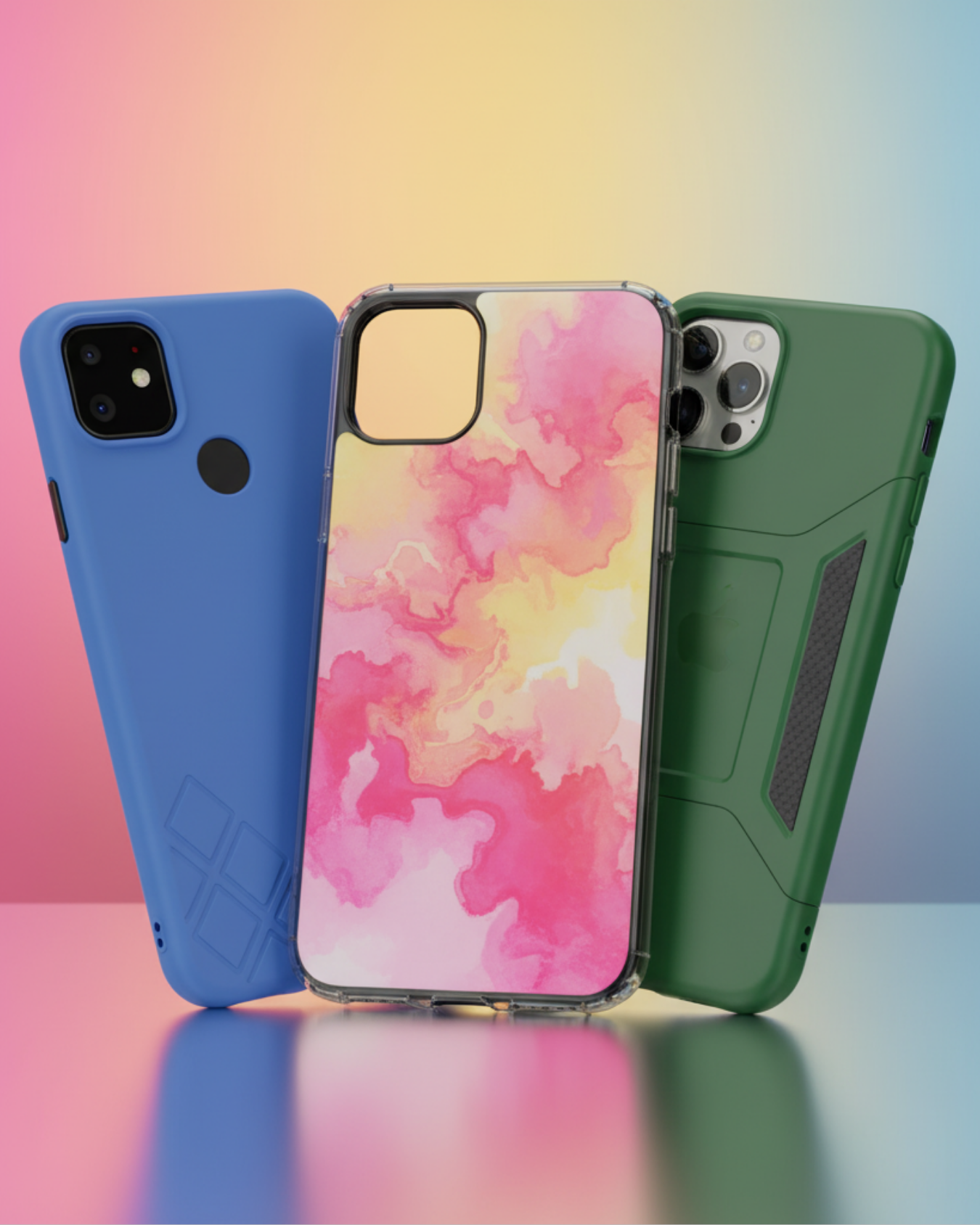
Phone Cases
Protect your device in style! At The Fix in Frederick, MD, we offer a wide selection of durable phone cases for all major brands—sleek designs that keep your phone safe and looking great.

Nintendo Switch Repair
Cracked Nintendo Switch screen? We repair Switch devices in Frederick, MD quickly and affordably. Fast, easy, and always with high-quality parts.

MacBook Repair
For broken screens, battery replacements, or other issues, The Fix in Frederick, MD provides quick MacBook repairs with premium parts.

PlayStation Repair
Is your PlayStation giving you trouble? At The Fix in Frederick, MD, we handle PlayStation repairs with care and quality parts—no long waits, no hassle.
Google Repair
Need your Google Pixel fixed? At The Fix in Frederick, MD, we repair cracked screens, charging issues, and more—always using high-quality parts for lasting results.

Tablet Repair
Whether your tablet screen is cracked or the battery won’t hold a charge, The Fix in Frederick, MD provides fast, affordable tablet repairs with free diagnostics.

Computer Repair
Need PC or desktop service in Frederick, MD? We provide free diagnostics and affordable repairs, always with high-quality parts.

Game Console Repair
From Nintendo Switch® to PlayStation and Xbox, The Fix in Frederick, MD repairs all major game consoles. Fast service and dependable results.

Laptop Repair
Got a broken laptop? The Fix In Frederick, MD, our team repairs most laptop brands and models using high-quality replacement parts.

iPad Repair
Need your iPad fixed? At The Fix in Frederick, MD, we repair cracked screens, charging issues, and more—always using high-quality parts for lasting results.

Cell Phone Repair
We repair all major phone brands in Frederick, MD. iPhone, Samsung, Google, and more—get your phone fixed fast.

Samsung Repair
Whether it’s a Galaxy screen replacement or a charging issue, The Fix in Frederick, MD offers fast and reliable Samsung repairs.

Xbox Repair
Xbox not working properly? Our team in Frederick, MD offers quick, reliable Xbox repairs with free diagnostics and high-quality replacement parts.


Trusted repair solution for mobile phones, tablets, gaming consoles, and computer systems. We provide fast, reliable, and affordable repair services to get your devices back in perfect working condition.
The Fix is an independent repair service provider and is not affiliated with, sponsored by, or endorsed by Apple Inc., Samsung Electronics, Google LLC, or any other device manufacturer. We use high-quality compatible replacement parts unless explicitly stated. All trademarks are property of their respective owners.


© Copyright The Fix Solutions All rights reserved 2026.
Design by Deepcoder