





Laptop Repair in The Fix in Walmart Frederick
Broken laptop slowing you down? At The Fix in Frederick, MD, we repair all major laptop brands and models. From cracked screens to battery issues, our technicians provide fast, affordable service with free diagnostics and high-quality parts.

Professional Laptop Repair Services
- Screen Repair & Replacement
- Battery Replacement
- Water Damage Repair
- Keyboard & Trackpad Repair
- Charging Port Repair
- Overheating & Fan Repair
- Hard Drive / SSD Replacement & Data Recovery
- Software Troubleshooting & Recovery
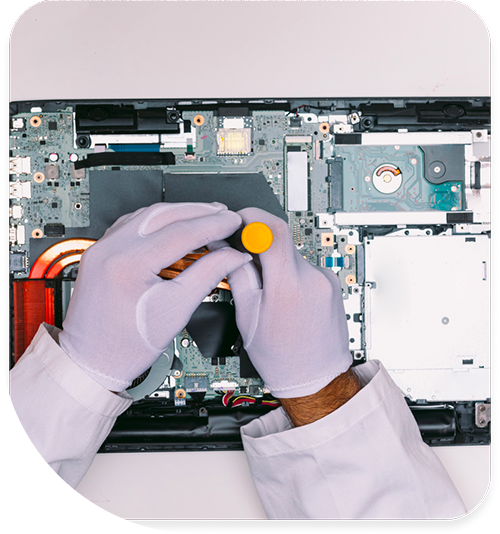
Professional Laptop Repair Services In The Fix in Walmart Frederick
Before Frederick's Mid-Atlantic Climate Makes It Worse: Laptop Repair
Frederick laptops operate in one of the most thermally challenging environments on the East Coast. The Monocacy River valley surrounding Frederick creates microclimatic humidity conditions where mid-Atlantic conditions intensify. From May through September, daily humidity swings from 45% at dawn to 85% at dusk, with thunderstorm season introducing electrical transients that propagate through AC adapter connections and USB ports. Contractors commuting on the I-270 corridor carry laptops through temperature and humidity extremes, subjecting components to thermal cycling stress. When keyboard responsiveness degrades, display hinges crack, or thermal management fails, the damage often traces back to accumulated environmental stress rather than known failure patterns.
Many Frederick laptop owners attempt quick repairs without understanding how local climate conditions accelerated the initial failure. Before investing in replacement or attempting risky self-service repairs, understanding the technical root cause becomes essential. For expert diagnostic assessment of Laptop in Frederick, MD thermal and mechanical issues, professional technicians can identify whether components can be restored through targeted intervention or whether replacement becomes necessary.
The Damage Clock
Every laptop in Frederick operates on a damage clock shaped by environmental conditions. Hinge torque failure represents the most visible manifestation of mechanical stress accumulation. The display hinge must support the screen weight while flexing thousands of times over the device lifetime, and each opening and closing cycle introduces stress at the solder connection where the hinge barrel connects to the frame. In Frederick's humidity-driven environment, water vapor condensation during thermal cycling penetrates the hinge assembly, causing corrosion at solder joints. Simultaneously, the repetitive flexing introduces mechanical fatigue stress that compounds the corrosion damage. Hinge failure doesn't occur suddenly—it develops through weeks of increasing stress until the hinge loses structural integrity. When the hinge finally fails, the LCD flex cable connecting the display to the motherboard experiences bending stress from the hinge misalignment. The flex cable fails under this secondary stress, causing display blanking. Yet the failure chain began months earlier with corrosion and fatigue accumulating at the hinge connection. Thermal throttling from dried thermal compound follows a similarly gradual progression. The compound bonding the CPU and GPU heat pipes to the thermal heatspreader degrades throughout years of thermal cycling, its silicone matrix drying out and losing viscosity.
This thermal degradation reduces contact pressure between the processor and heatspreader, increasing thermal resistance across the interface. The processor generates heat, the compound poorly transfers that heat to the heatspreader, and temperature rises beyond normal operating range. Protective firmware detects excessive temperature and throttles processor frequency, reducing performance to control thermal conditions. Users perceive stuttering and slowness, unaware that thermal interface degradation triggered this protective response. The thermal compound remains degraded until technician intervention removes it and reapplies fresh compound with correct thermal conductivity specifications. Keyboard membrane ribbon delamination represents another gradual failure mode shaped by humidity. The flexible ribbon connecting the keyboard matrix to the controller board experiences repeated flexing as keys are pressed thousands of times daily. Frederick's humidity creates osmotic pressure that pushes moisture into the laminated ribbon structure. Water absorption swells the ribbon layers, delaminating the adhesive bonding them together. Electrical conductivity degrades as moisture creates electrochemical corrosion on the copper traces. Key presses fail to register as trace resistance increases or traces separate entirely. DC jack solder fatigue develops from insertion angle stress during regular adapter connections. The DC connector experiences shear stress as users plug adapters in at various angles, introducing mechanical bending stress at the solder joints. The thermal cycling from regular on-off cycles compounds this mechanical stress, creating micro-fractures in solder connections.
The Cascade
Initial component failures cascade through dependent systems. Hinge torque failure cascades to LCD flex cable stress fracture because the mechanical misalignment introduces secondary bending stresses the flex cable wasn't designed to accommodate. The cable flexes at sharper angles than normal operation allows, introducing micro-fractures in the copper traces. These fractures propagate with each display opening until signal integrity fails completely. Battery cell internal impedance rise represents another cascading failure. Individual lithium cells within the battery pack accumulate charge cycling damage, with SEI (solid electrolyte interphase) layer growth reducing ion conductivity across the anode-electrolyte interface. Internal impedance increases, limiting the maximum current the cell can deliver. The battery voltage drops under load, triggering undervoltage protection in the power management circuits. The laptop shuts down to protect components, even though the battery retains considerable energy capacity. This appears as sudden shutdown from seemingly adequate charge, a false indicator of dead battery capacity. NVMe SSD controller firmware throttling develops when the storage controller experiences thermal stress from prolonged read-write operations. Storage access patterns in the Frederick area—where federal research applications at Fort Detrick demand intensive data processing—push controller temperatures toward design limits. The firmware applies progressive throttling to limit heat generation, reducing storage bandwidth and causing system slowdowns. Users perceive storage failure rather than thermal management protecting the controller from overheating.
GPU thermal pad contact gap initiates another cascade of thermal management failures. Unlike CPU thermal compound, GPU thermal pads rely on passive compression contact between the GPU die and heatspreader. When mechanical stress loosens component mounting or vibration gradually compresses the thermal pad, a microscopic gap develops between GPU and heatspreader. Heat transfer rate drops dramatically while thermal resistance increases sharply. GPU temperature rises, triggering throttling firmware that reduces graphics performance. 3D applications slow, video playback stutters, and rendering performance drops. Users attribute this to graphics processor failure rather than recognizing thermal interface degradation. DC jack solder fatigue cascades to power delivery failures because the jack connection represents the single point through which all power flows to the motherboard. Micro-fractures in the solder joints introduce intermittent contact resistance. The power management IC (PMIC) receives unstable supply voltage as a result, struggling to regulate the diverse voltage rails feeding the processor, GPU, memory, and storage subsystems. The system exhibits random shutdowns, reboot failures, and intermittent component detection errors. What appears as catastrophic motherboard failure actually traces to the jack connection. Keyboard membrane ribbon delamination cascades beyond keyboard functionality to motherboard connector stress. The flex ribbon plugs into a connector on the motherboard using a retention clip. When the ribbon swells from moisture absorption, the retention clip experiences increased pressure. Repeated plug-unplug cycles (as technicians attempt troubleshooting) strain the connector body, potentially cracking connector traces on the motherboard.
The cascading pattern makes early intervention critical. Addressing thermal interface compound degradation prevents thermal throttling and CPU damage progression. Replacing degraded thermal pads restores GPU performance and prevents the cascade to display artifacts and video corruption. Repairing DC jack connections stops power delivery instability before it propagates to voltage regulation failures. Replacing delaminated keyboard ribbons prevents downstream connector damage. Hinge failure correction must address both the mechanical hinge itself and the LCD flex cable stress introduced by hinge misalignment. Each intervention point in the cascade chain prevents downstream failures that would otherwise require costlier repairs. The Blue Ridge Mountains proximity creates temperature swings that accelerate all these cascading mechanisms. Winter temperatures dropping toward freezing combined with summer humidity spikes toward 85% relative humidity create thermal cycling stress amplifying mechanical fatigue and corrosion processes. Federal workers at Fort Detrick commuting through the I-270 corridor subject laptops to constant thermal cycling as vehicles transition from cold morning air to heated interiors and back.
The Intervention Window
The critical intervention window closes rapidly once cascading failures begin. Early thermal compound degradation can be addressed through targeted cleaning and reapplication, restoring full performance without hardware replacement. Waiting until thermal throttling visibly affects performance loses this intervention window—continued thermal stress may have already damaged the CPU or GPU substrate. DC jack solder fatigue must be addressed while micro-fractures remain limited to the jack connection itself. Allowing power delivery instability to persist risks damage to the power management IC and voltage regulation circuits, substantially increasing repair costs and complexity. Hinge failure requires intervention before flex cable stress fractures develop. Once the flex cable sustains micro-fractures, replacing only the hinge fails to restore display functionality—the cable replacement becomes necessary, increasing labor requirements and repair complexity. Keyboard ribbon delamination must be addressed before the ribbon separation stresses the motherboard connector. Continued keyboard use, even with failed keys, can propagate delamination to adjacent ribbon sections and introduce mechanical stress to the connector mounting. Battery cell degradation progresses relentlessly, but early detection of voltage sag under load allows for battery replacement before the battery protection circuits begin triggering protective shutdowns that appear as system failure. Storage controller throttling worsens progressively as the controller continues thermal stress cycles, making thermal intervention valuable before firmware throttling becomes a constant constraint on performance.
Intervention requires technical expertise to diagnose which cascading failure patterns are currently active versus which represent future risk. Replacing components without addressing the root causes ensures that new components will experience the same failure modes. Precise thermal interface reapplication demands correct compound thermal conductivity, proper application technique, and appropriate curing procedures. GPU thermal pad compression requires mechanical precision and understanding of compression force specifications. The Fix in Walmart Frederick provides the diagnostic precision and intervention expertise to address the specific failure patterns affecting your laptop while remaining attentive to the local Frederick climate conditions that accelerated the initial degradation.
Field Notes
Why does my laptop run hot and then suddenly slow down?
Thermal throttling is a protective mechanism that engages when the processor or graphics chipset exceed safe operating temperatures. Degraded thermal compound or thermal pad contact issues prevent heat transfer from the processor to the cooling system. Temperature rises, firmware detects the overheat condition, and deliberately reduces processor frequency to limit further heat generation. This reduces performance substantially but prevents permanent damage. Restoring the thermal interface through compound reapplication or thermal pad replacement immediately restores normal operation and eliminates the throttling.
Is it normal for my screen to flicker or go black when I open it to certain angles?
Display flickering or blackout at specific hinge angles indicates flex cable stress from hinge misalignment. The LCD flex cable transmits video signals from the motherboard to the display, requiring consistent mechanical positioning. When hinge solder joints weaken or hinge brackets loosen, the mechanical alignment degrades. Certain display angles introduce bending stress on the flex cable, causing intermittent signal loss. This requires hinge repair and evaluation of flex cable integrity to prevent cascade to permanent cable failure.
My laptop keeps shutting down without warning even when the battery shows charge.
Unexpected shutdown typically traces to power delivery instability or battery cell degradation. DC jack connection issues introduce intermittent contact resistance, causing the power management IC to receive unstable voltage. Protective firmware shuts down to prevent component damage. Battery cell internal impedance rise can trigger voltage sag under load, causing premature power loss despite adequate charge capacity. Professional diagnosis identifies whether the issue originates in the power jack, voltage regulation circuits, or battery cells, guiding appropriate repair strategy.
Other Locations Near By You
The Fix in Clarksburg Premium Outlets
22705 Clarksburg Rd, Clarksburg, MD 20871, USA
The Fix in Westfield Wheaton
11160 Veirs Mill Rd, Wheaton, MD 20902
The Fix in Walmart Landover Hills
6210 Annapolis Rd, Landover Hills, MD 20784, United States
The Fix in Walmart Laurel
3549 Russett Green E, Laurel, MD 20724, United States
The Fix in The Mall in Columbia
10300 Little Patuxent Pkwy #1708, Columbia, MD 21044, United States
The Fix in Towson Town Center
825 Dulaney Valley Rd, Towson, MD 21204, United States
The Fix in Westfield Montgomery
7101 Democracy Blvd #212B, Bethesda, MD 20817, United States
Your local repair experts for every device
From iPhones to gaming laptops, The Fix in Frederick, MD is your one-stop shop for device repair. Quick turnarounds, affordable prices, and local experts you can trust

Phone Cases
Protect your device in style! At The Fix in Frederick, MD, we offer a wide selection of durable phone cases for all major brands—sleek designs that keep your phone safe and looking great.

Nintendo Switch Repair
Cracked Nintendo Switch screen? We repair Switch devices in Frederick, MD quickly and affordably. Fast, easy, and always with high-quality parts.

MacBook Repair
For broken screens, battery replacements, or other issues, The Fix in Frederick, MD provides quick MacBook repairs with premium parts.

PlayStation Repair
Is your PlayStation giving you trouble? At The Fix in Frederick, MD, we handle PlayStation repairs with care and quality parts—no long waits, no hassle.

Google Repair
Need your Google Pixel fixed? At The Fix in Frederick, MD, we repair cracked screens, charging issues, and more—always using high-quality parts for lasting results.

Tablet Repair
Whether your tablet screen is cracked or the battery won’t hold a charge, The Fix in Frederick, MD provides fast, affordable tablet repairs with free diagnostics.

Computer Repair
Need PC or desktop service in Frederick, MD? We provide free diagnostics and affordable repairs, always with high-quality parts.

Game Console Repair
From Nintendo Switch® to PlayStation and Xbox, The Fix in Frederick, MD repairs all major game consoles. Fast service and dependable results.

iPad Repair
Need your iPad fixed? At The Fix in Frederick, MD, we repair cracked screens, charging issues, and more—always using high-quality parts for lasting results.

Cell Phone Repair
We repair all major phone brands in Frederick, MD. iPhone, Samsung, Google, and more—get your phone fixed fast.

iPhone Repair
Cracked screen? Battery draining too fast? Our team in Frederick, MD repairs iPhones with precision and high-quality parts to make your device feel new again.

Samsung Repair
Whether it’s a Galaxy screen replacement or a charging issue, The Fix in Frederick, MD offers fast and reliable Samsung repairs.

Xbox Repair
Xbox not working properly? Our team in Frederick, MD offers quick, reliable Xbox repairs with free diagnostics and high-quality replacement parts.


Trusted repair solution for mobile phones, tablets, gaming consoles, and computer systems. We provide fast, reliable, and affordable repair services to get your devices back in perfect working condition.
The Fix is an independent repair service provider and is not affiliated with, sponsored by, or endorsed by Apple Inc., Samsung Electronics, Google LLC, or any other device manufacturer. We use high-quality compatible replacement parts unless explicitly stated. All trademarks are property of their respective owners.


© Copyright The Fix Solutions All rights reserved 2026.
Design by Deepcoder