





Tablet Repair in The Fix in Walmart Laurel
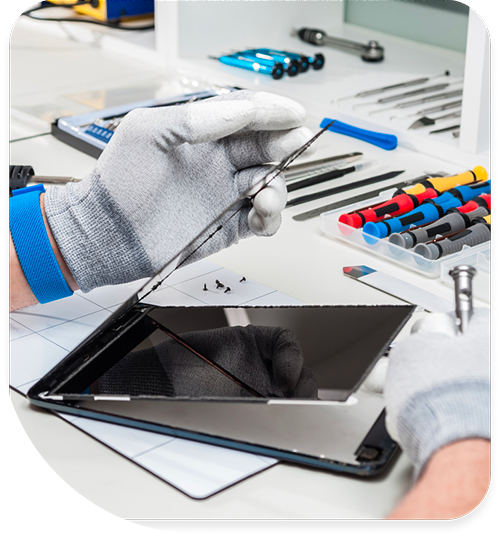
Cracked screen or charging issues slowing you down? At The Fix in Laurel, MD, we repair all major tablet brands, including Samsung, Lenovo, Huawei, and more. With free diagnostics and high-quality parts, we make it easy to get your tablet working like new.

Professional Tablet Repair Services
- Screen Repair & Replacement
- Battery Replacement
- Water Damage Repair
- Charging Port Repair
- Camera Repair
- Speaker & Microphone Repair
- Software Troubleshooting & Recovery
Professional Tablet Repair Services In The Fix in Walmart Laurel
Before Laurel's Humidity Makes It Worse: Tablet Repair
Tablet devices in Laurel, MD experience failure progression that follows predictable temporal patterns once environmental stress initiates degradation of specific components. The University of Maryland College Park student population, which maintains high tablet ownership rates for academic and entertainment purposes, subjects their devices to environmental conditions that dramatically accelerate component failure compared to national averages. The Mid-Atlantic humidity exceeding 85% during peak summer months, combined with storage patterns in dormitory environments with poor climate control, creates ideal conditions for digitizer OCA lamination separation, LCD backlight component failure, and battery cell swelling from deep-discharge cycles. Understanding the temporal progression of these failures—and recognizing the intervention window between initial symptom emergence and cascade-driven complete device failure—allows tablet owners to implement repairs that restore functionality before cascading failures render devices completely non-functional. The damage clock on tablets in Laurel begins the moment the device enters the regional environment, regardless of previous usage history or initial condition.
The damage clock on tablet devices in Laurel operates independently of device age or usage history, driven primarily by environmental stress factors that begin degrading components the moment the device enters the region. Understanding the timeline of Tablet repair in Laurel, MD failure progression allows residents to anticipate problems and implement proactive environmental controls that slow component degradation. Digitizer OCA lamination separation, LCD CCFL/LED backlight component failure, USB-C port micro-fractures, battery cell swelling, and frame thermal expansion cracking all follow predictable progression timelines once environmental stress begins. The summer thunderstorm season creates electrical surge risks that can trigger immediate failure in vulnerable components; the spring and summer humidity spike accelerates corrosion-based failures; winter temperature extremes stress frame materials and solder joints through thermal cycling. Recognizing these environmental patterns helps tablet owners implement environmental controls that slow the damage clock and plan repair timing strategically.
The Damage Clock
The damage clock for tablet devices begins measuring from month zero—the moment the device enters Laurel's humid environment—and progresses through distinct temporal phases that correlate with observable component degradation. Months 0-6 represent the silent degradation phase, during which digitizer OCA adhesive begins moisture infiltration and LCD backlight component insulation stress-relaxes under humidity and thermal cycling. No symptoms manifest during this period; the device functions normally despite accelerating molecular-level degradation of multiple components. Months 6-12 mark the symptom emergence phase, when intermittent touch input or display dimming first become noticeable, typically appearing under conditions of high ambient humidity or after the device has warmed during intensive use. Many users ignore these initial warnings or attribute them to software issues. Months 12-18 represent the rapid deterioration phase, where touch input becomes consistently unresponsive in specific regions, display brightness noticeably decreases despite maximum brightness settings, or battery no longer holds charge for its initial rated duration. By months 18-24, the device typically approaches cascade failure: digitizer lamination has progressed so far that the device is effectively unusable despite the screen displaying normally, or the battery has swelled to the point of causing physical frame damage, or the backlight has failed completely.
Environmental acceleration factors in Laurel compress the damage clock dramatically compared to national average tablet lifespans. Dormitory-based storage in College Park creates sustained humidity exposure in communal spaces; humidity levels in dorm rooms frequently exceed design specifications for sensitive electronics. The Patuxent Research Refuge area experiences salt spray transport that deposits corrosive compounds on exposed device surfaces, accelerating corrosion on USB-C ports and circuit board traces. Summer temperature swings from outdoor I-95 commute exposure to indoor climate-controlled environments create dramatic daily thermal cycling that stresses solder joints, LCD backlight connectors, and battery cell separators. Repeated insertion and removal cycles on USB-C ports—common for charging and data transfer—combined with humidity exposure cause micro-fractures in port solder joints that progress toward complete failure. Battery cell deep-discharge cycles, common in intensive-use scenarios and in users who allow batteries to drain completely before charging, interact with humidity exposure to accelerate cell degradation. A tablet showing one-year-old failure symptoms in Laurel might represent only 12 months of actual component stress, while a device in a dry climate experiencing the same symptoms might be 24-36 months old, indicating accelerated Laurel-specific environmental degradation of 100-200%.
The Cascade
The cascade phase begins when initial component failures—such as digitizer OCA lamination separation—trigger secondary failures in adjacent systems. Digitizer failure creates pressure on the touch input controller chip as the device attempts increasingly aggressive input sensing to compensate for decreased signal strength from the separating digitizer layer. This stress accelerates the touch IC (Atmel or Synaptics) failure, potentially causing the chip to become completely unresponsive. The device then displays normally but is completely non-functional for touch input, requiring not only digitizer replacement but also touch IC chip replacement. Similar cascades emerge from LCD backlight component failure: as the backlight dims, the display controller chip attempts to increase backlight brightness by increasing current through the backlight circuit; this increased current stresses capacitors and MOSFETs in the backlight power circuit, eventually causing catastrophic failure. Once the cascade begins, subsequent failures typically emerge within weeks, rapidly deteriorating the device from 'intermittently functional' to 'completely unusable' states.
USB-C port micro-fracture progression creates distinctive cascades where physical port degradation triggers electrical failures. The micro-fractures in solder joints create intermittent connectivity that forces the device to repeatedly disconnect and reconnect during charging. This cycling creates additional mechanical stress on the fracturing solder joints, accelerating the damage progression. Electrical arcing across failing solder joints can damage the power management circuit, causing the device to refuse to charge entirely or to charge at reduced power levels. Once the power management circuit has been compromised, simply replacing the USB-C port won't restore charging functionality; the power management circuit must also be repaired or replaced. Battery cell swelling from deep-discharge cycles creates physical pressure on the frame that stresses solder joints elsewhere on the logic board. If the swelling reaches critical levels, frame thermal expansion cracking follows, potentially damaging internal components and creating circuit board traces that fracture under mechanical stress. The frame structural damage can then be the limiting factor preventing repair, requiring replacement of the entire tablet or extensive logic board reconstruction.
LCD CCFL/LED backlight MOSFET gate failure initiates cascades through heat generation and thermal stress on surrounding components. As the backlight MOSFET fails, it typically continues conducting current inefficiently, generating excessive heat that affects neighboring components. This thermal stress accelerates failure in capacitors adjacent to the MOSFET, potentially creating a cascade of component failures across the power distribution circuit. The logic board temperature rise from the failing backlight circuit reduces overall device performance; the processor throttles in response to heat, causing the device to become slow and unresponsive independent of backlight failure. Users interpret this performance degradation as universal device failure when the root cause is actually localized to the backlight circuit. By the time users seek repair, thermal damage may have propagated to multiple components, requiring more extensive repair than simple backlight component replacement would have addressed.
The Intervention Window
The intervention window represents the period between symptom emergence (months 6-12) and cascade initiation (months 18-24), typically lasting 6-12 months depending on environmental stress intensity. Recognizing early symptoms—intermittent touch input in specific screen regions, display dimming despite maximum brightness settings, USB-C charging becoming intermittent—and scheduling repairs immediately during this window prevents cascade failures that would otherwise follow inevitably. For digitizer OCA lamination, the intervention window opens when touch input first becomes intermittent and closes when entire screen regions become permanently unresponsive. During this window, digitizer replacement with new OCA lamination restores full functionality without requiring touch IC chip replacement. For backlight component failure, the intervention window opens when display dimming becomes noticeable and closes when backlight completely fails or thermally damages surrounding components. During the intervention window, backlight component replacement or capacitor/MOSFET replacement can restore display brightness without cascading electrical damage. For USB-C port failures, the intervention window opens when charging becomes intermittent and closes when physical connector damage or power management circuit thermal stress prevents repair success.
Tablet devices in Laurel follow predictable degradation timelines that compress standard national failure progression by 30-40%, driven by regional humidity and temperature extremes that accelerate component stress-relaxation and corrosion. Recognizing early failure symptoms and implementing repairs during the intervention window between symptom emergence and cascade initiation prevents catastrophic failures that otherwise would follow. Expert technicians at The Fix in Walmart Laurel understand tablet failure progression specific to Laurel's environment and can identify early warning signs that users typically miss or misinterpret as software issues. Early intervention prevents expensive cascade failures; a digitizer replacement performed during the intermittent touch phase costs far less than combined digitizer and touch IC replacement after cascade failures have propagated. Understanding your tablet's vulnerability to Laurel's climate allows you to implement environmental controls that slow the damage clock and plan repair timing strategically.
Field Notes
Why is my tablet screen unresponsive in specific areas?
Digitizer OCA (optically clear adhesive) lamination separation creates localized touch input failure where the digitizer layer has delaminated from the LCD panel. The affected region may be completely unresponsive or may respond erratically to touch. Laurel's humidity accelerates OCA adhesive failure; tablets in dormitory environments show symptoms after 12-18 months, compared to 24-36 months in dry climates. Early-stage separation can sometimes be temporarily restored through heat cycling (carefully warming the device to restore adhesive flow), but professional digitizer replacement becomes necessary as separation progresses. The intervention window for repair is approximately 6-12 months from symptom emergence before touch IC chip damage forces more expensive repairs.
Why is my tablet battery swelling and pushing the frame apart?
Battery cell swelling results from deep-discharge cycles combined with humidity exposure that degrades cell separator materials. Laurel's humidity accelerates this degradation; cells in high-humidity environments show swelling 30-40% faster than in dry climates. Physical swelling creates pressure that stresses frame materials and solder joints on the logic board. Immediate repair (battery replacement) prevents frame cracking and logic board damage from pressure stress. Waiting until frame damage has occurred requires more extensive repairs including frame replacement and potential logic board restoration. Professional diagnostics can assess physical damage from swelling and recommend whether frame replacement is necessary.
Why does my tablet charge only intermittently?
USB-C port micro-fractures in solder joints create intermittent connectivity during charging. Repeated insertion cycles combined with humidity exposure and thermal cycling accelerate solder joint fracturing. Intermittent charging forces the device to repeatedly disconnect and reconnect, creating additional mechanical stress that accelerates damage progression. Professional inspection under magnification reveals solder fracture severity; early-stage fractures may be repairable through solder reflow, while advanced fractures require port replacement. Electrical arcing across failing solder joints can damage the power management circuit, requiring additional repairs beyond simple port replacement.
Other Locations Near By You
The Fix in Clarksburg Premium Outlets
22705 Clarksburg Rd, Clarksburg, MD 20871, USA
The Fix in Walmart Frederick
7400 Guilford Dr, Frederick, MD 21704, United States
The Fix in Westfield Wheaton
11160 Veirs Mill Rd, Wheaton, MD 20902
The Fix in Walmart Landover Hills
6210 Annapolis Rd, Landover Hills, MD 20784, United States
The Fix in The Mall in Columbia
10300 Little Patuxent Pkwy #1708, Columbia, MD 21044, United States
The Fix in Towson Town Center
825 Dulaney Valley Rd, Towson, MD 21204, United States
The Fix in Westfield Montgomery
7101 Democracy Blvd #212B, Bethesda, MD 20817, United States
Your local repair experts for every device
From iPhones to gaming laptops, The Fix in Laurel, MD is your one-stop shop for device repair. Quick turnarounds, affordable prices, and local experts you can trust

Phone Cases
Protect your device in style! At The Fix in Laurel, MD, we offer a wide selection of durable phone cases for all major brands—sleek designs that keep your phone safe and looking great.

Nintendo Switch Repair
Cracked Nintendo Switch screen? We repair Switch devices in Laurel, MD quickly and affordably. Fast, easy, and always with high-quality parts.

MacBook Repair
For broken screens, battery replacements, or other issues, The Fix in Laurel, MD provides quick MacBook repairs with premium parts.

PlayStation Repair
Is your PlayStation giving you trouble? At The Fix in Laurel, MD, we handle PlayStation repairs with care and quality parts—no long waits, no hassle.
Google Repair
Need your Google Pixel fixed? At The Fix in Laurel, MD, we repair cracked screens, charging issues, and more—always using high-quality parts for lasting results.

Computer Repair
Need PC or desktop service in Laurel, MD? We provide free diagnostics and affordable repairs, always with high-quality parts.

Game Console Repair
From Nintendo Switch® to PlayStation and Xbox, The Fix in Laurel, MD repairs all major game consoles. Fast service and dependable results.

Laptop Repair
Got a broken laptop? The Fix In Laurel, MD, our team repairs most laptop brands and models using high-quality replacement parts.

iPad Repair
Need your iPad fixed? At The Fix in Laurel, MD, we repair cracked screens, charging issues, and more—always using high-quality parts for lasting results.

Cell Phone Repair
We repair all major phone brands in Laurel, MD. iPhone, Samsung, Google, and more—get your phone fixed fast.

iPhone Repair
Cracked screen? Battery draining too fast? Our team in Laurel, MD repairs iPhones with precision and high-quality parts to make your device feel new again.

Samsung Repair
Whether it’s a Galaxy screen replacement or a charging issue, The Fix in Laurel, MD offers fast and reliable Samsung repairs.

Xbox Repair
Xbox not working properly? Our team in Laurel, MD offers quick, reliable Xbox repairs with free diagnostics and high-quality replacement parts.


Trusted repair solution for mobile phones, tablets, gaming consoles, and computer systems. We provide fast, reliable, and affordable repair services to get your devices back in perfect working condition.
The Fix is an independent repair service provider and is not affiliated with, sponsored by, or endorsed by Apple Inc., Samsung Electronics, Google LLC, or any other device manufacturer. We use high-quality compatible replacement parts unless explicitly stated. All trademarks are property of their respective owners.


© Copyright The Fix Solutions All rights reserved 2026.
Design by Deepcoder