




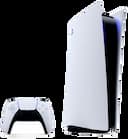

Game Console Repair in The Fix in Walmart Laurel
Having trouble with your game console? At The Fix in Laurel, MD, we repair all major consoles—including Nintendo Switch, PlayStation, and Xbox. Whether it’s a broken screen, overheating console, or controller drift, our technicians provide fast repairs with free diagnostics and high-quality parts.

Professional Game Console Repair Services
- Nintendo Switch Repair
- PlayStation Repair
- Xbox Repair
- Controller & Stick Drift Repair
- HDMI Port Repair & Replacement
- Overheating & Fan Repair
- Disc Drive Repair
- Power Supply Repair
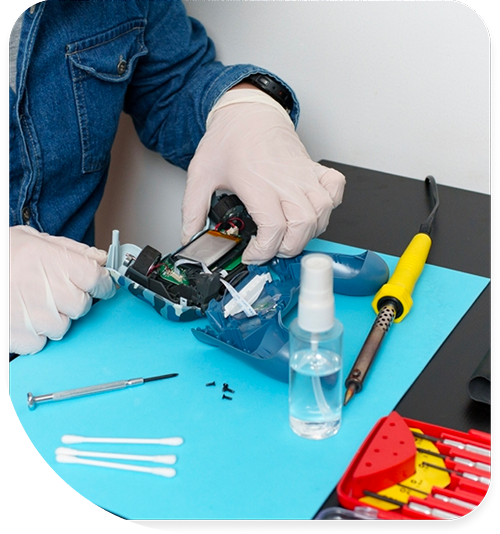
Professional Game Console Repair Services In The Fix in Walmart Laurel
Game Console Repair in Laurel, MD: What You're Actually Replacing (and What You're Not)
Laurel gamers frequently encounter a misconception: when a console stops responding to controller input or displays graphical anomalies, the entire system must be replaced. This assumption costs hundreds of dollars and overlooks the reality of how modern gaming hardware fails. The I-95 corridor's heavy commuter traffic brings constant vibration exposure, while Fort Meade's federal workforce relies on evening and weekend gaming to decompress. Understanding what actually fails inside a console—and what simply needs restoration—changes the entire repair calculus.
When you search for Game Console repair in Laurel, MD repair, you're looking for technicians who can distinguish between true component failure and temporary malfunction. This distinction is the foundation of sound repair strategy. Console hardware experiences predictable failure modes under continuous load cycles, thermal stress, and the humidity patterns that define the mid-Atlantic region.
The Replacement Reflex
The replacement mindset originates from manufacturers' marketing strategies and consumer unfamiliarity with console architecture. When a console fails to power on or displays thermal shutdown errors, retailers immediately recommend purchasing a new unit. However, most console failures stem from three distinct failure modes: thermal interface compound migration at the APU (accelerated processing unit) junction, HDMI encoder chip solder ball micro-fractures from thermal expansion cycling, and NAND flash storage block table corruption from power interruption. Each of these is addressable through targeted intervention rather than wholesale device replacement. Laurel's position in the I-95 corridor means many devices experience power fluctuation events from spring and summer thunderstorms—electrical surge damage that manifests as storage corruption but not necessarily as permanent component failure.
The disc drive optical lens alignment drift represents another category of apparent failure that drives replacement decisions. A console that won't read discs triggers the assumption that the laser diode has failed irreparably. In reality, the 405-nanometer laser remains functional in most cases—the optical lens has simply shifted position during years of continuous use, impact events, or thermal cycling. Realignment restores functionality without component replacement. Similarly, analog stick potentiometer carbon track wear patterns cause drift in controller input, yet the stick assembly itself—the most expensive control component—often remains viable. A technician trained in console architecture recognizes these distinctions immediately and proceeds with restoration protocols rather than replacement.
What's Actually Broken
The internal landscape of a console reveals why certain failures appear catastrophic but prove addressable. The APU thermal interface compound experiences migration under continuous load, particularly in systems used for extended gaming marathons during Laurel's summer months when ambient temperatures peak and HVAC systems struggle to maintain stable indoor climates. The compound's silicone oil component separates from the matrix above 70 degrees Celsius, creating a thermal barrier that causes the processor to throttle performance or shut down entirely. This degradation occurs gradually across years of use, not instantaneously, but once identified through thermal imaging, the solution involves careful compound reapplication and thermal cycling verification—a two-hour intervention rather than a hardware replacement.
The HDMI encoder chip solder ball micro-fractures emerge from thermal expansion cycling stress, a phenomenon particularly aggressive in Laurel's climate given the 85–90 percent relative humidity peaks during summer and the rapid temperature fluctuations between heated indoor environments and exterior conditions. Each thermal cycle creates mechanical stress on solder joints, and after hundreds or thousands of cycles, hair-line fractures develop in the connections between the encoder chip and the substrate. These fractures disrupt video output intermittently—the display cuts out, returns, flickers—creating the false impression of a defective encoder chip requiring replacement. In reality, targeted micro-soldering or reflow processes restore connection integrity and eliminate the symptom entirely. The chip itself remains fully functional.
The PSU LLC resonant converter capacitor aging represents a less visible but equally critical failure mode. The power supply unit's bulk capacitors degrade over years of operation, particularly in humid environments where moisture penetration accelerates internal corrosion. Capacitor aging increases output ripple and reduces voltage regulation precision, causing the system to crash or refuse to power. Technicians unfamiliar with power supply diagnostics assume the entire PSU has failed and recommend replacement. However, capacitor replacement restores full functionality at one-fifth the cost of a new PSU. NAND flash storage block table corruption, meanwhile, appears as a permanent failure but often resolves through secure erase cycles and file system reconstruction—a software-level intervention that users cannot perform independently but technicians can execute in minutes.
The Restoration
Restoration protocols for consoles depend on accurate fault isolation before any intervention begins. A technician applies thermal imaging to identify temperature gradients that indicate thermal interface compound degradation. Impedance testing on the HDMI encoder circuit reveals micro-fractures in solder connections. Disk read testing combined with laser power measurement quantifies lens alignment error. Storage diagnostic utilities scan for block table corruption and report remaining NAND capacity. Each test isolates the actual failure, enabling targeted restoration rather than shotgun replacement. Laurel residents benefit from this diagnostic rigor because it transforms a a fraction of replacement cost replacement into a a fraction of replacement cost–150 repair while preserving device history, game saves, and user familiarity with their hardware.
Restoration becomes possible when technicians understand the cascade of failures that lead to console shutdown but recognize that most failures arrest at intermediate stages before reaching truly irreversible component damage. The Fix in Walmart Laurel applies this diagnostic-first methodology to every console that arrives for service, beginning with comprehensive testing to map fault patterns before recommending specific interventions. This approach aligns with Laurel's values as a suburban community where residents prioritize pragmatic, cost-conscious solutions over unnecessary consumption.
Field Notes
What causes a console to overheat and shut down repeatedly?
Repeated thermal shutdown typically indicates APU thermal interface compound degradation, where the silicone oil component separates from the matrix under sustained load temperatures above 70 degrees Celsius. Laurel's summer conditions accelerate this degradation. The processor itself remains intact, but the thermal barrier causes the system to throttle performance and eventually trigger protective shutdown. Thermal pad replacement and compound reapplication restore thermal conductivity and eliminate the shutdown cycle. Testing involves running the console under load while measuring junction temperature against the baseline specification.
Can I fix a console that won't read discs?
Yes, in most cases. Disc read failures stem from optical lens alignment drift rather than laser diode failure. The 405-nanometer laser continues generating full power, but the lens no longer focuses that light precisely on the disc track. Alignment adjustment using precision calibration tools restores read accuracy without component replacement. Some disc failures involve NAND corruption affecting the file allocation table, which resolves through secure erase and remapping. Before assuming the disc drive has failed, technicians verify laser output power and lens focal point position through diagnostic testing.
Why does my controller drift when it worked fine last week?
Analog stick drift originates from potentiometer carbon track wear patterns developing under the dust, moisture, and electrical stress environment. Laurel's humidity levels and the pocket lint exposure that comes with portable gaming accelerate this wear. The worn track produces erratic resistance readings, causing the system to interpret stick position incorrectly. Potentiometer replacement is the standard solution, though some designs allow electrical recalibration. The stick assembly itself is not permanently damaged—wear is an expected consequence of mechanical use and addresses through component replacement or recalibration protocols.
Other Locations Near By You
The Fix in Clarksburg Premium Outlets
22705 Clarksburg Rd, Clarksburg, MD 20871, USA
The Fix in Walmart Frederick
7400 Guilford Dr, Frederick, MD 21704, United States
The Fix in Westfield Wheaton
11160 Veirs Mill Rd, Wheaton, MD 20902
The Fix in Walmart Landover Hills
6210 Annapolis Rd, Landover Hills, MD 20784, United States
The Fix in The Mall in Columbia
10300 Little Patuxent Pkwy #1708, Columbia, MD 21044, United States
The Fix in Towson Town Center
825 Dulaney Valley Rd, Towson, MD 21204, United States
The Fix in Westfield Montgomery
7101 Democracy Blvd #212B, Bethesda, MD 20817, United States
Your local repair experts for every device
From iPhones to gaming laptops, The Fix in Laurel, MD is your one-stop shop for device repair. Quick turnarounds, affordable prices, and local experts you can trust

Phone Cases
Protect your device in style! At The Fix in Laurel, MD, we offer a wide selection of durable phone cases for all major brands—sleek designs that keep your phone safe and looking great.

Nintendo Switch Repair
Cracked Nintendo Switch screen? We repair Switch devices in Laurel, MD quickly and affordably. Fast, easy, and always with high-quality parts.

MacBook Repair
For broken screens, battery replacements, or other issues, The Fix in Laurel, MD provides quick MacBook repairs with premium parts.

PlayStation Repair
Is your PlayStation giving you trouble? At The Fix in Laurel, MD, we handle PlayStation repairs with care and quality parts—no long waits, no hassle.
Google Repair
Need your Google Pixel fixed? At The Fix in Laurel, MD, we repair cracked screens, charging issues, and more—always using high-quality parts for lasting results.

Tablet Repair
Whether your tablet screen is cracked or the battery won’t hold a charge, The Fix in Laurel, MD provides fast, affordable tablet repairs with free diagnostics.

Computer Repair
Need PC or desktop service in Laurel, MD? We provide free diagnostics and affordable repairs, always with high-quality parts.

Laptop Repair
Got a broken laptop? The Fix In Laurel, MD, our team repairs most laptop brands and models using high-quality replacement parts.

iPad Repair
Need your iPad fixed? At The Fix in Laurel, MD, we repair cracked screens, charging issues, and more—always using high-quality parts for lasting results.

Cell Phone Repair
We repair all major phone brands in Laurel, MD. iPhone, Samsung, Google, and more—get your phone fixed fast.

iPhone Repair
Cracked screen? Battery draining too fast? Our team in Laurel, MD repairs iPhones with precision and high-quality parts to make your device feel new again.

Samsung Repair
Whether it’s a Galaxy screen replacement or a charging issue, The Fix in Laurel, MD offers fast and reliable Samsung repairs.

Xbox Repair
Xbox not working properly? Our team in Laurel, MD offers quick, reliable Xbox repairs with free diagnostics and high-quality replacement parts.


Trusted repair solution for mobile phones, tablets, gaming consoles, and computer systems. We provide fast, reliable, and affordable repair services to get your devices back in perfect working condition.
The Fix is an independent repair service provider and is not affiliated with, sponsored by, or endorsed by Apple Inc., Samsung Electronics, Google LLC, or any other device manufacturer. We use high-quality compatible replacement parts unless explicitly stated. All trademarks are property of their respective owners.


© Copyright The Fix Solutions All rights reserved 2026.
Design by Deepcoder