





MacBook Repair in The Fix in Paramus Park
Need MacBook repair in Paramus, NJ? At The Fix, we provide quick, reliable solutions for your Apple laptop. From screen damage to battery replacements, our technicians use high-quality parts and offer free diagnostics so you always know what’s needed before we start.

Professional MacBook Repair Services
- Screen Repair & Replacement
- Battery Replacement
- Water Damage Repair
- Keyboard Repair
- Charging Port Repair
- Overheating & Fan Repair
- Hard Drive / SSD Replacement & Data Recovery
- macOS Troubleshooting & Recovery
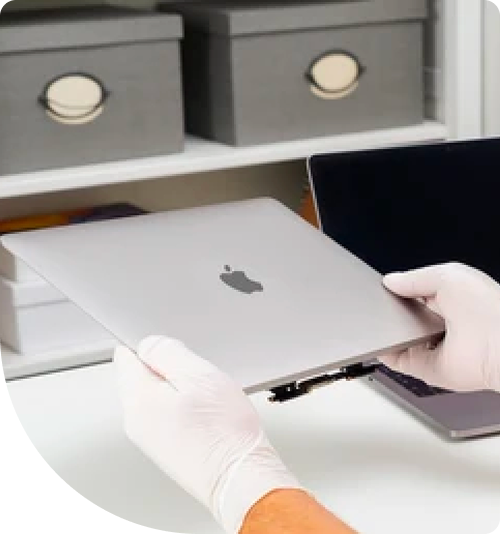
Professional MacBook Repair Services In The Fix in Paramus Park
Need MacBook Repair in Paramus, NJ 07652?
Your MacBook just froze mid-presentation at a Bergen County office near New Bridge Medical Center. Or perhaps you opened your laptop at a Garden State Plaza coffee shop only to discover the display flickering with vertical lines. These aren't minor inconveniences—they're symptoms of specific hardware failures within Apple's tightly integrated architecture. Modern MacBooks sacrifice repairability for sleek industrial design, soldering RAM directly to logic boards and fusing display assemblies with adhesive so strong it requires specialized heating equipment to separate. When you encounter these failures and need professional MacBook Repair in Paramus, NJ, understanding the root cause helps distinguish between a straightforward screen replacement and a complex logic board failure requiring component-level repair.
Apple's engineering philosophy prioritizes thermal efficiency and compact form factors over user serviceability. Components that once connected via sockets now exist as permanent solder joints. This integration delivers remarkable performance-per-watt ratios but creates repair challenges that demand specialized tools and board-level diagnostics. At 700 Paramus Park, Paramus, NJ 07652, we approach MacBook service as precision electronics work, using schematics, multimeters, and thermal imaging to diagnose failures at the component level rather than simply replacing entire assemblies.
What causes the display cable to fail prematurely?
"Flexgate" represents a design flaw affecting MacBook Pro models from 2016-2019 where the display's backlight flex cable suffers mechanical fatigue from repeated opening and closing. The cable routes through the hinge mechanism, experiencing tensile stress with each lid movement. Apple dimensioned this cable too short—it stretches taut when the display opens beyond approximately 45 degrees, creating stress concentration at the cable's termination points.
Over thousands of open-close cycles during normal use—opening your laptop at Paramus High School, closing it for transport via Route 4, reopening at your destination—microscopic fractures develop in the cable's copper conductors. These cracks initially manifest as intermittent backlight flickering, particularly when adjusting display angle. As the damage progresses, the backlight fails completely, leaving you with a visible image only under direct light. The LCD panel itself remains functional; only the LED backlight circuit has failed.
Repair requires complete display assembly replacement in most cases. The backlight cable integrates into the display housing assembly, making isolated cable replacement impractical without specialized equipment. We source display assemblies with the revised cable design that addresses the undersized cable length—these longer cables reduce tensile stress, preventing recurrence of the failure mode. Post-repair, your display functions normally across its full range of motion without the stress-induced failures that plagued the earlier cable design.
Why does your MacBook suddenly shut down despite showing remaining battery charge?
Unexpected shutdowns during demanding tasks—video rendering, virtual machine operation, or photo editing—often indicate peak power capability failure in aging lithium-ion batteries. Battery cells degrade through normal charge cycles, with internal resistance increasing as the electrochemical reactions slow over time. The battery must deliver specific current at defined voltage levels to power the logic board's voltage regulators.
As batteries age beyond approximately 500 full charge cycles, their internal impedance rises. When the processor demands peak current—during CPU boost states or GPU-intensive operations—the degraded battery cannot maintain voltage under load. The System Management Controller (SMC) detects this voltage sag and initiates protective shutdown to prevent brownout-induced data corruption or component damage. Your battery percentage indicator may show 40% remaining, but that remaining capacity exists only under light loads, not peak power demands.
Battery replacement involves more than physical installation. Post-2016 MacBooks integrate batteries with strong adhesive strips requiring specific removal techniques to prevent puncture or thermal runaway. The replacement battery's management chip must communicate properly with the SMC to report accurate health metrics. We reset the SMC after installation to recalibrate power management parameters, ensuring the logic board recognizes the cell's capacity and adjusts power delivery accordingly. This restores peak performance capability and eliminates unexpected shutdowns during processor-intensive work.
How does liquid damage affect MacBooks differently than other laptops?
MacBook keyboards use a butterfly or scissor-switch mechanism directly above the logic board with minimal protective barriers. Liquid spills—coffee at a Garden State Parkway rest stop, water near Van Saun Park—reach the logic board within seconds, bypassing the keyboard assembly entirely. The dense component packing on MacBook logic boards means liquid spreads across multiple critical circuits simultaneously.
The corrosive threat comes from ionic contaminants in beverages rather than water itself. Minerals, sugars, and acids in drinks create conductive paths between circuits that should remain electrically isolated. When powered, these shorts generate heat that damages integrated circuits and creates permanent corrosion through electrolysis—electricity flowing through the contaminated liquid accelerates oxidation of copper traces and component leads.
Immediate response determines survival rates. Power off the device instantly and do not attempt charging—active current accelerates corrosion exponentially. Professional remediation begins with logic board extraction and ultrasonic cleaning in specialized solvents that remove ionic contamination without harming components. Under microscope magnification, we identify corroded traces, inspect chip solder balls for oxidation, and test voltage rails for shorts. Advanced repairs involve microsoldering to replace damaged components or bridge broken circuit pathways with hair-thin jumper wires, restoring electrical continuity where corrosion destroyed the traces.
What happens when SSD storage degrades or fails?
Solid-state drives in MacBooks utilize NAND flash memory that degrades through write cycles. Consumer-grade SSDs typically endure 3,000-10,000 program-erase cycles per cell before reliability drops. MacBooks employ wear-leveling algorithms to distribute writes evenly across cells, but heavy users—video editors, software developers compiling code, photographers processing RAW files near Ridgewood—accumulate write cycles faster than typical usage patterns predict.
NAND degradation manifests as slow performance, frequent beachballing, or kernel panics with messages referencing disk I/O errors. The drive's controller detects failing memory cells and marks them as bad blocks, reallocating data to reserve cells. As the reserve pool depletes, the drive enters read-only mode to protect existing data, preventing further writes while allowing recovery attempts.
In MacBooks with soldered storage—most models from 2016 onward—SSD failure presents significant challenges. The NAND chips connect directly to the T2 security chip or M-series processor, with data encrypted by hardware keys unique to that specific logic board. We can't simply transplant the SSD to another machine. For removable SSDs in older MacBooks, we can clone data to replacement drives using specialized adapters. With soldered storage, recovery depends on whether the drive still responds to diagnostic commands—if the controller functions, we can image data before failure progresses; if the controller failed, data recovery requires chip-off techniques and specialized equipment to read NAND directly.
Why won't external displays connect via Thunderbolt ports?
Thunderbolt 3 and 4 ports on MacBooks carry multiple protocols simultaneously—USB data, DisplayPort video, and power delivery—all through the same USB-C connector. Display connectivity failures often trace to the Thunderbolt controller chips on the logic board or damaged USB-C port assemblies. Unlike simple USB-A ports, these controllers perform active signal conversion and protocol negotiation.
The Alpine Ridge or Titan Ridge Thunderbolt controller (depending on MacBook model) includes integrated DisplayPort multiplexers that route video signals from the GPU to the USB-C ports. If this controller malfunctions—often from electrostatic discharge events or power surges through connected devices—video output fails while USB data transfer may continue functioning normally. This selective failure pattern helps diagnose controller versus port damage.
Port physical damage presents differently. The USB-C connector contains 24 pins in two rows, with specific pins dedicated to DisplayPort alternate mode signals. Damaged pins from forceful cable insertion or foreign object contamination can break video signal paths while leaving charging and data transfer functional. We diagnose this using specialized Thunderbolt testers that check individual signal pairs, identifying whether the fault exists in the port hardware, the controller chip, or the GPU-to-controller signal pathways on the logic board. Repairs range from port replacement requiring microsoldering to controller chip replacement depending on the specific failure location.
What causes kernel panics and random freezes?
Kernel panics—the macOS equivalent of system crashes—indicate critical hardware or software failures that compromise system stability. While software conflicts occasionally trigger panics, persistent random freezes and crashes often trace to hardware faults. RAM failures, logic board shorts, or GPU thermal issues create the conditions that force macOS to halt rather than risk data corruption.
In MacBooks with soldered RAM—all models since 2012—memory failures manifest as progressively frequent crashes, particularly during memory-intensive operations. Individual memory chips can develop bit errors where specific memory addresses return incorrect data. The kernel detects these errors through ECC checks on Pro models or experiences unexpected behavior from corrupted data structures, forcing a protective shutdown.
We diagnose these failures using comprehensive hardware diagnostics that stress-test RAM, GPU, CPU, and logic board subsystems. Memory testing involves writing specific patterns to every address and verifying the data returns correctly—failures indicate which DRAM chips on the logic board have developed faults. For GPU-related crashes, thermal imaging reveals whether inadequate cooling or dried thermal paste allows graphics processors to exceed thermal limits. Logic board shorts appear as unexpected voltage drops on power rails during load testing, pointing to damaged MOSFETs or shorted capacitors that require component-level repair.
Why does local service matter for time-sensitive repairs?
Professional work doesn't pause for extended repair turnarounds. When your MacBook fails during a critical project deadline in Bergen County, waiting for distant service centers to process, diagnose, and return your device creates unacceptable productivity gaps. Our Paramus Park location provides immediate access to diagnostic equipment and experienced technicians who can identify failures the same day you bring your device in.
Same-day diagnostics mean you understand the problem before the workday ends. We explain whether your issue stems from a failing SSD, degraded battery, or logic board fault—providing the information you need to make informed repair decisions. For common repairs like battery replacement, display assemblies, or keyboard service, we complete work within 24-48 hours. Complex logic board repairs requiring microsoldering or component replacement may take 3-5 days depending on parts availability, but you receive regular status updates throughout the process.
Geographic proximity offers practical advantages beyond speed. You can stop by during lunch breaks from offices near Route 17, drop off devices while shopping at Paramus Park, or coordinate pickups around your Bergen County schedule. Direct communication with repair technicians eliminates the information gaps inherent in distant service models where your device disappears into regional facilities with minimal status visibility.
Maximizing Your MacBook's Service Life
Hardware failures represent opportunities for targeted repairs rather than device replacement triggers. Display issues, battery degradation, and even liquid damage affect specific components while leaving the rest of your system functional. Visit us at 700 Paramus Park, Paramus, NJ 07652, where we'll diagnose your MacBook's exact issue and present clear repair options based on component-level testing.
Frequently Asked Questions
Q: Can you upgrade the RAM or storage on my MacBook in Paramus, NJ?
A: Upgrade capability depends entirely on your MacBook's model year. Pre-2012 MacBooks featured user-accessible RAM slots allowing memory upgrades. From 2012 onward, Apple solders RAM directly to the logic board—no upgrade path exists. Storage upgrades are possible on 2013-2015 models with proprietary removable SSDs, but 2016+ models solder storage to the logic board as well. We can identify your specific model and advise on upgrade possibilities during diagnostic inspection.
Q: My MacBook's fan runs constantly at maximum speed—what's failing?
A: Constant maximum fan speed without corresponding heat generation typically indicates SMC confusion or failed temperature sensors. The SMC reads thermal sensors throughout the system to adjust fan speeds appropriately. If a sensor returns invalid readings or the SMC firmware becomes corrupted, it defaults to maximum fan speed as a protective measure. We can reset the SMC, test individual sensors, and verify the fan control circuitry functions correctly to restore normal thermal management.
Q: Is data recovery possible if my MacBook won't power on near Route 17?
A: Recovery success depends on the failure location. If power issues exist but the logic board and SSD remain functional, we can often repair the power circuits and access your data normally. With T2 or M-series Macs, the SSD encrypts data using keys tied to the specific logic board—if the board failed catastrophically, data recovery becomes extremely difficult since we cannot transfer the SSD to another machine. We always attempt repair before considering data lost, as power circuit fixes often restore full functionality.
Other Locations Near By You
The Fix in American Dream in East Rutherford
1 American Dream Wy, East Rutherford, NJ 07073
The Fix in Bridgewater Commons
400 Commons Way, Bridgewater Township, NJ 08807, United States
The Fix in The Mills at Jersey Gardens
651 Kapkowski Rd Elizabeth, NJ 07201
The Fix in Walmart Vineland
1070 W Landis Ave, Vineland, NJ 08360, United States
The Fix in Walmart Riverdale
48 NJ-23, Riverdale, NJ 07457
The Fix Kiosk in Bridgewater Commons
400 Commons Way Suite 7504, Bridgewater, NJ 08807, USA
The Fix in Deptford Mall
1750 Depford Center Road, Deptford, NJ
The Fix in Hoboken
131 Washington St, Hoboken NJ 07030
Your local repair experts for every device
From iPhones to gaming laptops, The Fix in Paramus, NJ is your one-stop shop for device repair. Quick turnarounds, affordable prices, and local experts you can trust

Phone Cases
Protect your device in style! At The Fix in Paramus, NJ, we offer a wide selection of durable phone cases for all major brands—sleek designs that keep your phone safe and looking great.

Nintendo Switch Repair
Cracked Nintendo Switch screen? We repair Switch devices in Paramus, NJ quickly and affordably. Fast, easy, and always with high-quality parts.

PlayStation Repair
Is your PlayStation giving you trouble? At The Fix in Paramus, NJ, we handle PlayStation repairs with care and quality parts—no long waits, no hassle.
Google Repair
Need your Google Pixel fixed? At The Fix in Paramus, NJ, we repair cracked screens, charging issues, and more—always using high-quality parts for lasting results.

Tablet Repair
Whether your tablet screen is cracked or the battery won’t hold a charge, The Fix in Paramus, NJ provides fast, affordable tablet repairs with free diagnostics.

Computer Repair
Need PC or desktop service in Paramus, NJ? We provide free diagnostics and affordable repairs, always with high-quality parts.

Game Console Repair
From Nintendo Switch® to PlayStation and Xbox, The Fix in Paramus, NJ repairs all major game consoles. Fast service and dependable results.

Laptop Repair
Got a broken laptop? The Fix In Paramus, NJ, our team repairs most laptop brands and models using high-quality replacement parts.

iPad Repair
Need your iPad fixed? At The Fix in Paramus, NJ, we repair cracked screens, charging issues, and more—always using high-quality parts for lasting results.

Cell Phone Repair
We repair all major phone brands in Paramus, NJ. iPhone, Samsung, Google, and more—get your phone fixed fast.

iPhone Repair
Cracked screen? Battery draining too fast? Our team in Paramus, NJ repairs iPhones with precision and high-quality parts to make your device feel new again.

Samsung Repair
Whether it’s a Galaxy screen replacement or a charging issue, The Fix in Paramus, NJ offers fast and reliable Samsung repairs.

Xbox Repair
Xbox not working properly? Our team in Paramus, NJ offers quick, reliable Xbox repairs with free diagnostics and high-quality replacement parts.


Trusted repair solution for mobile phones, tablets, gaming consoles, and computer systems. We provide fast, reliable, and affordable repair services to get your devices back in perfect working condition.
The Fix is an independent repair service provider and is not affiliated with, sponsored by, or endorsed by Apple Inc., Samsung Electronics, Google LLC, or any other device manufacturer. We use high-quality compatible replacement parts unless explicitly stated. All trademarks are property of their respective owners.


© Copyright The Fix Solutions All rights reserved 2026.
Design by Deepcoder