




Phone Cases in The Fix in South County Center
Looking for the perfect case to protect your device? At The Fix in St. Louis, MO, we offer a wide selection of durable phone cases for all major brands. Whether you need heavy-duty protection or a slim look, we help you find the right fit fast.

Premium Phone Cases
- Heavy-Duty Protection Cases
- Slim & Stylish Designs
- Screen Protector Compatible
- All Major Brands Available
- Wireless Charging Compatible

Premium Phone Cases In The Fix in South County Center
How Local Climate Impacts Polymer Durability: Phone Cases in St. Louis, MO
St. Louis is defined by its dramatic atmospheric variance. With summer humidity levels frequently pushing past 70% and winter temperatures dropping well below freezing, the materials protecting your mobile devices face a unique set of stressors compared to those in arid or temperate regions. Most users view a protective cover as a static barrier, but from a materials science perspective, it is a dynamic component that reacts—often poorly—to the local environment.
When selecting Phone Cases in St. Louis, MO, understanding the interaction between Missouri’s specific climate data and polymer chemistry is essential for actual device protection. A case that remains pliable and shock-absorbent in a climate-controlled office may become brittle and structurally compromised after just twenty minutes of exposure to a St. Louis winter, significantly altering its ability to dissipate impact energy during a fall.
The Physics of Thermal Expansion and Contraction
The fundamental challenge for any protective accessory in the Midwest is the coefficient of thermal expansion (CTE). This metric describes how the size of an object changes with a change in temperature. In the 63129 zip code, we experience wide temperature swings, sometimes shifting 30 to 40 degrees within a single week during transition seasons.
Polycarbonate (PC) and Thermoplastic Polyurethane (TPU)—the two most common materials used in modern device armor—react differently to these fluctuations. Hard polycarbonate shells have a lower CTE, meaning they remain relatively rigid. Softer TPU bumpers expand and contract more aggressively. When these materials are bonded together in "hybrid" cases, the differential rates of expansion can cause microscopic delamination between the layers over time. This separation weakens the structural integrity of the case, creating voids where impact energy is no longer efficiently transferred away from the glass back of your phone.
Winter Brittleness: A Hidden Risk Factor
As temperatures drop in South County, the molecular chains within plastic materials lose their mobility. This phenomenon is known as the glass transition temperature shift. While your case does not literally turn to glass, it moves closer to a "glassy" state, significantly reducing its ductility.
In practical terms, this means a drop that would be harmless in July becomes critical in January. A silicone or TPU case that typically acts as a shock absorber can stiffen in freezing conditions. Instead of compressing to absorb the kinetic energy of a fall on the pavement outside South County Center, a stiffened case transmits that shockwave directly through the chassis of the phone. This transmission is a primary cause of internal component dislocation and solder joint fractures on logic boards, even if the exterior glass remains intact.
Humidity and Hydrolysis: The Yellowing Effect
Residents of St. Louis are familiar with high humidity, but few consider its chemical effect on clear phone accessories. The "yellowing" of clear cases is not just a cosmetic issue caused by dirt; it is often a chemical reaction called hydrolysis, accelerated by UV exposure and atmospheric moisture.
Standard TPU polymers contain ester groups that are susceptible to breaking down when exposed to water molecules in the air. Missouri’s humid summers accelerate this degradation. As the polymer chains break down, the material doesn't just change color; it loses tensile strength. The molecular bonds that allow the case to stretch and rebound are weakened. Over time, this leads to a looser fit. A case that fit snugly in the store may, after a humid summer, exhibit "sagging" around the volume buttons or charging port. This gap allows abrasive debris—silica dust and grit—to enter the space between the case and the phone, leading to severe pitting and scratching of the device’s frame.
The Friction Coefficient and Material Selection
The grip provided by a case is determined by its coefficient of friction, which is also environmentally dependent. In high humidity, smooth polycarbonate surfaces can become slick due to condensation micro-layers. Conversely, silicone cases, which offer high friction, can become tacky, attracting lint and particulate matter that interferes with charging ports and speaker grilles.
For the St. Louis environment, textured finishes often outperform smooth ones. A textured surface breaks the surface tension of moisture, providing a consistent grip regardless of the humidity index. Furthermore, "dual-layer" designs that mechanically lock the soft inner core to the hard outer shell (rather than relying solely on chemical adhesives) tend to withstand the thermal cycling of the region more effectively.
Selecting Protection for the 63129 Environment
Effective protection requires analyzing the Shore Hardness scale of the materials involved. Shore Hardness measures a material's resistance to indentation. For optimal protection in a variable climate like St. Louis, a multi-durometer approach is often best.
- Inner Layer (Low Shore A): A softer material inside to dampen vibrations and accommodate thermal contraction without crushing the device.
- Outer Layer (High Shore D): A rigid exterior to deflect sharp impact forces and resist environmental wear.
When these materials are engineered to work in concert, they create a protective system that remains stable despite temperature fluctuations. It is not merely about thickness; it is about density and thermal stability. A thin case engineered with high-grade, temperature-resistant composites will often outperform a thick, generic rubber case that freezes solid in winter.
Conclusion on Material Integrity
The perception that all plastic cases are created equal is scientifically inaccurate. The localized stress factors of St. Louis—specifically the thermal cycling and humidity—demand higher standards for material engineering. Protecting a device here means choosing accessories that are chemically and physically stable enough to maintain their protective properties whether it is a sweltering August afternoon or a freezing February morning.
Technical Q&A: Device Protection
Q: Why do some phone cases interfere with wireless charging capabilities? A: Wireless charging relies on magnetic induction, where a coil in the charger creates a magnetic field that induces a current in the coil inside the phone. If a case is too thick (generally over 4mm) or contains materials with high magnetic permeability (like metal plates or certain metallic paints), it disrupts this field. The energy that should charge the battery is instead converted into heat within the case material, which reduces charging efficiency and can trigger the phone’s thermal safety shutoff.
Q: Does a "military-grade" drop test rating actually mean the device is safe from all falls? A: Not necessarily. The term "military-grade" usually refers to the MIL-STD-810G standard, specifically method 516.6, which involves dropping a device 26 times from 4 feet onto plywood over concrete. However, this test is conducted in a controlled lab environment. It does not account for the variables of real-world impacts, such as uneven surfaces (rocks, curbs), rotational velocity (spinning while falling), or drops from heights greater than 4 feet. It indicates a baseline of durability, but it is not a guarantee of invincibility.
Q: How often should I remove my case to clean the device? A: We recommend removing the case and cleaning both the phone and the interior of the case once every two weeks. Dust, pocket lint, and microscopic grit inevitably migrate into the crevices between the case and the device. If left to accumulate, the friction from normal usage causes these particles to act like sandpaper, slowly grinding away the anodized finish of the phone’s frame and potentially clogging microphone and speaker meshes.
Other Locations Near By You
The Fix in Walmart St. Louis
3270 Telegraph Rd, St. Louis, MO 63125, United States
The Fix in St. Louis Galleria
1155 Galleria Pkwy #1081, St. Louis, MO 63117, United States
The Fix in Walmart Manchester
201 Highlands Blvd Dr, Manchester, MO 63011, United States
The Fix in Walmart Kansas City
8301 N Church Rd, Kansas City, MO 64158, United States
The Fix in Walmart Lee's Summit
1000 NE Sam Walton Ln, Lee's Summit, MO 64086, United States
The Fix in Walmart Lake St. Louis
6100 Ronald Reagan Dr, Lake St Louis, MO 63367, United States
The Fix in Walmart Raytown
10300 E State Rte 350, Raytown, MO 64138, United States
The Fix in Walmart Wentzville
1971 Wentzville Pkwy, Wentzville, MO 63385, United States
The Fix in Walmart Maplewood
1900 Maplewood Commons Dr, Maplewood, MO 63143, United States
The Fix in West County
80 W County Center Dr Store #2187 Des Peres Missouri 63131
Your local repair experts for every device
From iPhones to gaming laptops, The Fix in St. Louis, MO is your one-stop shop for device repair. Quick turnarounds, affordable prices, and local experts you can trust

Nintendo Switch Repair
Cracked Nintendo Switch screen? We repair Switch devices in St. Louis, MO quickly and affordably. Fast, easy, and always with high-quality parts.

MacBook Repair
For broken screens, battery replacements, or other issues, The Fix in St. Louis, MO provides quick MacBook repairs with premium parts.

PlayStation Repair
Is your PlayStation giving you trouble? At The Fix in St. Louis, MO, we handle PlayStation repairs with care and quality parts—no long waits, no hassle.
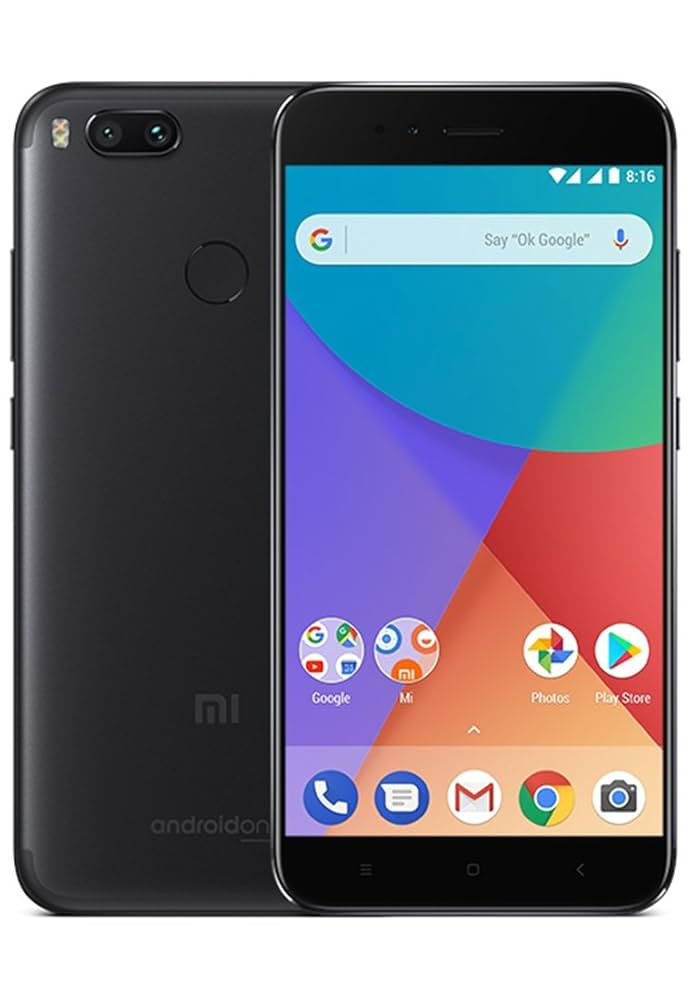
Google Repair
Need your Google Pixel fixed? At The Fix in St. Louis, MO, we repair cracked screens, charging issues, and more—always using high-quality parts for lasting results.

Tablet Repair
Whether your tablet screen is cracked or the battery won’t hold a charge, The Fix in St. Louis, MO provides fast, affordable tablet repairs with free diagnostics.

Computer Repair
Need PC or desktop service in St. Louis, MO? We provide free diagnostics and affordable repairs, always with high-quality parts.

Game Console Repair
From Nintendo Switch® to PlayStation and Xbox, The Fix in St. Louis, MO repairs all major game consoles. Fast service and dependable results.

Laptop Repair
Got a broken laptop? The Fix In St. Louis, MO, our team repairs most laptop brands and models using high-quality replacement parts.

iPad Repair
Need your iPad fixed? At The Fix in St. Louis, MO, we repair cracked screens, charging issues, and more—always using high-quality parts for lasting results.

Cell Phone Repair
We repair all major phone brands in St. Louis, MO. iPhone, Samsung, Google, and more—get your phone fixed fast.

iPhone Repair
Cracked screen? Battery draining too fast? Our team in St. Louis, MO repairs iPhones with precision and high-quality parts to make your device feel new again.

Samsung Repair
Whether it’s a Galaxy screen replacement or a charging issue, The Fix in St. Louis, MO offers fast and reliable Samsung repairs.

Xbox Repair
Xbox not working properly? Our team in St. Louis, MO offers quick, reliable Xbox repairs with free diagnostics and high-quality replacement parts.


Trusted repair solution for mobile phones, tablets, gaming consoles, and computer systems. We provide fast, reliable, and affordable repair services to get your devices back in perfect working condition.
The Fix is an independent repair service provider and is not affiliated with, sponsored by, or endorsed by Apple Inc., Samsung Electronics, Google LLC, or any other device manufacturer. We use high-quality compatible replacement parts unless explicitly stated. All trademarks are property of their respective owners.


© Copyright The Fix Solutions All rights reserved 2026.
Design by Deepcoder