





MacBook Repair in The Fix in Moonachie
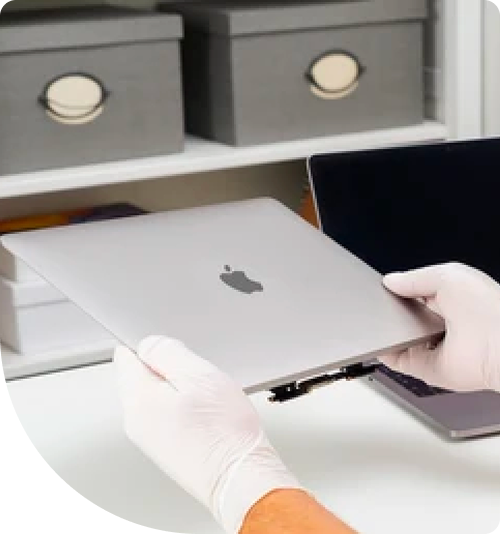
Need MacBook repair in Moonachie, New Jersey? At The Fix, we provide quick, reliable solutions for your Apple laptop. From screen damage to battery replacements, our technicians use high-quality parts and offer free diagnostics so you always know what’s needed before we start.

Professional MacBook Repair Services
- Screen Repair & Replacement
- Battery Replacement
- Water Damage Repair
- Keyboard Repair
- Charging Port Repair
- Overheating & Fan Repair
- Hard Drive / SSD Replacement & Data Recovery
- macOS Troubleshooting & Recovery
Professional MacBook Repair Services In The Fix in Moonachie
Logic Board Dynamics and Thermal Efficiency: Advanced MacBook Repair in Teterboro, NJ
In the high-stakes commercial environment of Teterboro—home to aviation logistics, warehouse operations, and corporate offices—portable computing power is a fundamental requirement. Modern high-performance laptops are marvels of engineering density, packing billions of transistors into a chassis often less than 1.6 centimeters thick. However, this density creates specific challenges regarding thermodynamics and electromechanical stress. When these systems fail, it is rarely a random occurrence; it is a result of physics.
For professionals and businesses requiring MacBook Repair in Teterboro, NJ, the issue often demands more than a superficial part swap. At The FIX, located at 600 Hollister Rd, the repair process is approached as a forensic engineering challenge. By analyzing the root causes of hardware failures—from the molecular degradation of thermal compounds to the galvanic corrosion of circuits—technicians provide solutions that restore not just functionality, but long-term reliability.
The Physics of Thermal Throttling and Paste Degradation
The Central Processing Unit (CPU) and Graphics Processing Unit (GPU) generate significant heat during operation. To prevent self-destruction, these chips rely on a thermal dissipation system comprising copper heat pipes, heatsinks, and cooling fans. The critical interface between the silicon die and the copper heatsink is a microscopic layer of thermal interface material (TIM), commonly known as thermal paste.
Over time, particularly in environments with fluctuating ambient temperatures like the warehouses and hangars around Teterboro, this paste undergoes a process known as the "pump-out effect." Repeated heating and cooling cycles cause the paste to expand and contract, eventually pushing it out from the center of the die or causing it to dry out and calcify. When this interface fails, heat cannot transfer efficiently to the fans.
The system’s firmware responds by "throttling"—deliberately slowing down the processor speed (clock cycles) to reduce heat generation. Users experience this as severe system lag during basic tasks. If left unaddressed, the excessive heat can warp the logic board or desolder critical Ball Grid Array (BGA) connections. Professional maintenance involves cleaning the old compound and applying new, high-conductivity thermal paste to restore the thermal transfer coefficient to optimal levels.
Logic Board Corrosion: The Chemistry of Liquid Damage
One of the most technically complex repairs involves liquid ingress. The danger of liquid is not just the immediate short circuit, but the subsequent chemical reaction. When water containing electrolytes (minerals, salts, or sugars) contacts a powered logic board, a process called electrolysis begins immediately.
The electrical current flowing through the board acts as a catalyst, breaking down the liquid and causing the metal contacts (copper, gold, and tin) to oxidize and corrode rapidly. This creates "bridges" of conductive corrosion that can send high-voltage power lines (like the backlight circuit) into sensitive low-voltage data lines (like the CPU data bus), instantly destroying the processor.
Contrary to popular belief, placing the device in rice acts merely as a passive desiccant and does nothing to remove the conductive mineral residue. True recovery requires ultrasonic cleaning. This process uses high-frequency sound waves in a specialized chemical bath to cavitate microscopic bubbles, dislodging corrosion from underneath chips and inside connectors. Microsoldering technicians then rebuild the damaged traces to restore the electrical pathways.
The Mechanics of Keyboard Actuation
Input devices have seen significant evolution, particularly with the transition between "scissor" mechanisms and ultra-low-profile "butterfly" switches. The technical challenge with these designs is the minimal travel distance and tight tolerances. In Teterboro’s industrial areas, where airborne dust and particulate matter are common, a single grain of sand can physically block the key switch mechanism.
In many modern models, the keyboard is not a separate component but is riveted directly to the top case assembly (palm rest). This means replacing a single failing key often requires a complete disassembly of the machine, removing the battery, logic board, and trackpad to replace the entire aluminum top assembly. Understanding these assembly hierarchies is crucial for proper service. Force-attempting to pry off a keycap on certain mechanisms can snap the fragile plastic clips, turning a cleaning job into a major component replacement.
Battery Chemistry and Gas Generation
Lithium-ion polymer batteries operate through the movement of ions between the cathode and anode. Over hundreds of charge cycles, the electrolyte breaks down, a process that can generate gas as a byproduct. In a sealed pouch cell, this gas has nowhere to go, causing the battery to swell or "puff up."
This swelling exerts tremendous hydraulic-like pressure on the internal components. It often manifests as a trackpad that no longer clicks (because the battery underneath is pushing upward against it) or a bottom case that wobbles on a flat surface. From a safety perspective, a swollen battery is a containment vessel for pressurized, flammable gas. Puncturing it can lead to thermal runaway. Safe removal requires specialized adhesive solvents and non-conductive tools to extract the battery without deforming the cells.
Display Assembly Integration and "Flexgate"
Modern "Retina" style displays are not single components but fused assemblies. The LCD (or OLED) panel, the backlight layers, and the front cover glass are bonded together with optically clear adhesive (OCA). This bonding reduces glare and increases thinness, but it also means that the glass cannot simply be separated from the LCD without industrial-grade cryogenic freezing or heated wire separators.
When the display backlight fails—often appearing as a "stage light" effect at the bottom of the screen—it is frequently due to the flex cable cracking from the mechanical stress of opening and closing the lid thousands of times. Because these cables are often integrated into the display panel itself, resolving the issue typically requires replacing the full display assembly to ensure uniform brightness and color calibration.
The Role of the T2 and M-Series Security Silicon
Newer architecture includes dedicated security silicon (like the T2 or M-series chips). These chips control the boot process, encryption, and hardware verification. This adds a layer of complexity to repairs, as the logic board is cryptographically paired with certain components, such as the Touch ID sensor or the lid angle sensor.
Replacing these components requires not just physical installation but also potential software configuration or the transfer of specific integrated circuits (ICs) from the old part to the new one to preserve functionality. Technicians performing MacBook Repair in Teterboro, NJ, must be versed in both the hardware mechanics and the firmware requirements to ensure a fully functional device post-repair.
Technical Q&A
Q: What is an SMC reset and why does it fix power issues? A: The System Management Controller (SMC) is a dedicated chip on the logic board that controls low-level functions like power management, battery charging, LED indicators, and thermal management (fans). If the data inside the SMC becomes corrupt due to a power surge or software glitch, the machine may refuse to turn on or charge. An SMC reset cuts power to this chip and forces it to reload its default parameters, often clearing these "phantom" hardware errors without any physical repair.
Q: Can data be recovered if the logic board is dead? A: On older models with removable SSDs, the drive can simply be moved to another machine or an enclosure. However, on modern machines where the storage chips are soldered directly to the logic board, data recovery becomes a complex microsoldering task. It involves repairing the power rails of the "dead" board just enough to get the logic board to boot into a target disk mode, or in extreme cases, transplanting the storage NAND chips and controller to a donor board to extract the files.
Q: Why does the screen coating look like it is peeling off? A: This phenomenon, often called "Stain-gate," involves the degradation of the anti-reflective (AR) coating applied to the surface of the glass. Oils from the keyboard, combined with the pressure of the closed lid and environmental humidity, can cause the chemical bond of the coating to break down. While cosmetic, it can obscure vision. It does not affect the LCD pixels themselves, but often requires a screen assembly replacement or specialized polishing to remove the damaged coating layer completely.
Your local repair experts for every device
From iPhones to gaming laptops, The Fix in Moonachie, New Jersey is your one-stop shop for device repair. Quick turnarounds, affordable prices, and local experts you can trust
Phone Cases
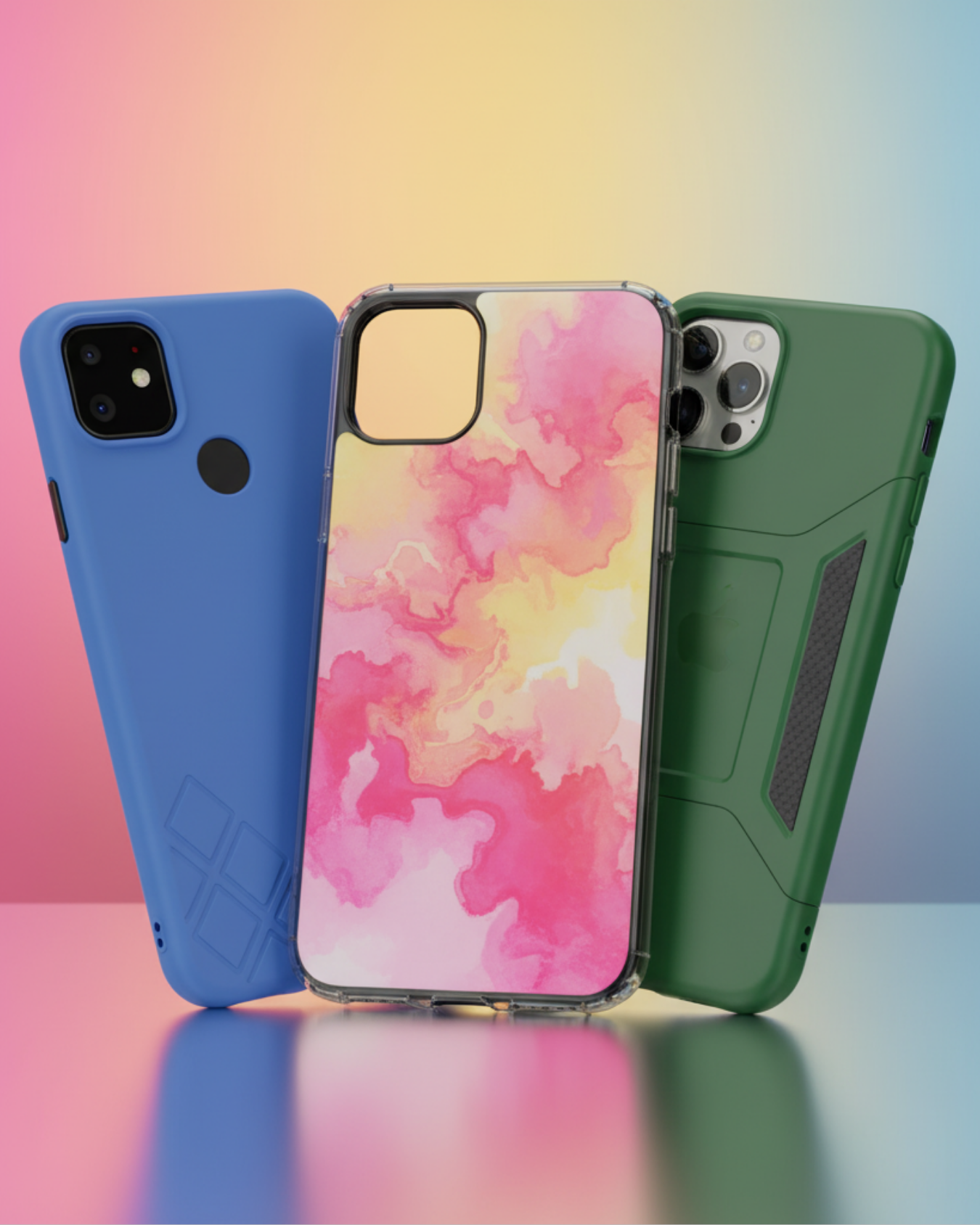
Protect your device in style! At The Fix in Moonachie, New Jersey, we offer a wide selection of durable phone cases for all major brands—sleek designs that keep your phone safe and looking great.

Nintendo Switch Repair
Cracked Nintendo Switch screen? We repair Switch devices in Moonachie, New Jersey quickly and affordably. Fast, easy, and always with high-quality parts.

PlayStation Repair
Is your PlayStation giving you trouble? At The Fix in Moonachie, New Jersey, we handle PlayStation repairs with care and quality parts—no long waits, no hassle.
Google Repair
Need your Google Pixel fixed? At The Fix in Moonachie, New Jersey, we repair cracked screens, charging issues, and more—always using high-quality parts for lasting results.

Tablet Repair
Whether your tablet screen is cracked or the battery won’t hold a charge, The Fix in Moonachie, New Jersey provides fast, affordable tablet repairs with free diagnostics.

Computer Repair
Need PC or desktop service in Moonachie, New Jersey? We provide free diagnostics and affordable repairs, always with high-quality parts.

Game Console Repair
From Nintendo Switch® to PlayStation and Xbox, The Fix in Moonachie, New Jersey repairs all major game consoles. Fast service and dependable results.

Laptop Repair
Got a broken laptop? The Fix In Moonachie, New Jersey, our team repairs most laptop brands and models using high-quality replacement parts.

iPad Repair
Need your iPad fixed? At The Fix in Moonachie, New Jersey, we repair cracked screens, charging issues, and more—always using high-quality parts for lasting results.

Cell Phone Repair
We repair all major phone brands in Moonachie, New Jersey. iPhone, Samsung, Google, and more—get your phone fixed fast.

iPhone Repair
Cracked screen? Battery draining too fast? Our team in Moonachie, New Jersey repairs iPhones with precision and high-quality parts to make your device feel new again.

Samsung Repair
Whether it’s a Galaxy screen replacement or a charging issue, The Fix in Moonachie, New Jersey offers fast and reliable Samsung repairs.

Xbox Repair
Xbox not working properly? Our team in Moonachie, New Jersey offers quick, reliable Xbox repairs with free diagnostics and high-quality replacement parts.


Trusted repair solution for mobile phones, tablets, gaming consoles, and computer systems. We provide fast, reliable, and affordable repair services to get your devices back in perfect working condition.
The Fix is an independent repair service provider and is not affiliated with, sponsored by, or endorsed by Apple Inc., Samsung Electronics, Google LLC, or any other device manufacturer. We use high-quality compatible replacement parts unless explicitly stated. All trademarks are property of their respective owners.


© Copyright The Fix Solutions All rights reserved 2026.
Design by Deepcoder