





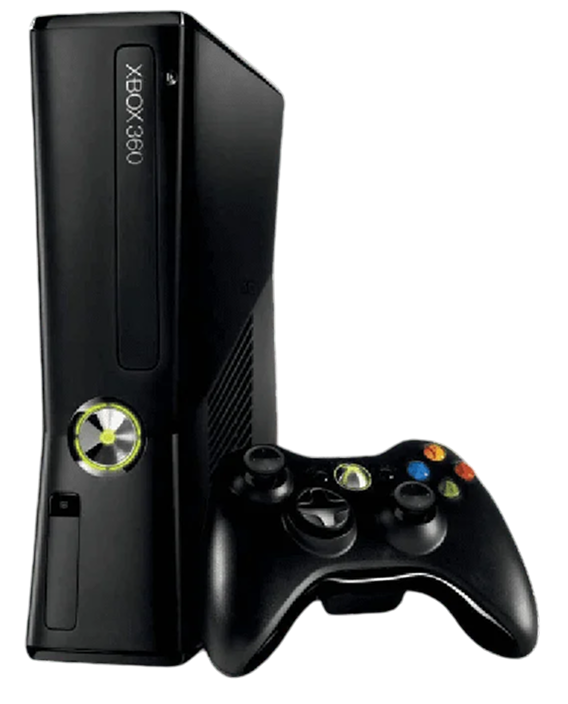
Xbox 360 Slim Repair Services
Get fast, reliable, and professional Xbox 360 Slim repair services at The Fix — your trusted destination for expert device care.
Common Repairs We Handle Daily


Your Complete Xbox 360 Slim Repair Analysis: What Really Works
You bought an Xbox 360 Slim because it fixed everything wrong with the original Xbox 360—smaller size, built-in WiFi, quieter operation, and most importantly, improved reliability that eliminated the red ring of death. Fast forward 14+ years: the console that was supposed to be bulletproof now overheats and shuts down during gameplay, or the disc drive makes grinding noises before refusing to read discs, or the HDMI port stopped working after years of use. Maybe the power supply died suddenly, or the console won't turn on at all, or it works but runs so loud you can hear it over game audio. Could be you're seeing error codes you don't understand, or the console freezes randomly during games.
Here's the contrast most people miss: while the Xbox 360 Slim eliminated RROD, it's not immune to other failures after 14+ years of service. Overheating? Still happens with degraded cooling. Disc drives? They wear out mechanically. HDMI ports? Vulnerable to damage. Power supplies? They fail with age. Professional Xbox 360 Slim repair addresses these issues and extends the life of Microsoft's improved console design. This guide covers what actually goes wrong with Slim models, why these problems happen, and how repair keeps your retro gaming system running.
Your Xbox 360 Slim: The Quick Rundown
Microsoft released the Xbox 360 Slim (officially called Xbox 360 S) in June 2010 as a major redesign addressing the reliability disasters of original Xbox 360s. The Slim used a 45nm CPU/GPU (down from 90nm), dramatically reducing heat generation. The cooling system was completely redesigned with better heatsinks and airflow. The motherboard layout improved thermal distribution. Built-in WiFi eliminated the need for adapters. The design was smaller and quieter. A 250GB hard drive became standard. Touch-sensitive buttons replaced mechanical ones. Most importantly, Microsoft essentially eliminated RROD—the Slim's failure rate was dramatically lower than original models. The console plays the same massive Xbox 360 library: Halo, Gears of War, Forza, Red Dead Redemption, and thousands more titles.
What makes the Slim interesting from a repair perspective? It's significantly more reliable than original Xbox 360s—you're not dealing with RROD epidemic-level failures. The improved 45nm chips run cooler and don't suffer the same thermal stress. The better cooling system provides more margin. But the Slim isn't invincible—after 14+ years, components still fail from age and wear. The disc drive is mechanical and wears out. The HDMI port is vulnerable to damage. The power supply (still external) fails from age. Thermal paste still dries out. Fans still wear out. From a repair standpoint, the Slim is actually easier to work on than original Xbox 360s—better internal layout, no X-clamps to deal with, and you're not fighting fundamental design flaws. Most Slim repairs are straightforward component replacements rather than advanced techniques like GPU reballing.
Why Devices Don't Age Gracefully
Every Xbox 360 Slim eventually needs attention, but unlike original Xbox 360s, these issues stem from normal aging rather than design flaws. Here's what's physically happening inside your console.
Your cooling system degrades like a car engine losing efficiency with mileage. When it was new, everything ran smoothly and efficiently. After years of operation and thermal cycling, oil breaks down, seals wear, and performance drops. Your Slim's cooling system faces similar aging. The thermal paste between the 45nm CPU/GPU and heatsinks dries out after years—not as catastrophically as original Xbox 360s because the chips run cooler, but degradation still occurs. Dust accumulates in heatsinks over years of use. Fan bearings wear from thousands of hours of operation. The Slim's cooling was adequate when new and remains functional longer than original models, but 14+ years of service means maintenance is eventually necessary.
The disc drive faces mechanical wear you can't avoid. Think about a USB drive connector bending after thousands of insertions—the metal fatigues and the connection becomes unreliable. Xbox 360 Slim disc drives experience similar wear. Motors that open/close the tray and spin discs weaken over time. The laser lens gets dusty or the laser diode weakens with use. Gears strip from years of operation. The drive belt (if equipped) stretches. The mechanism that clamps discs can fail. After thousands of disc insertions across 14 years, mechanical components simply wear out—this is normal aging, not design flaws.
HDMI ports on the Slim face stress from cable insertions and occasional yanks. The port is a 19-pin connector soldered to the motherboard. Years of cable changes create wear. Accidental cable yanks bend pins or crack solder joints. The Slim's HDMI port has better mounting than some gaming consoles but it's still vulnerable to lateral stress.
Power supplies—external on all Xbox 360 models including Slim—fail from electrical stress and age. The Slim's power brick is more efficient than original models but still contains capacitors that degrade, voltage regulators that fail, and fans that wear out. After 14 years of service, power brick failures become common.
Console Overheats and Shuts Down During Gaming
Your Xbox 360 Slim sounds louder than it used to—the fan runs at higher speeds during gameplay. Or maybe the console shuts down randomly after 45-60 minutes of gaming, especially during demanding games. Could be you see the red dot light up before shutdowns (overheating indicator). Perhaps the console feels very hot to touch near vents. Some Slim owners notice performance degradation—stuttering, frame drops—before thermal shutdowns occur.
Why this happens: The Xbox 360 Slim's cooling system was a massive improvement over original models—the 45nm CPU/GPU generate less heat, the heatsinks are larger, and the airflow design is better. But after 14+ years, thermal performance still degrades. Thermal paste between the chips and heatsinks dries out—not as badly as original Xbox 360s, but degradation happens. Dust accumulates in heatsinks—years of pulling air through the console accumulates shocking amounts of dust. Fan bearings wear, reducing airflow efficiency or causing noise. The thermal interface pads on secondary components dry out. As thermal performance drops, temperatures rise, the fan spins faster (louder) trying to compensate, and eventually thermal protection shuts down the console. The good news? The Slim has enough thermal headroom that overheating is usually fixable with maintenance rather than indicating imminent hardware failure like RROD on original models.
What you can try:
- Clean all external vents thoroughly with compressed air from multiple angles
- Ensure the console has clearance on all sides—don't use in enclosed cabinets
- Make sure vents aren't blocked by walls, furniture, or other objects
- Listen to the fan—grinding or excessive noise suggests bearing wear
- Note which games cause shutdowns—more demanding games generate more heat
- Track how long until shutdown—consistent timing indicates thermal limits
From our experience fixing thousands of these: When you bring overheating Xbox 360 Slims to The Fix, the pattern is consistent—dried thermal paste and dust-packed heatsinks, but nowhere near as bad as original Xbox 360s. The Slim's better cooling means it degrades more gracefully. Thermal maintenance on the Slim is straightforward. We disassemble the console to access the motherboard—the Slim's internal layout is more organized than original models. We remove the heatsink assemblies from the CPU and GPU (the Slim uses bolt-mount heatsinks, not problematic X-clamps). We clean off old thermal paste completely with isopropyl alcohol and proper techniques. We apply fresh high-quality thermal paste with appropriate amount and spread. We thoroughly clean all heatsink fins with compressed air and brushes—dust between fins dramatically restricts airflow. We clean fan blades and inspect bearing condition. We replace thermal pads on RAM and voltage regulators. We reassemble carefully and run extended stress tests while monitoring temperatures. Xbox 360 Slim repair for thermal issues takes 75-90 minutes. Results are excellent—temperature drops of 15-25°C, fan noise decreases noticeably, and thermal shutdowns stop completely. The Slim responds very well to thermal maintenance because the underlying hardware is sound—you're just restoring proper cooling performance.
Disc Drive Making Grinding Noises or Won't Read Discs
Your Xbox 360 Slim's disc drive makes terrible grinding, clicking, or buzzing sounds when you insert discs. Or maybe the tray won't open when you press eject—it tries but immediately stops. Could be it accepts discs but can't read them, giving errors about unreadable games. Perhaps the tray won't close properly with a disc inserted. Some Slim owners find the drive worked perfectly for years and suddenly started making concerning noises or failing to read discs reliably.
Why this happens: The Xbox 360 Slim uses a disc drive similar to original Xbox 360s but with revised components—Microsoft addressed some reliability issues, but it's still a mechanical device that wears over time. The drive has motors for opening/closing the tray and spinning discs, laser assemblies for reading data, gears for moving components, and sensors for detecting discs. After 14 years and thousands of disc insertions, components wear. The tray motor weakens or the gears that drive it strip. The disc spindle motor weakens or develops bearing noise. The laser lens gets dirty or the laser diode weakens with age and use. Drive belts (if equipped) stretch. The mechanism that clamps the disc can fail. Gears crack from wear. The laser assembly rails need lubrication that dried out years ago. Sometimes it's not the drive—it's discs that are scratched or dirty causing read errors.
What you can try:
- Try multiple different discs—games, DVDs, music CDs—to identify what fails
- Clean discs thoroughly before testing—dirt causes read errors
- For trays that won't open, try the manual eject—small hole near the disc slot, insert paperclip and push
- Listen to drive sounds—grinding suggests mechanical issues, clicking suggests laser or motor problems
- Check if the tray opens and closes smoothly without a disc—if it struggles, it's mechanical
- Make sure you're inserting discs correctly—label side up
- Don't force discs or trays—additional force damages components
What our tech does first: Xbox 360 Slim disc drive repair requires systematic diagnosis. We test with multiple known-good discs to characterize the problem—does it fail on all formats or just specific media? We listen to drive operation for mechanical issues. We attempt manual controls to test motors and gears. The repair process involves opening the console and removing the disc drive assembly (connected via SATA data and power cables). We disassemble the drive to access internal components—disc drives have multiple circuit boards, mechanical assemblies, and the laser module. We clean the laser lens with proper cleaning solution and lens tissue—contamination causes read errors that cleaning fixes. We thoroughly inspect all mechanical components—motors, gears, belts, rails, clamp mechanisms. We lubricate moving parts that dried out. We test motor operation for weakening or bearing noise. For weak lasers (common as drives age), we replace the laser assembly—replacement lasers for Xbox 360 Slims are available. For mechanical failures, we replace worn gears, belts, or motors as needed. For tray mechanism issues, we repair or replace the tray drive assembly. For severely damaged drives, we replace the entire mechanism. Important note: Xbox 360 disc drives are paired to motherboards with encryption keys for DRM, so drive replacement requires additional technical procedures—we use specialized tools to properly pair replacement drives to motherboards. Xbox 360 Slim repair for disc drives takes 90-120 minutes including removal, internal work, reinstallation or pairing, and testing with multiple disc formats. Success rate is high—most drive issues are fixable with cleaning, lubrication, or component replacement.
HDMI Port Stopped Working—No Video Output
You've got no display on your TV even though your Xbox 360 Slim clearly powers on—you hear the startup sound, the console lights up, but the screen stays black. Maybe you get intermittent video that flickers or cuts out when you move the cable. Could be the picture is distorted with visual artifacts or incorrect colors. Perhaps the HDMI cable won't stay firmly in the port anymore—it feels loose and falls out easily. Some Slim owners accidentally pulled the HDMI cable and immediately lost all video output.
Why this happens: The Xbox 360 Slim includes HDMI output standard (unlike early original Xbox 360s that only had component). The HDMI port is a 19-pin connector soldered to the motherboard, handling both video and audio. It's designed for occasional cable changes and stable connections, not lateral stress or rough handling. When HDMI cables get yanked accidentally—someone trips over the cable, the console gets moved while connected, or cables are pulled during setup—the port experiences force from the side. This bends the metal shield around the port opening, bends or breaks the delicate internal pins, or cracks the solder joints connecting the port to motherboard traces. After years of cable insertions and removals, wear accumulates on the pins and housing. Poor-quality HDMI cables that fit improperly stress the port with repeated use.
What you can try:
- Test with multiple different HDMI cables to eliminate cable problems
- Try different HDMI inputs on your TV to rule out TV port issues
- Try a completely different TV or monitor to isolate console versus display
- Inspect the HDMI port carefully with a flashlight—look for bent metal shield or visible pin damage
- Try component video cables (if you have them) to verify the console works—if component works but HDMI doesn't, it confirms HDMI port failure
- Check Xbox video settings if accessible via component
- Don't wiggle or force the HDMI cable—additional stress causes more damage
Key decision points during repair: HDMI port replacement on Xbox 360 Slim consoles is straightforward motherboard work. We've performed hundreds of these repairs. Physical port damage from yanked cables accounts for 60% of cases. Bent or broken pins make up 30%. Cracked solder joints represent 10%. When you bring HDMI issues to The Fix, we inspect the port under magnification for bent shields and damaged pins. We test with known-good high-quality cables. The repair involves careful desoldering of the damaged port using temperature-controlled soldering equipment—the HDMI connector has 19 data pins plus multiple shield ground connections that must be removed cleanly without damaging the circuit board. The Slim's motherboard has good component spacing making HDMI work slightly easier than some consoles. We thoroughly clean all connection pads with desoldering braid and flux to remove old solder and oxidation. We position a new HDMI port with precision alignment tools—even 0.5mm misalignment prevents proper connection. We solder each connection point cleanly using proper temperature and technique. We inspect all solder joints under magnification for quality—checking for cold joints, solder bridges between pins, or insufficient solder. We test extensively at multiple resolutions with different HDMI cables, and stress-test by connecting and disconnecting repeatedly to verify solid connections. Xbox 360 Slim repair for HDMI ports takes 60-90 minutes. Success rate is nearly 100% when done properly with quality replacement ports and proper technique.
Power Supply Failed—Console Won't Turn On
You press the power button and absolutely nothing happens—no lights, no sounds, complete silence. Maybe the power brick's LED is orange, red, or not lit at all instead of the normal green. Could be you hear a brief sound but the console immediately shuts off. Perhaps the console worked fine and suddenly died during gameplay or while in standby. Some Slim owners find the power brick feels extremely hot or makes buzzing sounds.
Why this happens: The Xbox 360 Slim uses an external power brick (135W or 150W depending on model—less than the 203W brick on original Xbox 360s thanks to more efficient 45nm chips). The power supply converts AC wall power to DC voltages the console needs. After 14 years of service, power brick components fail. Capacitors inside the brick bulge or leak from age and electrical stress. Voltage regulators fail. The power supply's internal fan can fail, causing the brick to overheat and shut down for thermal protection. The connector where the brick plugs into the console can develop bad connections from years of plugging/unplugging. The power brick's LED indicates status—green means good power, orange means standby, no light or red means failure.
What you can try:
- Check the power brick LED color carefully—note whether it's green, orange, red, or off
- Try different power outlets and power cables (the cable between wall and brick)
- Unplug the brick completely for 10 minutes to let it cool and reset, then try again
- Check if the brick feels excessively hot—overheating bricks shut down for protection
- Inspect the connector where it plugs into the console for visible damage or bent pins
- Try wiggling the connector gently—if the LED color changes, it's a connection issue
- Listen for sounds from the power brick—buzzing or clicking suggests internal problems
Quality verification throughout the process: When you bring power issues to The Fix, diagnosis is straightforward with external power bricks. We test the power brick output with a multimeter—it should deliver proper DC voltage (12V on the primary rail). We check all voltage rails under load. We test the console with a known-good power brick to verify the console itself functions. For failed power bricks, replacement is the most cost-effective solution—replacement power bricks for Xbox 360 Slim are readily available and reasonably priced. For power bricks that work intermittently or overheat, we can sometimes repair them by replacing internal capacitors and cleaning the fan, but replacement is usually more economical. For console-side connector issues (damaged or loose power jack), we can repair or replace the connector on the console. Xbox 360 Slim repair for power issues takes 30-60 minutes for power brick replacement, or 60-90 minutes for console power connector repair. Most power problems are completely solvable, and your game saves remain safe on the hard drive—power issues don't affect data.
Console Freezes or Crashes During Games
Your Xbox 360 Slim freezes randomly during gameplay—the screen locks up and you can't do anything until you force a restart. Or maybe games crash to dashboard with error messages. Could be specific games won't load at all. Perhaps you're seeing graphical glitches—textures flickering, artifacts on screen, or weird visual bugs. Some Slim owners find the console works fine for menus but crashes when loading games.
Why this happens: Random freezing and crashing on Xbox 360 Slim can stem from multiple causes. Hard drive problems are common—after 14 years, mechanical hard drives develop bad sectors, file system corruption, or failing read/write heads causing freezing when games try to load data. Overheating causes instability—if the console's getting too hot, games crash before thermal shutdown occurs. Disc drive read errors cause freezing—if the laser struggles to read game data, games freeze or crash. Corrupted game installs or system cache cause crashes. RAM failures (rare but possible) cause random freezing. GPU issues (much rarer on Slim than original Xbox 360s, but possible) cause graphical glitches and crashes.
What you can try:
- Clear the system cache: Settings > System > Storage > select hard drive > press Y > Clear System Cache
- Delete and reinstall problematic games
- Test with multiple different games—if one game crashes but others work fine, it's game-specific
- Check for system updates
- Try playing games without the hard drive installed to test if the drive is causing issues
- Listen for clicking from the hard drive—clicking indicates mechanical failure
- Monitor temperatures—feel if the console is getting very hot before crashes
Final testing to ensure everything works: Freezing and crashing requires systematic diagnosis. We test with multiple games to characterize the issue. We check system temperatures under load. We test the hard drive—we remove it and test in external enclosures checking for bad sectors, mechanical failure, or file system corruption. We test RAM using diagnostic procedures. We stress-test the GPU with demanding games while monitoring for graphical glitches. For hard drive issues (40-50% of freezing cases), we replace the drive—Xbox 360 Slim hard drives are still available, and we can install fresh drives, format them properly, and set them up for use. For overheating-related crashes, thermal maintenance solves it. For corrupted system software, we can reinstall the operating system. For hardware failures like RAM or GPU (rare on Slim), we evaluate whether repair is feasible or if the console has reached end-of-life. Xbox 360 Slim repair for freezing issues takes 60-120 minutes depending on the cause. Most cases are solvable—hard drive replacement, thermal maintenance, or software fixes resolve the majority of problems.
Keep Your Xbox 360 Slim Running for Years
Thermal maintenance every few years. Even though the Slim runs cooler than original models, thermal paste still dries out. Clean vents quarterly. Keep in open spaces with clearance. Thermal paste replacement every 5-7 years keeps temperatures optimal.
HDMI cable care prevents repairs. Use quality HDMI cables—cheap cables stress ports. Never yank cables. Route cables to minimize tension. Don't move the console while HDMI is connected.
Power brick maintenance. Keep the power brick in open air with ventilation—don't enclose it. Check the LED color regularly—orange/red indicates problems. Replace failing bricks promptly before they damage the console.
Disc drive care. Clean discs before use. Handle by edges only. Store in cases. Don't use damaged or warped discs. Don't move the console while discs spin—the Slim is quieter so you might not notice the disc spinning, but movement can still cause drive damage.
Hard drive health. Back up saves regularly to USB drives or cloud storage (Xbox Live). Don't fill the drive to 100%—leave free space. Consider upgrading to SSD for better reliability and faster load times. Test the drive if you hear clicking sounds.
Ventilation matters. Keep vents clear. Don't use in enclosed cabinets without ventilation. The Slim runs cooler but still needs airflow. Clean dust buildup regularly.
Software maintenance. Keep system software updated. Clear cache monthly. Delete games you don't play. Restart the console weekly rather than leaving it in standby constantly.
Your Improved Console Can Last for Years
The Xbox 360 Slim fixed the reliability disasters of original Xbox 360s and it shows—these consoles are significantly more reliable. After 14+ years, age-related failures happen, but they're normal wear rather than design flaws. Most problems—overheating, disc drives, HDMI ports, power supplies—are completely repairable. These consoles were built right, and with professional maintenance, they'll keep delivering retro gaming for years to come.
Drop by The Fix for a free diagnostic. We'll run comprehensive tests on your Xbox 360 Slim, identify exactly what's happening, and give you honest recommendations. No pressure, no upselling—just straightforward guidance from technicians who work on legacy consoles every day. Your retro gaming collection deserves expert care.


Trusted repair solution for mobile phones, tablets, gaming consoles, and computer systems. We provide fast, reliable, and affordable repair services to get your devices back in perfect working condition.
The Fix is an independent repair service provider and is not affiliated with, sponsored by, or endorsed by Apple Inc., Samsung Electronics, Google LLC, or any other device manufacturer. We use high-quality compatible replacement parts unless explicitly stated. All trademarks are property of their respective owners.


© Copyright The Fix Solutions All rights reserved 2026.
Design by Deepcoder