





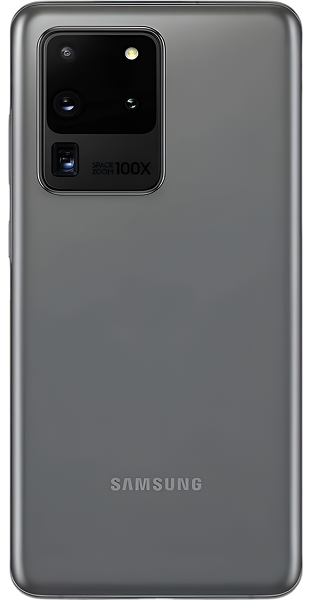
Samsung Galaxy S20 5G Repair Services
Get fast, reliable, and professional Samsung Galaxy S20 5G repair services at The Fix — your trusted destination for expert device care.
Common Repairs We Handle Daily


The Truth About Samsung Galaxy S20 5G Repair: Professional Guidance
Picture this: you're scrolling through your S20 5G, probably reading this article right now, when it hits you—this phone's been with you since 2020. Five years of photos, messages, late-night doom scrolling, and video calls. It's survived drops you'd rather not remember, been your GPS on countless road trips, and honestly? It still works pretty well. Except for that battery that dies by 3 PM. And maybe the charging port that's gotten a bit finicky. Oh, and the camera sometimes takes a second to focus.
Here's what nobody tells you about Samsung Galaxy S20 5G repair: your five-year-old flagship is absolutely worth fixing. We're talking about a device that was cutting-edge in 2020 and still holds its own in 2025. That Snapdragon 865 processor? Still capable. That 120Hz display? Still smooth. The camera system? Still takes great photos when it's working right. Professional Samsung Galaxy S20 5G repair can address those age-related issues and give you another solid year or two with a phone you already know and trust. In this guide, we'll walk through the most common problems we see with the S20 5G, explain why they happen, and show you exactly how to get your device back to performing like you remember.
The S20 5G Story
When Samsung dropped the Galaxy S20 5G in early 2020, it felt like the future arriving early. That 6.2-inch Dynamic AMOLED display with 120Hz refresh rate was buttery smooth, the triple camera system produced legitimately impressive photos, and 5G connectivity meant you were ready for the network revolution. The Snapdragon 865 processor handled everything you threw at it, and that sleek design made the S20 5G feel premium in ways that mid-range phones couldn't touch.
Fast forward five years, and here's the interesting thing—your S20 5G is still a capable device. Sure, it's not the latest and greatest anymore, but that processor handles modern apps just fine, the display still looks fantastic, and the camera produces results that beat plenty of newer budget phones. The S20 5G represents Samsung's last pre-pandemic flagship, and they built it to last. Which is exactly why so many people are choosing Samsung Galaxy S20 5G repair over upgrading to something new.
How Time Affects Your Tech
You know how a coffee maker brews strong, hot coffee when it's new, but after years of daily use, it takes longer to heat up and doesn't quite brew as hot as it used to? Your S20 5G experiences something similar—not because Samsung built it poorly, but because electronics age just like everything else.
Your battery has been through over 1,800 charge cycles at this point if you've charged daily for five years. Every single cycle causes tiny chemical changes inside the battery cells. The lithium ions move back and forth between electrodes thousands of times, and gradually, the battery's ability to hold charge diminishes. It's not dramatic—you lose maybe 2-3% capacity per year—but after five years, you're looking at 80-85% of original capacity at best. That's why your phone that used to last all day now needs a midday charge.
The charging port has experienced over 1,800 plug-in cycles too. Each time you connect a cable, there's microscopic wear on those internal pins. Lint, dust, and pocket debris get compressed into the port with every insertion. After five years, it's completely normal for charging ports to feel loose, make inconsistent connections, or require specific cable angles to work properly.
Your display has been on for thousands of hours over five years. OLED displays are organic—there are actual carbon-based compounds in those pixels. Over time, these compounds degrade slightly, particularly the blue subpixels which work harder. This can lead to slight color shifts, minor burn-in if you've had static elements on screen a lot, or reduced maximum brightness. It's barely noticeable day-to-day, but compare your screen to a brand new S20 5G and you'd see the difference.
The camera system relies on tiny motors that move lens elements for autofocus and optical image stabilization. After five years of constant vibration, temperature changes, and millions of focus operations, these motors can develop slight slack or wear. The camera app has also accumulated cached data, and the software that manages image processing has been through dozens of updates that weren't specifically optimized for the S20 5G's now-aging hardware.
Software complexity multiplies over time too. Your S20 5G launched with Android 10 and has received multiple major updates, countless security patches, and app updates that weren't designed with 2020 hardware in mind. System files accumulate, apps get more resource-intensive, and cached data builds up. It's like your phone's brain is trying to remember five years of information all at once.
None of this means your S20 5G is obsolete or dying. It just means that after five years of faithful service, some maintenance is due. That's exactly what professional Samsung Galaxy S20 5G repair addresses—bringing your device back to optimal performance by replacing worn components and optimizing what's still working great.
The Battery Mystery
What you're experiencing: Your S20 5G barely makes it to dinner anymore. You start the day at 100%, and by lunch you're at 40%. Forget about evening plans without a charger—you're perpetually hunting for outlets. The battery percentage seems to jump around too, dropping from 30% to 15% in minutes, or sometimes shutting down at 20% like it just gave up.
Why this happens: Five years is a long time in battery years. Your battery has been through roughly 1,800+ charge cycles, and lithium-ion chemistry simply degrades with each cycle. The battery physically can't hold as much charge as it used to. But here's what makes it worse—the S20 5G's battery management system was calibrated for a new battery in 2020. After years of degradation, the phone's estimate of remaining battery life gets increasingly inaccurate. That's why you get those sudden drops or unexpected shutdowns.
Temperature plays a role too. If you've left your phone in hot cars, charged it while gaming, or used it in extreme cold, you've accelerated battery degradation. Heat is battery enemy number one, and five years of heat exposure adds up.
What you can try:
- Check battery health in Device Care settings—if it's below 80%, replacement makes sense.
- Recalibrate: let the battery fully drain to shutdown, then charge to 100% without interruption.
- Identify battery hogs in settings and uninstall or restrict apps draining excessive power.
- Disable 5G if you're in areas with weak signal—searching for 5G kills batteries fast.
- Reduce screen refresh rate to 60Hz in settings for better battery life.
What the data shows from our repairs: Battery replacement is the single most common Samsung Galaxy S20 5G repair we perform. The good news? It's also one of the most impactful. People are shocked at the difference—we're talking "feels like a new phone" level of improvement. A fresh battery in your S20 5G can easily get you back to full-day battery life with moderate use. It's the repair with the best return on investment for five-year-old devices.
The Charging Conundrum
What you're dealing with: Your charging cable doesn't sit snugly in the port anymore. It wiggles around, falls out easily, or only charges at specific angles. Sometimes the phone doesn't recognize that it's plugged in at all. You might see the "moisture detected" warning even though the phone's completely dry. Wireless charging works fine, but wired charging is a frustrating game of cable positioning.
Why this happens: Five years of daily charging takes its toll. The USB-C port in your S20 5G has those tiny pins inside that make electrical contact with your cable. After 1,800+ insertions, those pins can bend slightly or wear down. But more often, the problem is compressed debris. Every time you plug in a cable, you push lint, dust, and pocket debris deeper into the port. After five years, there can be a solid layer of compacted material in there preventing proper contact.
The port's retention clips—the little tabs that hold the cable firmly—also weaken over time. They're designed for thousands of insertions, but eventually they lose their springiness, leading to that loose, wiggly feeling.
What you can try:
- Inspect your charging port with a flashlight—shine light directly into it and look for packed debris.
- Very carefully clean it out with a wooden toothpick—gently scrape along the bottom and sides.
- Use compressed air from a distance to blow out loosened debris (don't get too close).
- Try multiple cables and chargers to confirm it's the port and not your accessories.
- Test wireless charging—if that works, it confirms your battery can charge, isolating the problem to the port.
Did You Know? The USB-C port in your S20 5G isn't just for charging—it's also your data connection, audio output (if you use wired headphones), and the interface for accessories like external drives or game controllers. When that port fails, you lose more functionality than just charging. Professional port replacement restores all of these functions and only takes about an hour in most cases. Many people limp along with wireless charging only, not realizing how much easier life gets with a functioning port.
When Your Screen Acts Weird
What you're noticing: Your display doesn't look quite as vibrant as it used to. Maybe there's a slight green or pink tint that wasn't there before. The brightness doesn't seem to go as high as you remember. You might see image retention or burn-in from the keyboard or navigation buttons if you look carefully. Touch response occasionally feels laggy in certain areas, or you have to tap twice to register input.
Why this happens: OLED displays age organically—literally. Those pixels contain carbon-based compounds that emit light, and after five years of use, they've degraded slightly. Blue subpixels wear fastest, which can cause the slight color shifts people notice on older OLED screens. If you've kept your screen at high brightness constantly, or if you've had static elements like navigation buttons visible for thousands of hours, you might see burn-in.
The touch digitizer is separate from the display itself, and it can develop issues too. Micro-cracks from drops, moisture infiltration, or just age can cause dead spots or reduced sensitivity. Sometimes it's as simple as a screen protector that's lifted slightly and interfering with touch detection.
What you can try:
- Remove any screen protector temporarily to test if touch issues improve.
- Clean your screen thoroughly—oils and residue affect both touch and visual quality.
- Adjust color settings—you can manually compensate for slight tints in display settings.
- Test touch response in safe mode to rule out app interference.
- Enable "Show taps" in developer options to see exactly where touch is registering.
Camera Focus Acting Up
What's happening: Your camera takes forever to focus, or it hunts back and forth without ever getting sharp. Photos come out blurry even when you're holding steady. The issue might be worse in low light or at certain zoom levels. Sometimes the camera app just freezes or crashes when you try to take a photo.
Why this happens: The S20 5G's camera uses small motors to move lens elements for focusing and stabilization. After five years and millions of focus operations, these motors can develop slight wear or slack. The laser autofocus sensor on the back can get dirty or scratched, interfering with distance measurement. The camera app's cache has accumulated years of data that can cause glitches.
Sometimes it's simpler—the camera lens cover is scratched or dirty, which affects both focus and image quality. Or the camera module has shifted slightly from drops over the years, causing alignment issues.
What you can try:
- Clean your camera lenses thoroughly with a microfiber cloth—smudges kill focus performance.
- Clear the camera app cache and data: Settings > Apps > Camera > Storage > Clear Cache.
- Test in safe mode to see if third-party apps are interfering with camera function.
- Update your system software—Samsung occasionally releases camera improvements.
- Try tapping to focus on high-contrast edges—it gives the autofocus system clearer targets.
In our experience with hundreds of these: Camera issues on the S20 5G split about 50/50 between software and hardware problems. Software fixes—cache clearing, updates, resets—solve about half of cases. The other half need hardware attention, usually cleaning or replacing the camera module. The good news is that even hardware camera repairs are straightforward and relatively affordable compared to the cost of upgrading to a new device.
Software Slowdowns and Glitches
What you're experiencing: Apps take longer to open than they used to. There's occasional lag when switching between apps or typing. The phone sometimes freezes for a few seconds before responding. You get random app crashes that didn't happen before. The phone feels generally sluggish compared to how you remember it performing.
Why this happens: Your S20 5G has been through five years of software updates, app updates, and accumulated digital clutter. The system partition has Android 13 or 14 now (depending on your last update), but it was optimized for Android 10 hardware expectations. Apps have gotten more complex and resource-intensive. Background processes multiply as you install more apps over time.
Cached data builds up across hundreds of apps, bloating storage and slowing file access. The file system itself gets fragmented after years of installing, uninstalling, and updating apps. It's like having five years of stuff crammed into a closet—everything's harder to find and access.
What you can try:
- Clear system cache by wiping cache partition from recovery mode (Google instructions for your specific model).
- Uninstall apps you don't use—each one consumes background resources even when "closed."
- Clear individual app caches for apps you use heavily (Settings > Apps > [App Name] > Storage > Clear Cache).
- Disable or uninstall bloatware and carrier apps you never use.
- Free up storage space—keep at least 10-15% available for optimal performance.
- Consider a factory reset as a last resort (backup everything first!).
The Overheating Pattern
What's going on: Your S20 5G gets noticeably warm during normal use, and hot during anything intensive like gaming or video calls. It might slow down dramatically when hot, or apps might crash with heat warnings. Charging generates significant heat, especially with fast charging. The area around the camera gets particularly warm.
Why this happens: After five years, thermal paste inside your phone has dried out and become less effective at transferring heat from processors to heat spreaders. Dust and debris can accumulate inside, blocking airflow and trapping heat. The battery itself generates more heat as it ages and becomes less efficient.
But here's a bigger issue—software running on five-year-old hardware often isn't well optimized. Apps and system processes designed for newer, more efficient processors work the Snapdragon 865 harder, generating more heat. Background processes multiply over time, keeping the processor constantly busy even when you think the phone's idle.
What you can try:
- Close all apps and restart your phone—sometimes background processes go rogue.
- Check battery usage to identify apps generating excessive heat and restrict them.
- Avoid using your phone while fast charging—that combination generates serious heat.
- Remove your case temporarily to allow better heat dissipation.
- Keep your phone updated—thermal management improvements come in system updates.
After years of fixing these devices: Overheating on five-year-old S20 5G units usually stems from battery degradation combined with software bloat. The aging battery works harder and generates more heat, while accumulated apps and processes keep the processor busy. Professional Samsung Galaxy S20 5G repair often involves battery replacement plus system optimization—addressing both the hardware heat source and the software efficiency problems.
What Tools We Use for This Specific Device
Here's exactly what happens when you bring your S20 5G to our shop, and we'll pull back the curtain on the actual repair process. No vague promises—just the real technical work that goes into servicing your device.
Initial Diagnostic Phase
We start by connecting your S20 5G to specialized diagnostic equipment that Samsung repair techs use. This isn't the same as the battery health indicator in your settings—we're pulling detailed data on battery cycle count, actual capacity versus design capacity, charge rate consistency, and voltage stability. We're looking for specific failure patterns that indicate whether your battery just needs replacement or if there's a deeper charging circuit issue.
Next comes thermal imaging. We use an infrared camera while running stress tests to see heat distribution across your device. Hot spots tell us a lot—a hot area near the charging port indicates port issues, excessive heat near the battery suggests degradation, and concentrated heat at the processor area points to thermal paste failure or cooling system problems.
We test the charging port with multiple cables while watching connection quality on our test equipment. We're measuring if the port is making good electrical contact, if data lines are functioning (not just power), and whether the moisture sensor is working correctly or giving false positives.
Display testing involves running pixel test patterns to check for burn-in, dead pixels, and color uniformity. We test touch response across 100+ points on the screen using diagnostic software, mapping any dead zones or areas with reduced sensitivity. For the S20 5G specifically, we check if that 120Hz refresh rate is still working properly—sometimes aging displays drop frames or revert to 60Hz under the hood.
Camera diagnostics involve testing autofocus speed, image stabilization function, and taking test photos under controlled lighting. We inspect the camera modules with magnification to check for dust infiltration, lens scratches, or physical damage. We also test the laser autofocus sensor separately—it's a common failure point on five-year-old units.
The Actual Repair Work
For battery replacements on the S20 5G, we're dealing with a glued-in battery that requires careful heat application to soften adhesive without damaging surrounding components. We use precision heat mats set to specific temperatures for the S20 5G's construction. Once removed, we thoroughly clean old adhesive residue—leftover adhesive prevents the new battery from sitting flush, which can cause pressure points or poor heat transfer.
The new battery gets installed with proper adhesive strips in the exact pattern Samsung uses. We don't just slap it in—alignment matters for heat dissipation and to prevent pressure on the flexible display cable underneath. After installation, we run charging tests to verify proper communication between battery and phone, confirming normal charge rates and thermal behavior
Charging port replacement requires complete disassembly of the bottom section. The USB-C port on the S20 5G is part of a small flex cable assembly that also includes the microphone and antenna connections. We disconnect multiple ribbon cables, remove the motherboard shield, and carefully extract the old port assembly. Installation of the new port involves precise alignment—if it's off by even a millimeter, the cable won't fit properly in the chassis opening.
We test the new port extensively before reassembly—charging function, data transfer, audio output through wired headphones, and moisture sensor operation. We verify the port sits flush and the cable retention feels factory-correct.
Display work on the S20 5G is the most involved repair. The screen is glued to the frame with strong adhesive that requires controlled heat application. We work slowly around the perimeter, using precision tools to separate the display without cracking it or damaging the fingerprint sensor underneath. The flexible display cables are incredibly delicate—one wrong move and you've damaged something beyond the original problem.
New displays get installed with fresh adhesive gaskets that maintain the S20 5G's water resistance rating. We're not just slapping on a screen—we're restoring the device to factory ingress protection standards. After installation, we run touch calibration, test fingerprint sensor function, and verify the display's color calibration matches Samsung's specifications for this model.
Quality Verification Process
Before you see your phone again, we run it through comprehensive testing. We charge it fully and monitor charging behavior. We stress test the processor while monitoring thermals. We test every button, both cameras, all sensors, fingerprint reader, speakers, microphone, and wireless connectivity. For the S20 5G specifically, we verify 5G connectivity still works—older devices can develop antenna issues that repairs might have disturbed.
We also optimize software—clearing unnecessary cached data, uninstalling obvious bloatware if we have your permission, and verifying you're on the latest available software for this model. Many people don't realize Samsung stopped major updates for the S20 5G, but security patches still come through, and we make sure you're current.
Finally, we test your phone exactly as you'd use it. We open apps, switch between them, test camera focus and quality, browse the web, make a test call. We're not just checking boxes—we're making sure your S20 5G works the way you need it to work.
Keep Your S20 5G Healthy Longer
Daily care routine: Clean your charging port every few weeks with a wooden toothpick—gently scrape the bottom to remove packed debris. Wipe your screen and camera lenses daily with a microfiber cloth. Check your battery usage occasionally to catch rogue apps before they become problems.
Weekly maintenance: Restart your phone at least once a week to clear memory and refresh system processes. Review which apps have background activity permissions and restrict ones you don't need constantly syncing. Check your storage space—if you're above 90% full, delete old photos, videos, or unused apps.
Monthly deep care: Clear cache for your most-used apps—Camera, browser, social media apps, and any apps you notice lagging. Update all apps to their latest versions. Review your installed apps and uninstall anything you haven't used in months. Back up your photos and important data.
What helps most: Use a quality case that protects the corners and camera bump—those are impact zones in drops. Avoid extreme temperatures—don't leave your S20 5G in hot cars or use it in extreme cold. Charge with decent cables and adapters—cheap accessories can damage your port or stress your battery. Consider slower charging overnight instead of always using fast charging—it's gentler on five-year-old battery chemistry.
Your Five-Year-Old Flagship Still Has Life
The truth about Samsung Galaxy S20 5G repair is simple: your device is absolutely worth maintaining. We're talking about a phone that was $1,000 new and still outperforms many current mid-range devices. Battery replacement, port repair, or even screen work costs a fraction of what you'd pay for a new phone with equivalent performance.
After five years, some maintenance is expected—that's not a design flaw, it's just reality. The good news is that most common issues are totally fixable, and professional Samsung Galaxy S20 5G repair can restore your phone to performing like you remember. Whether you're dealing with battery drain, charging problems, camera issues, or just general sluggishness from five years of accumulated digital clutter, we've got solutions.
We're here to help—bring it by anytime for a free diagnostic. We'll check battery health, inspect your charging port, test camera function, and give you honest guidance about what your S20 5G needs. Your five-year-old flagship deserves expert care from people who understand these devices inside and out, and that's exactly what we deliver.


Trusted repair solution for mobile phones, tablets, gaming consoles, and computer systems. We provide fast, reliable, and affordable repair services to get your devices back in perfect working condition.
The Fix is an independent repair service provider and is not affiliated with, sponsored by, or endorsed by Apple Inc., Samsung Electronics, Google LLC, or any other device manufacturer. We use high-quality compatible replacement parts unless explicitly stated. All trademarks are property of their respective owners.


© Copyright The Fix Solutions All rights reserved 2026.
Design by Deepcoder