





Nexus 10 Repair Services
Get fast, reliable, and professional Nexus 10 repair services at The Fix — your trusted destination for expert device care.
Common Repairs We Handle Daily


Nexus 10 Repair: The Smart Alternative to Replacing Your Nexus 10
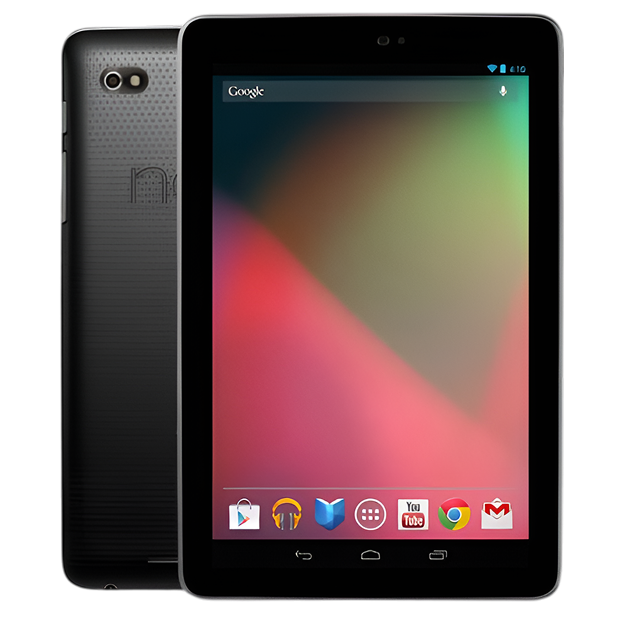
The Nexus 10 launched in late 2012 as Google's flagship tablet, built in partnership with Samsung. It packed impressive specs for its time—a stunning 10.1-inch display with 2560x1600 resolution (higher pixel density than the iPad's Retina display), dual-core processor, 2GB RAM, and front-facing stereo speakers. Running stock Android 4.2 Jelly Bean, it offered the pure Google experience without manufacturer bloatware. Storage options were 16GB or 32GB with no microSD expansion. The rubberized back made it easy to grip, and at 603 grams, it was reasonably light for a 10-inch tablet.
Twelve years later, these Nexus 10 tablets are still kicking around as dedicated streaming devices, kids' tablets, or kitchen recipe displays. But twelve-year-old Android tablets develop serious problems. Cracked screens, dead batteries, worn charging ports, and sluggish performance plague devices this old. If you're dealing with a broken Nexus 10 and wondering whether Nexus 10 repair makes sense for a twelve-year-old tablet that lost official software support years ago, let's analyze what's fixable and what your realistic options look like.
The Nexus 10: High-Resolution Pioneer
Google and Samsung designed the Nexus 10 to compete directly with Apple's iPad. The 2560x1600 display was the standout feature—300 pixels per inch meant incredibly sharp text and images. Even today, that resolution impresses for reading and video content.
The Samsung Exynos 5 Dual processor (dual-core Cortex-A15 at 1.7GHz) was powerful in 2012 but struggles with modern apps designed for octa-core processors with far more capability. The Mali-T604 GPU handled graphics adequately for 2012 games but can't run current titles smoothly.
The tablet ran stock Android—no Samsung TouchWiz or other manufacturer skins. This meant clean software, quick updates (while Google supported it), and the Android experience Google intended. Software support officially ended around Android 5.1 Lollipop, leaving the device vulnerable and incompatible with many current apps.
Front-facing stereo speakers delivered surprisingly good audio for a tablet. The 5MP rear camera and 1.9MP front camera were adequate for video calls and casual photos but primitive by modern standards. The rubberized back with dimpled texture made the Nexus 10 easy to grip and less likely to slip from hands.
The 9000mAh battery provided excellent runtime when new—roughly 9 hours of mixed use. Twelve years later, those batteries are severely degraded if they work at all. Many Nexus 10 units won't hold a charge anymore or only work when plugged in constantly.
What Causes Tech to Break Down
Let's talk about why your twelve-year-old Nexus 10 develops issues even with careful use. Understanding this helps you make informed decisions about Nexus 10 repair value for such an old device.
Your Nexus 10's battery is like a car engine losing efficiency with mileage. A new engine runs smoothly and efficiently. After 200,000 miles, it burns more oil, loses compression, and doesn't deliver the power it once did. Your tablet's battery has gone through probably 2,000+ charge cycles over twelve years. The lithium-polymer cells have degraded severely—internal resistance is dramatically higher, capacity has dropped to maybe 20-40% of design spec, and the battery management system struggles to report accurate remaining charge.
Display technology ages from cumulative use. The LED backlight has logged thousands of operational hours, causing noticeable dimming and potentially uneven illumination. The LCD panel itself can develop stuck or dead pixels from age. The digitizer coating that detects touch has worn from millions of taps and swipes over twelve years.
The micro-USB charging port has experienced hundreds or thousands of insertion cycles. The internal contacts that maintain electrical connection are worn, bent, or corroded. The port housing has likely loosened from the circuit board through repeated stress. Debris has accumulated over years—lint, dust, particles from wherever the tablet's been stored.
Software obsolescence affects twelve-year-old Android devices severely. Android 5.1 Lollipop (the last official version for Nexus 10) is ancient by current standards. Most modern apps won't install on such old Android versions. Those that do install often crash or perform poorly because they're designed for much newer hardware. Websites load slowly or incorrectly because they expect modern browser capabilities.
Security vulnerabilities are a serious concern. Without updates for seven-plus years, the Nexus 10 has known security holes that'll never be patched. Using it for sensitive tasks like banking or shopping is genuinely risky. This isn't something Nexus 10 repair can fix—it's the inevitable obsolescence of unsupported software.
Problem #1: Battery Completely Dead
The Issue
What the data shows from our repairs: battery failure is universal on twelve-year-old Nexus 10 tablets. We haven't seen one with functional battery capacity in years. Most either won't hold any charge, work only when plugged in, or shut down randomly at non-zero percentages.
You're experiencing one or more of these symptoms: the tablet only works when plugged into power, it shuts down immediately when unplugged, it shows charging but percentage never increases, or it won't turn on at all even after hours on the charger.
The 9000mAh lithium-polymer battery has degraded beyond usability. After twelve years and thousands of charge cycles, the cells can't hold adequate charge or deliver necessary current. Sometimes the battery's so degraded it prevents the tablet from booting even when plugged in.
The Solution
Battery replacement is technically possible. The Nexus 10 uses a replaceable battery that's adhered inside the case but not impossible to access. A skilled technician can open the device, disconnect the old battery, and install a fresh one.
However—and this is critical—finding quality replacement batteries for twelve-year-old tablets is challenging. Manufacturers stopped producing Nexus 10 batteries years ago. Available replacements are often old stock that's been sitting in warehouses degrading, or they're questionable quality third-party batteries that might not deliver advertised capacity.
The repair process involves removing the back cover (which is glued on), disconnecting internal components, releasing the battery from adhesive, installing the new battery, and reassembling everything. It's doable but time-consuming, and you're gambling on battery quality.
Cost-benefit analysis rarely favors this repair on such an old device. You're investing significant money for uncertain battery quality on a tablet with no software support, aged components beyond just the battery, and severely limited capability compared to even budget current tablets.
Problem #2: Cracked or Unresponsive Screen
The Issue
Screen damage on Nexus 10 tablets takes several forms. Physical cracks from drops or pressure create spiderweb patterns across the high-resolution display. Dead zones where touch doesn't register indicate digitizer failure. Complete touch failure means the screen displays content but doesn't respond to any input.
The Nexus 10's display assembly includes the glass, digitizer, and LCD panel. Depending on damage type, you might need just the glass and digitizer or the entire assembly including LCD. Determining which requires professional diagnosis.
After twelve years, we also see screen issues from age rather than damage. The display connector can work loose, causing flickering or complete display failure. The backlight LEDs dim unevenly or fail completely. The LCD develops stuck pixels or dead zones.
The Solution
Screen replacement for Nexus 10 is complex and expensive relative to the device's value. The display assembly is large (10.1 inches), uses specialized components no longer in production, and requires careful disassembly to access.
The repair process involves heating adhesive, carefully prying off the back cover without cracking it, disconnecting the battery, removing internal components blocking display access, disconnecting the damaged screen, installing the replacement, and reassembling everything. It's time-intensive and requires precision.
Economic reality: screen replacement costs approach or exceed what you could pay for a significantly newer, better-supported Android tablet. Unless your Nexus 10 has significant sentimental value, screen repair rarely makes financial sense.
Problem #3: Won't Charge or Charges Intermittently
The Issue
Charging problems manifest in frustrating ways. The tablet only charges when you hold the cable at specific angles. Charging works sometimes but not others with no discernible pattern. The Nexus 10 doesn't recognize when you've plugged in power—no charging indicator appears. Charging is incredibly slow, taking 12+ hours to reach full charge.
The micro-USB port is almost always the culprit. Twelve years of insertion cycles have worn the internal contacts. The port housing has loosened from the circuit board. Debris has packed into the port cavity over years, preventing proper cable seating.
Sometimes the issue isn't the port itself but the charging cable or power adapter. Cheap cables wear out quickly, and twelve-year-old cables might be degraded even if they're not visibly damaged. Power adapters fail too, delivering insufficient current even if they're technically working.
The Solution
Start with thorough port cleaning. Professional cleaning removes compacted lint, dust, and debris that prevents proper connection. We use specialized tools and techniques that remove buildup without damaging the delicate internal contacts. This simple service solves many "broken" charging ports.
If cleaning doesn't work, test with multiple known-good cables and power adapters. We keep verified-functional micro-USB cables and chargers specifically for diagnostic purposes. This isolates whether the problem is your accessories or the tablet itself.
Port replacement requires micro-soldering the component to the circuit board. The micro-USB port is surface-mounted with multiple tiny solder joints. Replacement means desoldering the old port, cleaning solder pads, and precisely soldering a new port. It's delicate work requiring specialized equipment.
On a twelve-year-old device, port replacement costs rarely justify the investment. The tablet has aged components beyond just the port, no software support, and limited capability. Unless you're strongly attached to this specific Nexus 10, replacement makes more financial sense than expensive port repair.
Problem #4: Performance Painfully Slow
The Issue
Your Nexus 10 that once performed smoothly now crawls. Apps take 15-30 seconds to launch. Web pages load incredibly slowly or fail to load at all. The interface lags noticeably when switching between apps or screens. Everything feels like it's moving through molasses.
This isn't single-cause problem—it's the accumulated weight of twelve years of software evolution running on 2012 hardware. The dual-core processor can't compete with current octa-core chips. The 2GB RAM is severely limited for modern multitasking. The storage is likely nearly full and possibly degraded.
Many apps no longer support Android 5.1 and won't install. Those that do install are often newer versions designed for far more powerful devices. They run poorly or crash frequently. Websites are built assuming modern JavaScript engines and rendering capabilities the Nexus 10's ancient browser can't provide.
The Solution
Software optimization can help marginally. Clear cache, uninstall unused apps, disable unnecessary background processes, reset the device to factory settings for a fresh start. These steps free resources and eliminate software cruft accumulated over years.
But there's no fix for fundamental hardware limitations. The Exynos 5 Dual processor is ten generations behind current chips. No software optimization makes it faster than its capabilities allow. The 2GB RAM is fixed—you can't add more. The storage speed is limited by the technology available in 2012.
Custom ROMs might extend functionality slightly. Enthusiast communities have developed newer Android versions for Nexus 10, though support is limited and installation requires technical expertise. Even with custom ROMs, you're still fighting hardware limitations.
Realistic expectation: the Nexus 10 will never perform like even a budget current tablet. You can optimize for its capabilities, but you're working within severe constraints. Accept that it's a twelve-year-old device with twelve-year-old performance.
Problem #5: Software Hopelessly Outdated
The Issue
Your Nexus 10 is stuck on Android 5.1 Lollipop from 2014 or 2015. Google stopped official support years ago. Security patches ended long ago. Apps you want to use won't install because they require Android 7, 8, 9, or newer. The Google Play Store itself barely works.
This creates multiple problems. Security vulnerabilities leave you exposed to malware and exploits. App incompatibility means you can't install current versions of banking apps, streaming services, productivity tools, or games. Websites don't display correctly or function properly.
You can't simply "update" to newer Android like you would on a supported device. The update path has ended. Google isn't releasing new versions for this hardware. Manufacturer support never existed—this was a Google device and Google abandoned it.
The Solution
Custom ROMs offer the only path to newer Android versions. Enthusiast developers have created unofficial Android builds for Nexus 10—LineageOS being the most well-known. These provide newer Android versions (potentially up to Android 10 or 11) without official support.
Installing custom ROMs requires unlocking the bootloader, installing custom recovery, and flashing the ROM. It's technically involved, voids any remaining support (though there isn't any), and carries risks of bricking the device if done incorrectly. The process isn't for everyone.
Even with custom ROMs, you're running newer software on twelve-year-old hardware. Performance won't match devices designed for that Android version. Some features won't work properly because the hardware lacks necessary capabilities. Apps might install but run poorly.
Alternative solution: accept limitations and use the Nexus 10 within its capabilities. Use it for basic tasks it handles adequately—reading, light browsing (avoiding complex modern websites), streaming video, displaying recipes, playing older games. Don't expect it to do what current devices do.
Behind-the-Scenes at The Fix
When you bring a Nexus 10 to The Fix, here's what happens from our technicians' perspective:
The Tools We Use for Twelve-Year-Old Devices
We maintain diagnostic equipment that works with older Android devices. Many modern tools don't support Android 5.1 anymore, so we keep legacy equipment specifically for older tablets like the Nexus 10.
Opening the Nexus 10 requires heat guns to soften the adhesive holding the back cover. We use precision temperature control because too much heat damages components while too little leaves adhesive stuck firmly. Specialized plastic prying tools separate the cover without cracking it or damaging the fragile clips.
Battery testing on such old devices requires different approaches than newer tablets. Standard battery diagnostics often fail on twelve-year-old batteries with severe degradation. We use multimeters and load testing to verify actual capacity and current delivery.
Charging port diagnosis uses magnification to inspect the tiny micro-USB contacts for wear, damage, or corrosion. We test with known-good cables and power supplies to isolate the issue. Micro-soldering equipment is ready if port replacement is needed, though we're honest about whether that makes economic sense.
Why We Approach Nexus 10 Repairs Carefully
These tablets are twelve years old. Parts availability is limited—most components are salvaged from other broken units or questionable aftermarket alternatives. We can't promise quality matching what the device had new.
Internal components are fragile after twelve years. Ribbon cables become brittle. Connectors crack easily. Adhesive that once held firmly has degraded and crumbles. Opening the device risks breaking things that are currently working.
We photograph everything during disassembly. Screw locations, cable routing, component placement—everything gets documented. The Nexus 10's internal layout isn't something technicians work on regularly anymore, so detailed documentation prevents reassembly errors.
We test extensively after any repair work. Power-on testing, charging verification, touch response across the entire screen, audio output, button function, camera operation. We verify the repair worked and didn't cause collateral damage.
How We Protect Your Data
Your data stays on the device during most repairs. Battery replacement, charging port work, and screen repairs don't require accessing your storage. We never need your PIN or password for these repairs.
We disconnect the battery immediately after opening the case to prevent electrical issues while working on other components. This protects both your data and the components we're repairing. Power surges during repair can corrupt storage or damage the logic board.
If we discover logic board issues during diagnosis, that's when data recovery becomes relevant. But that's a different conversation with different considerations. For standard Nexus 10 repair like batteries and charging ports, your apps, photos, and files remain completely safe.
The Economic Reality
Here's the honest assessment: the Nexus 10 is twelve years old, running obsolete software with no security updates, powered by severely outdated hardware, and has multiple components showing age-related failure. Parts availability is limited and questionable. Replacement tablets with vastly better capability, current software support, and years of remaining useful life cost a few hundred dollars.
Investing significant repair money into such an old device rarely makes financial sense unless it has serious sentimental value or fills a specific niche nothing else can. Even then, understand that repair doesn't address software obsolescence or fundamental hardware limitations—it just fixes the specific broken component.
For most people, the Nexus 10 has served its purpose. It was a great tablet in 2012-2015. Now it's a twelve-year-old device at the end of its practical life. Using it as-is for the limited tasks it still handles or replacing it with something current usually makes more sense than expensive repairs.
When Repair Makes Sense
There are scenarios where Nexus 10 repair might be justified:
Sentimental value: If this specific tablet has personal significance—maybe it was a gift from someone special, or it holds memories you can't replace—repair investment for emotional reasons is valid even if it's not financially optimal.
Dedicated use case: If your Nexus 10 fills a specific niche perfectly—maybe it's the exact size for a custom mount in your kitchen, or it runs a specific old app you can't find for newer devices—targeted repair to keep it functional might make sense.
Learning project: If you want to learn tablet repair, the Nexus 10 is low-risk practice. Parts are cheap (if available), and if you break it further, you're not out much money. Just understand you're learning rather than economically repairing.
Already have parts: If you happen to have a working replacement screen, battery, or charging port from another broken Nexus 10, installing those parts yourself could make sense. No parts cost, just your time.
Your Smartest Move
Having issues with your Nexus 10? The Fix specializes in tablet repairs. Stop by our shop—we'll diagnose the problem for free, explain what's happening in plain English, and get your device working right again.
We'll be completely honest about repair value on your twelve-year-old tablet. If fixing it makes sense, we'll do quality work at fair prices. If it doesn't, we'll tell you straight and explain why. You deserve technicians who respect both your device and your budget—that's what we deliver at The Fix every single time.


Trusted repair solution for mobile phones, tablets, gaming consoles, and computer systems. We provide fast, reliable, and affordable repair services to get your devices back in perfect working condition.
The Fix is an independent repair service provider and is not affiliated with, sponsored by, or endorsed by Apple Inc., Samsung Electronics, Google LLC, or any other device manufacturer. We use high-quality compatible replacement parts unless explicitly stated. All trademarks are property of their respective owners.


© Copyright The Fix Solutions All rights reserved 2026.
Design by Deepcoder