





Google Pixel 9 Pro XL Repair Services
Get fast, reliable, and professional Google Pixel 9 Pro XL repair services at The Fix — your trusted destination for expert device care.
Common Repairs We Handle Daily


Google Pixel 9 Pro XL Issues Explained: Expert Insights You Need
According to repair industry data, Pixel Pro XL owners most commonly report battery optimization concerns, display edge sensitivity issues, and thermal management questions—not because these are flawed devices, but because users who invest in the largest, most powerful Pixel expect perfection. If your Pixel 9 Pro XL isn't performing exactly as you expected, you're probably wondering whether you have a legitimate defect or if this is normal flagship behavior. Let's analyze what's actually happening.
In this guide, we'll provide expert insights into what really happens with the Pixel 9 Pro XL, which issues indicate hardware problems versus software or usage patterns, and when professional Google Pixel 9 Pro XL repair makes sense. You're about to get the technical breakdown you need.
Why People Love (and Hate) the Pixel 9 Pro XL
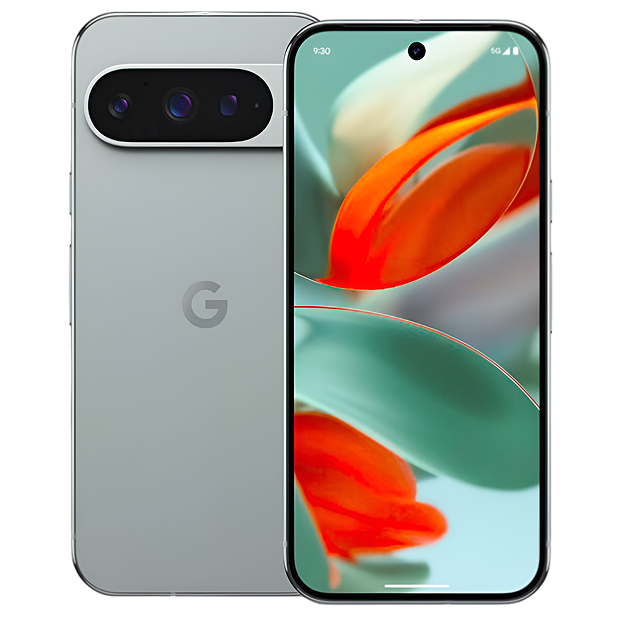
Google released the Pixel 9 Pro XL in 2024 as their ultimate flagship—the biggest, most feature-packed Pixel ever made. You got the Tensor G4 chip, massive 6.8-inch Super Actua display with LTPO technology and 3000 nits peak brightness, triple camera system with advanced telephoto, 5,060mAh battery, and Google's complete AI feature set. This is Google's answer to iPhone 16 Pro Max and Galaxy S24 Ultra—no compromises, maximum capability.
What's interesting about the Pro XL from a repair perspective is the sheer scale. That 6.8-inch display is enormous, which means more potential uniformity challenges across a larger surface area. The device generates substantial heat from the Tensor G4 during intensive tasks, but the larger body actually helps dissipate heat better than smaller Pixels. The battery capacity matches the standard Pro despite the larger screen, which means battery life expectations need calibration based on that bigger, brighter display consuming more power.
The Inevitable Wear and Tear
Look, let's be completely honest about flagship devices—spending premium money doesn't buy you immunity from physics. Your Pixel 9 Pro XL contains sophisticated components operating at the bleeding edge of current technology, and cutting-edge tech often has narrower margins and more potential failure modes than mature, conservative designs.
Think about high-performance sports cars versus economy sedans. That Ferrari engine produces incredible power from relatively small displacement through precision engineering, exotic materials, and tight tolerances. But it also requires more frequent maintenance, operates within narrower acceptable ranges, and has more potential failure points than the Honda Civic's reliable but less impressive engine. Higher performance inherently means more complexity and sensitivity.
Your Pixel 9 Pro XL operates similarly. That Tensor G4 chip packs billions of transistors into a tiny die, running complex AI algorithms and pushing thermal limits. The Super Actua display uses advanced LTPO OLED technology with variable refresh from 1Hz to 120Hz—more sophisticated than simpler fixed-refresh displays, but also more complex with more potential failure modes. The camera system coordinates three high-resolution sensors with advanced computational photography—amazing capability, but many interdependent components.
That 5,060mAh battery undergoes the same lithium-ion chemistry degradation as every other battery, but the large screen's power consumption means you're cycling through charge more frequently than smaller devices. More charge cycles equals faster capacity degradation—not a defect, just math. After 500 full cycles (maybe 12-18 months of heavy use on a power-hungry device), you're looking at 85-90% capacity remaining. On a device this large with this screen, that reduced capacity becomes noticeable in daily use.
The LTPO OLED display technology is cutting-edge, offering variable refresh that saves power. But LTPO adds complexity to the display stack—more layers, more control circuitry, more potential points where manufacturing variance or degradation can cause issues. The organic compounds that emit light in OLED still degrade with use, and a 6.8-inch display has more surface area where subtle uniformity issues might appear.
The USB-C port handles not just charging but also data transfer, DisplayPort video output (for external displays), and power delivery negotiation. More functionality means more complex pin assignments and more ways connections can fail. Those 24 pins inside the USB-C connector must reliably handle multiple protocols simultaneously.
Understanding that flagship complexity comes with trade-offs helps calibrate expectations. Your Pixel 9 Pro XL is extraordinarily capable, but that capability comes from sophisticated engineering with inherent complexity. It's not fragile, but it's also not indestructible or immune to the component aging that affects all electronics.
Display Behavior on Large LTPO OLED Panels
What you're experiencing: You might notice very slight brightness variance across the large 6.8-inch screen, particularly at low brightness levels. Or a subtle green/pink tint that appears at specific brightness levels. Or you've spotted the faintest ghost image of UI elements after heavy use. Maybe the display's variable refresh feels slightly inconsistent in certain apps.
Why this happens: Creating uniform large OLED panels is extraordinarily difficult. The Pixel 9 Pro XL's Super Actua display measures 6.8 inches diagonally—that's substantial surface area where microscopic manufacturing variances can manifest as perceivable uniformity differences. Premium displays like this have much tighter tolerances than budget OLEDs, but perfect uniformity across this much area is essentially impossible at mass production scale.
LTPO (Low-Temperature Polycrystalline Oxide) technology adds another complexity layer. The backplane that controls individual pixels uses different materials than standard OLED to enable variable refresh rates. This enables better power efficiency (the display can drop to 1Hz for static content, saving battery), but LTPO panels can exhibit slightly different characteristics than non-LTPO OLEDs. The green tint some users notice at very low brightness relates to how LTPO backplanes control pixels at minimal current.
Edge brightness variance is common on large OLEDs because the panel's edge seal affects nearby pixels differently than center pixels. The organic materials near edges experience different electrical characteristics. Again, premium panels minimize this through sophisticated manufacturing, but can't eliminate it entirely.
Burn-in is OLED's fundamental limitation. Static UI elements—status bar, keyboard, navigation gestures—cause localized organic compound degradation. Google implements aggressive burn-in mitigation (pixel shifting, automatic brightness reduction on static elements, strategic dimming), but can't prevent it completely. On a device used heavily for navigation, messaging, or activities with static UI, some burn-in after 12-18 months is characteristic, not defective.
The variable refresh LTPO technology sometimes causes subtle judder or tearing in certain apps that don't properly support variable refresh rates. This isn't a display defect—it's app compatibility issues with advanced display features.
What we've seen in our repair shop: Most display "issues" reported on Pixel 9 Pro XL are actually normal OLED characteristics that users notice on this large, bright display. Minor green tint at 1-3% brightness? Normal LTPO behavior every unit exhibits. Slight edge dimming measurable with instruments but barely noticeable in use? Normal OLED manufacturing tolerance. Very faint keyboard ghost after a year of heavy messaging? Normal burn-in for OLED technology.
Actual display defects look different—dead pixels, bright or dark lines across the screen, large areas of obvious discoloration, severe burn-in after minimal use, touch zones completely unresponsive, or display failures where sections don't light up at all.
When repair makes sense: Severe display defects warrant screen replacement. Minor OLED characteristics that all units exhibit don't. We use calibrated testing equipment to distinguish between the two. Google Pixel 9 Pro XL repair should address actual hardware failures, not normal panel characteristics you'd also see on a replacement screen.
Battery Performance Reality Check for Large Displays
What you're experiencing: Battery life doesn't meet the advertised claims. Or you're seeing inconsistent battery drain—some days it's fine, other days it drains rapidly. Or the phone gets noticeably warm during charging or intensive use. Or you're not making it through a full day despite the large battery.
Why this happens: Here's something Google doesn't emphasize in marketing—that 6.8-inch Super Actua display consumes substantially more power than smaller screens. The display can hit 3000 nits peak brightness, and even at moderate brightness levels, lighting up this much OLED surface area requires significant current. Battery life claims assume specific usage patterns (mixed tasks, moderate brightness, substantial idle time) that rarely match heavy user behavior.
The Tensor G4 chip prioritizes AI processing capability over pure power efficiency. Compared to Snapdragon 8 Gen 3 or Apple's A18, the Tensor G4 consumes more power during intensive tasks. This is a deliberate design trade-off—Google chose AI performance over efficiency. On a large device with a power-hungry display, this becomes more noticeable.
Actual battery defects are uncommon but do occur. Symptoms include: battery draining from full to empty in 2-3 hours of light use (not gaming or video), the phone becoming extremely hot during normal tasks, charging slowing dramatically without obvious cause, or battery percentage jumping erratically (80% to 40% suddenly with no usage).
Battery capacity degrades predictably. After 200 charge cycles (6-8 months of daily charging), capacity typically drops to 95-97%. After 500 cycles (15-20 months), expect 85-90% capacity. On a device with this large display consuming substantial power, that reduced capacity translates to noticeably shorter runtime. This is normal aging, not a defect.
A pattern we've noticed over the years: Pro XL owners often expect battery life proportional to battery capacity, but don't account for the large display's power consumption. The 5,060mAh battery is identical to the smaller Pixel 9 Pro, but the Pro XL's display is substantially larger. Battery life per mAh is actually lower on the XL because of that display, which is normal physics, not a battery defect.
When repair makes sense: Actual battery defects (rapid degradation, swelling, charging failures, excessive heat) warrant replacement. Normal battery aging after 18-24 months of heavy use also justifies replacement if runtime no longer meets your needs. Failing to meet advertised battery life during intensive use isn't necessarily a hardware issue—it's often realistic usage exceeding marketing claims.
Thermal Management on High-Performance Devices
What you're experiencing: The Pixel 9 Pro XL gets noticeably warm during intensive tasks—gaming, video recording, camera use, or even just using demanding apps. Sometimes performance seems to slow down when the phone is warm. Or charging slows significantly when the device is warm.
Why this happens: The Tensor G4 chip generates substantial heat during intensive processing, especially AI workloads. The large body of the Pro XL actually helps dissipate heat better than smaller Pixels because there's more surface area for heat transfer. However, when you're pushing the chip hard (4K video, intensive gaming, heavy camera use, multiple AI tasks), heat generation exceeds dissipation capacity and the device warms noticeably.
This isn't a defect—it's thermodynamics. High-performance processors generate heat. Google implements thermal management to prevent damage—when internal temperatures exceed thresholds, the system throttles CPU/GPU frequencies, reduces display brightness, limits charging speed, or even disables certain features temporarily. This protective behavior prevents hardware damage but manifests as performance reduction or feature limitations.
The large OLED display also generates heat. OLED panels convert electrical energy to light, and the conversion isn't 100% efficient. Lost energy becomes heat. At high brightness levels across 6.8 inches, that heat is measurable. Combine display heat with processor heat, and the device can get quite warm during intensive use.
Charging generates heat from battery chemistry and charging circuit inefficiency. Fast charging generates more heat than slow charging. If you use the phone during fast charging, you're combining heat from processor, display, and charging simultaneously. The thermal management system responds by slowing charging to prevent temperature runaway.
Real-world repair results show: Most thermal complaints on Pixel 9 Pro XL are actually normal device behavior during intensive tasks, not hardware defects. The phone is working as designed—generating heat from intensive processing and managing that heat to prevent damage. Actual thermal system failures (inadequate heat dissipation from faulty thermal interface materials, malfunctioning temperature sensors causing inappropriate throttling) are rare.
When repair makes sense: If your Pixel 9 Pro XL gets excessively hot during light tasks (reading emails, light browsing), that might indicate a hardware issue. If thermal throttling is so aggressive that the device is unusable for normal tasks, investigation is warranted. But warmth during intensive use and thermal management behavior during that use are normal, not defective.
Camera System Expectations vs. Reality
What you're experiencing: Photos sometimes don't match your expectations from a flagship camera. Autofocus occasionally hunts before locking. Video recording stops after extended 4K recording. Zoom quality varies depending on lighting. Or computational photography produces results you don't prefer.
Why this happens: The Pixel 9 Pro XL's triple camera system (50MP main, 48MP ultrawide, 48MP telephoto with 5x optical zoom) represents Google's most advanced mobile imaging hardware. But Google's approach is heavily computational—the hardware captures data, then AI processing creates final images. This "Pixel look" involves aggressive processing that some users love and others find artificial.
Autofocus uses Voice Coil Motors (VCMs) that move lens elements electromagnically. These are tiny motors that occasionally struggle in challenging conditions—low light, low contrast scenes, very close subjects. This isn't necessarily hardware failure—it's the physical limitation of autofocus systems in difficult scenarios.
Video recording thermal limitations are real. Extended 4K video recording generates enormous heat from sensor readout, video encoding, and display. After several minutes of 4K recording, thermal management may stop recording to prevent damage. This is intentional protective behavior, not a defect. The Pro XL's larger body helps thermal dissipation compared to smaller Pixels, but physics still limits extended 4K recording.
Zoom quality varies because the system uses different combinations of cameras and digital processing depending on zoom level. 1x uses the main sensor. 2-3x uses main sensor with crop and upscaling. 5x uses dedicated telephoto. Between focal lengths, Google blends data from multiple sensors with computational processing. Quality variation across zoom range is characteristic of this approach.
The reality from our repair experience: Most camera complaints on Pixel devices are actually software/processing issues or user preference mismatches, not hardware failures. Google's computational photography is polarizing—some love it, others prefer more natural processing. Actual hardware failures (autofocus motor failure, sensor defects, OIS malfunction) have specific symptoms: consistent focus failure, dead pixels in images, severe image stabilization problems regardless of conditions.
When repair makes sense: Actual hardware failures warrant camera module replacement. Processing characteristics, thermal limitations during extended video, or simply preferring different photo processing styles don't indicate hardware problems requiring Google Pixel 9 Pro XL repair.
What to Expect When You Bring Your Pro XL In
Here's exactly what happens when you bring a flagship device like the Pixel 9 Pro XL to The Fix.
Comprehensive diagnostic testing comes first, using professional-grade equipment. Battery health gets precisely measured—capacity, voltage curves, internal resistance, charge cycles. We compare measurements against age-appropriate degradation patterns. Display gets tested with calibrated instruments—uniformity mapping, color accuracy, brightness levels, touch response mapping. Camera system gets systematically validated—all three modules tested for focus accuracy, stabilization, sensor quality, feature functionality.
Then we have a detailed discussion about findings, which is crucial for flagship devices where users sometimes conflate normal characteristics with defects. If your display shows minor LTPO-related green tint at ultra-low brightness, we'll explain this is characteristic of LTPO technology, not a defect. If your battery health is at 91% after 10 months of heavy use, we'll contextualize that as normal aging for a device with this screen size and usage pattern.
For actual hardware issues, we discuss repair options transparently. Maybe your charging port has debris affecting fast charging negotiation—cleaning solves it. Maybe battery health has degraded unusually rapidly—replacement makes sense. Maybe your telephoto camera's autofocus has failed—module replacement is necessary. Maybe your display has actual defects beyond normal OLED panel variation—screen replacement is appropriate.
Pixel 9 Pro XL repair requires specific expertise. The device uses sophisticated water-resistant sealing, precise internal cable routing, and specific assembly procedures to maintain build quality. Our technicians understand these requirements and use appropriate tools. We're not just fixing problems—we're maintaining flagship engineering standards.
After repairs, extensive validation ensures everything works correctly. Battery repairs get full charge/discharge testing at various power levels. Display repairs get calibrated uniformity and touch testing. Camera repairs get validated across all modules and shooting modes. We test under various conditions—not just basic functionality, but edge cases that might reveal issues.
Most Google Pixel 9 Pro XL repair jobs complete same-day for common repairs. Battery replacement, charging port service, screen replacement typically finish the same day. Camera module replacement might need overnight for comprehensive testing. We don't rush flagship repairs—proper quality work takes appropriate time.
Protect Your Pixel 9 Pro XL
Flagship device care:
- High-quality USB-C PD charger (30W+) and certified cables are essential for proper fast charging
- Premium tempered glass screen protector and case worthwhile on a device this expensive
- Keep USB-C port clean—monthly inspection with flashlight and gentle debris removal
- Manage thermal loads—remove case during extended intensive tasks for better heat dissipation
Battery longevity strategies:
- Use Adaptive Charging overnight—it learns your wake time and charges to 80% until shortly before
- Avoid letting battery drop below 20% regularly—shallow discharge cycles extend longevity
- Don't use phone heavily during fast charging—combined heat accelerates degradation
- Lower display brightness and use dark mode to reduce power consumption and extend battery life
Display care:
- Use dark mode as default to reduce OLED burn-in on static UI elements
- Enable burn-in mitigation features Google provides
- Vary your usage patterns when possible—don't spend hours only in one app with static UI
- Clean screen gently with microfiber cloth only—no harsh cleaners on the OLED coating
Long-term value:
- Keep Android updated—Google continuously optimizes Pixel 9 Pro XL performance and efficiency
- Monitor battery usage statistics to identify power-hungry apps and address them
- Restart weekly to clear memory and system process issues
- Don't leave device in extreme temperatures—heat is the enemy of batteries and OLEDs
Google Pixel 9 Pro XL Issues Explained: Expert Insights You Need
Your Pixel 9 Pro XL represents Google's ultimate flagship—maximum screen size, top-tier hardware, complete feature set. Most issues users report are either normal device characteristics (OLED panel variance, thermal management during intensive use, battery life with large display), software/configuration issues (processing preferences, settings optimization), or normal component aging (battery degradation after heavy use).
Actual hardware defects requiring repair are less common on flagship devices but do occur. Bring your Pixel 9 Pro XL to The Fix for expert diagnostic testing with proper equipment. We'll distinguish between normal flagship behavior, software issues, and genuine hardware problems requiring repair. No upselling, no unnecessary services—just honest expertise.
Professional Google Pixel 9 Pro XL repair addresses legitimate hardware failures—degraded batteries, damaged displays, camera malfunctions, charging system issues. Your premium device deserves expert service with quality components, proper procedures, and technicians who understand flagship device engineering. We maintain devices to factory standards with appropriate care for premium hardware.


Trusted repair solution for mobile phones, tablets, gaming consoles, and computer systems. We provide fast, reliable, and affordable repair services to get your devices back in perfect working condition.
The Fix is an independent repair service provider and is not affiliated with, sponsored by, or endorsed by Apple Inc., Samsung Electronics, Google LLC, or any other device manufacturer. We use high-quality compatible replacement parts unless explicitly stated. All trademarks are property of their respective owners.


© Copyright The Fix Solutions All rights reserved 2026.
Design by Deepcoder