





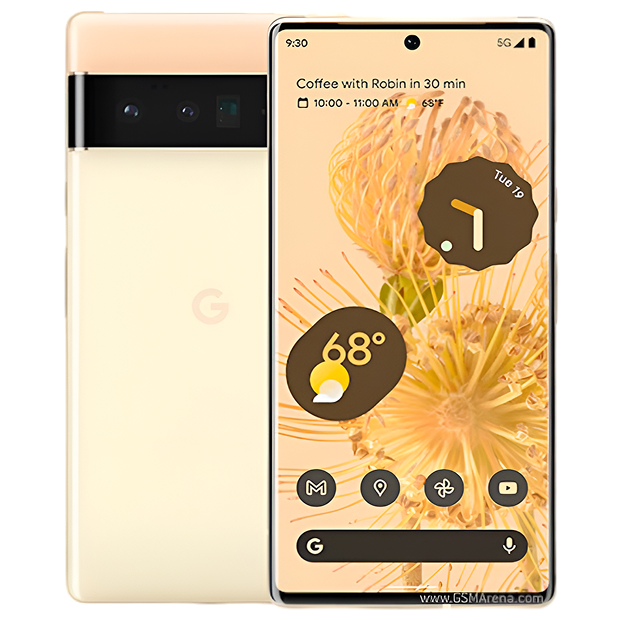
Google Pixel 6 Pro Repair Services
Get fast, reliable, and professional Google Pixel 6 Pro repair services at The Fix — your trusted destination for expert device care.
Common Repairs We Handle Daily


Solve Your Pixel 6 Pro Problems: Google Pixel 6 Pro Repair Solutions
You know what's interesting? The Pixel 6 Pro was Google's big flagship moment in 2021—first custom Tensor chip, premium everything, competing directly with iPhone and Galaxy Ultra. Now we're three years in, and that premium device is showing its age in predictable ways. If your 6 Pro is experiencing battery issues, display problems, thermal concerns, or charging failures, you're dealing with patterns we see constantly on devices this age.
In this guide, we'll break down what actually happens to the Pixel 6 Pro after three years of use, which problems are fixable versus which ones are just aging hardware, and when professional Google Pixel 6 Pro Repair makes sense. Let's figure out what's going on and what you should do about it.
Why People Love (and Hate) the Pixel 6 Pro
Google released the Pixel 6 Pro in October 2021 as their ultimate flagship. You got the Tensor G1 chip, massive 6.7-inch QHD+ 120Hz LTPO OLED display, triple camera system with 4x telephoto, 5,003mAh battery, premium build, and Google's full computational photography suite. This was Google saying "we can compete with anyone" using their own custom silicon.
Three years later, we've got extensive data on how these devices age. The Tensor G1 has known thermal characteristics affecting long-term reliability. The large LTPO OLED shows three-year degradation patterns. Batteries have been through 1,000-1,200+ cycles. This real-world aging data helps diagnose issues accurately and set realistic expectations about what's fixable.
Your Phone vs. Physics: Guess Who Wins?
Here's the truth about premium devices after three years—spending flagship money in 2021 doesn't exempt your phone from physics in 2024. Your Pixel 6 Pro contains sophisticated components that have been degrading continuously, and after three years, that degradation is substantial and noticeable.
Think about premium appliances you've used daily for three years. That high-end coffee machine, expensive vacuum, or professional-grade mixer. When new, everything operated flawlessly. After three years of daily use, you notice changes: motors sound different, seals have compressed, moving parts feel looser, and minor issues have developed. These aren't defects—they're natural results of thousands of operating cycles on mechanical and electrical components.
Your Pixel 6 Pro is identical. That 5,003mAh battery—the largest Google had used at the time—has been through 1,000-1,200+ charge cycles for heavy users. Every single cycle causes permanent electrochemical degradation. After this many cycles, capacity typically drops to 75-82% of original. You've lost 900-1,250mAh—that's massive. Your battery now holds roughly 3,750-4,100mAh instead of 5,003mAh.
The 6.7-inch LTPO OLED has displayed billions of images over three years. OLED organic compounds physically degrade when emitting light. After this long, visible burn-in is nearly universal. Status bar, keyboard, navigation—these static elements cause localized degradation that's characteristic of three-year-old OLEDs.
The Tensor G1 chip is Google's first custom silicon, and first-generation products often have quirks. The G1 runs warm—substantially warmer than competitors' chips. Three years of thermal cycling (heating during use, cooling during idle) stresses internal connections, solder joints, and thermal interface materials. Thermal stress accumulates over thousands of cycles.
The triple camera system has captured hundreds of thousands of photos. Voice Coil Motors for autofocus have moved thousands of times. The 4x telephoto zoom mechanism has operated repeatedly. Optical image stabilization actuators have made countless tiny corrections. These mechanical components experience wear.
The USB-C port has experienced 1,500-2,000 cable insertions over three years. Pins wear from friction. Solder joints stress from lateral forces. Contamination accumulates despite best efforts. After this much use, port issues are common.
Software has grown dramatically heavier. The Pixel 6 Pro shipped with Android 12 optimized for Tensor G1. You've received Android 13, 14, and now 15. Apps update constantly, adding features and complexity. You're running substantially heavier software on three-year-old hardware.
Understanding these patterns helps evaluate whether your Pixel 6 Pro needs repair or if you're seeing normal end-of-lifecycle behavior where repair might not be worthwhile.
Battery Performance After 1,000+ Cycles
What you're experiencing: Battery life is genuinely terrible now. You're charging 2-3 times daily. Battery percentage drops rapidly and unpredictably—showing 45%, then suddenly 15%. Phone gets noticeably warm during charging. Charging takes much longer than it used to.
Why this happens: After three years of daily charging, battery degradation is severe. Testing on three-year-old Pixel 6 Pro devices consistently shows battery health at 75-82%. You've lost 18-25% of that massive 5,003mAh capacity—that's 900-1,250mAh gone. Your battery now holds what a much smaller phone holds when new.
That capacity loss is devastating because the large QHD+ 120Hz LTPO display and Tensor G1 chip consume substantial power. With 900-1,250mAh less capacity, battery life becomes genuinely problematic for normal use.
Battery percentage jumping erratically is common on severely degraded batteries. The management system can't accurately estimate remaining charge when cells have degraded this much and internal resistance has increased substantially. The system makes educated guesses that are often wildly wrong.
Phone getting warm during charging relates to increased internal resistance in degraded batteries. As batteries age, they generate more heat during charging and discharge because degraded cells are less efficient at energy transfer.
What we tell customers who come in: Pixel 6 Pro battery complaints after three years consistently show testing results around 75-82% health. This is normal aging for devices this age, but degradation is severe enough that battery life is genuinely poor. Battery replacement restores full 5,003mAh capacity and transforms the device. Customers report it "feels new again"—because with full capacity, the large battery provides excellent runtime again.
When repair makes sense: At three years and 75-82% health, battery replacement makes sense if you're keeping the device another year or more. If you're planning to upgrade within 6 months, battery replacement might not be worthwhile given the device's age.
LTPO OLED Degradation After Three Years
What you're experiencing: Obvious burn-in on status bar, keyboard, and navigation areas. Green or pink tint at low brightness. Brightness variance across the large 6.7-inch screen. Image retention where content temporarily ghosts. Maybe even areas of slight discoloration.
Why this happens: After three years of heavy use, OLED degradation is substantial and visible. Burn-in after this long is nearly universal on heavily-used devices—it's not "if" but "how severe." The LTPO technology (variable refresh from 10Hz to 120Hz) adds complexity with more layers and control circuitry, potentially making degradation patterns more complex.
Status bar and keyboard burn-in are extremely common because these elements remain static for hours daily over three years of use. The organic compounds in those pixel locations have been emitting light far more than surrounding pixels, causing faster localized degradation.
Tint becoming more noticeable relates to uneven organic compound degradation. Different color sub-pixels (red, green, blue) degrade at different rates. After three years, this uneven degradation causes tint that wasn't visible when new to become apparent, particularly at low brightness.
Based on the devices we see: Almost all three-year-old Pixel 6 Pro displays with heavy use show visible burn-in. Moderate burn-in is normal aging, not defective. The question is whether it's severe enough to justify expensive screen replacement on a three-year-old device.
When repair makes sense: Severe burn-in that genuinely impacts usability might justify screen replacement if you're committed to keeping the device another 18-24 months. Moderate burn-in that's annoying but doesn't prevent use probably doesn't justify expensive screen repair on a device this age unless you're strongly committed to long-term use.
Thermal Management on First-Gen Tensor
What you're experiencing: Phone gets very warm during normal tasks—not just gaming or video, but regular use. Performance feels more sluggish than it used to. Battery drains noticeably faster when phone is warm. Sometimes the phone feels warm even when mostly idle.
Why this happens: The Tensor G1 has documented thermal characteristics—it runs warmer than contemporary competitors like Snapdragon 888 or Apple A15. After three years of thermal cycling, thermal interface materials between chip and heat spreader degrade, making heat dissipation less efficient. The phone gets warmer than it used to for identical tasks.
Severely degraded battery contributes significantly. As batteries age and internal resistance increases, they generate substantially more heat during all operations. A degraded battery at 78% health generates far more heat than a healthy battery doing the same work. Combined with Tensor G1's inherent warmth, thermal management becomes much more aggressive.
The system throttles performance more aggressively on aged devices to prevent overheating. This manifests as the phone feeling slower—not because the chip is failing, but because thermal management is limiting performance more than it used to.
The consistent trend we observe: Thermal issues on three-year-old Pixel 6 Pro devices often improve substantially with battery replacement because the severely degraded battery was generating excessive heat. However, Tensor G1's thermal characteristics are inherent—battery replacement helps significantly but doesn't eliminate warmth during intensive tasks. The chip simply runs warm by design.
When repair makes sense: If thermal issues stem primarily from degraded battery generating heat, battery replacement provides substantial improvement. If issues persist after battery replacement, they're Tensor G1 characteristics that repair can't fully address—they're design limitations, not fixable defects.
Charging Port After Years of Use
What you're experiencing: Charging is completely unreliable or doesn't work at all. Cable doesn't stay connected properly. Connection drops when phone moves. Fast charging doesn't engage. Or the port seems entirely dead despite trying multiple cables and chargers.
Why this happens: After three years and 1,500-2,000 cable insertions, port failure is extremely common. Severe contamination affects nearly all devices—years of pocket lint compress into dense layers. Actual mechanical wear is significant—pins bend or wear smooth, solder joints crack from repeated stress.
Our repair data reveals something interesting: On three-year-old Pixel 6 Pro devices, roughly 50% have severe contamination that cleaning solves, 35% have actual hardware failure requiring port replacement, and 15% have both contamination and hardware damage. Professional cleaning with proper tools solves contamination issues immediately. Hardware failure requires complete port assembly replacement.
When repair makes sense: Port replacement on a three-year-old device makes sense if you're committed to keeping it another year or more. The repair restores reliable charging. If you're planning to upgrade within 6-12 months, port repair on an aging device might not be worthwhile—consider whether the repair cost makes sense given planned device lifespan.
Camera System After Extensive Use
What you're experiencing: Cameras still work but maybe not as consistently. Autofocus is slower, especially in challenging conditions. The telephoto camera seems less reliable. Image quality varies more than you remember.
Why this happens: After three years and hundreds of thousands of photos, mechanical wear on camera components is measurable. Voice Coil Motors for autofocus have moved thousands of times. The 4x telephoto zoom mechanism has operated repeatedly. OIS actuators have made countless corrections. Slight performance degradation after this much use is normal.
From working on these every day: Most Pixel 6 Pro camera issues after three years are minor mechanical wear rather than complete failures. Slightly slower autofocus, minor OIS changes—these are normal aging. Complete failures are less common.
When repair makes sense: Complete autofocus failure or severe issues warrant camera replacement if keeping device long-term. Minor performance changes typical of aged cameras don't necessarily justify expensive repair on a three-year-old device.
What to Expect at The Fix
Comprehensive diagnostic (free): We test everything—battery capacity (typically 75-82% on three-year-old devices), display condition including burn-in severity, charging port functionality, camera performance, thermal behavior.
Honest assessment for aged devices: We'll be straightforward about whether repair makes sense for a three-year-old device. Sometimes battery replacement transforms usability and extends life 12-18 months. Sometimes multiple repairs are needed, making repair less worthwhile. Sometimes the device is genuinely end-of-lifecycle where repair doesn't make financial sense. We give you all information to decide.
Transparent options: Battery replacement, charging port service, screen replacement—we explain costs and whether each makes sense given device age and your plans.
Quality work if repairing: We maintain water-resistant sealing, use quality components, follow proper procedures.
Realistic timeline: Most repairs finish same-day, but we don't rush work on devices requiring careful handling.
Solve Your Pixel 6 Pro Problems: Google Pixel 6 Pro Repair Solutions
Your Pixel 6 Pro is three years old—significant age for intensive-use electronics. Battery degradation is severe. Display aging is visible. Thermal behavior has changed. Charging ports show wear. Software is substantially heavier than at launch.
Whether repair makes sense depends entirely on your situation. Keeping the device 12-18+ more months? Battery replacement dramatically improves usability. Planning to upgrade in 6 months? Repair might not be worthwhile. Need multiple repairs? Combined cost might exceed device value.
Bring your Pixel 6 Pro to The Fix for honest assessment. We'll test everything comprehensively, explain exactly what we find, and give you straightforward advice about whether Google Pixel 6 Pro repair makes sense for your specific situation. No pressure to buy services—just honest expertise helping you make informed decisions about an aging but potentially still useful device.


Trusted repair solution for mobile phones, tablets, gaming consoles, and computer systems. We provide fast, reliable, and affordable repair services to get your devices back in perfect working condition.
The Fix is an independent repair service provider and is not affiliated with, sponsored by, or endorsed by Apple Inc., Samsung Electronics, Google LLC, or any other device manufacturer. We use high-quality compatible replacement parts unless explicitly stated. All trademarks are property of their respective owners.


© Copyright The Fix Solutions All rights reserved 2026.
Design by Deepcoder