





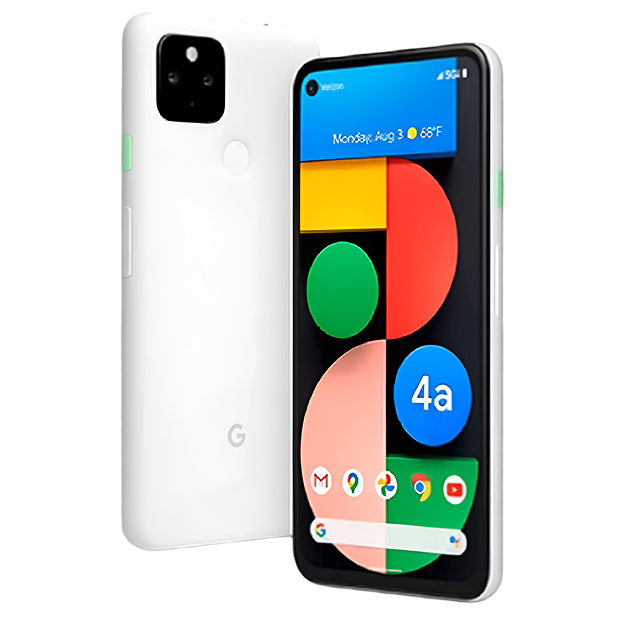
Google Pixel 4a 5G Repair Services
Get fast, reliable, and professional Google Pixel 4a 5G repair services at The Fix — your trusted destination for expert device care.
Common Repairs We Handle Daily


Dealing With Pixel 4a 5G Issues? Your Google Pixel 4a 5G Repair Answer
Picture this: you bought the Pixel 4a 5G in late 2020 because it offered flagship features at mid-range pricing—5G connectivity, the same cameras as the Pixel 5, solid performance, all for $499. It was the sweet spot in Google's lineup. Now we're four years later, and that value champion is showing serious age. Battery dies before you get home, screen has burn-in you can't unsee, charging port is playing games with you, or the phone overheats doing basic tasks. You're wondering whether professional repair brings it back or if it's just time to move on.
In this guide, we'll break down exactly what happens to the Pixel 4a 5G after four years of daily use, which problems are genuinely repairable versus which indicate end-of-lifecycle, and when professional Google Pixel 4a 5G repair makes financial sense. Let's figure out what's happening with your device.
Why People Love (and Hate) the Pixel 4a 5G
Google launched the Pixel 4a 5G in November 2020 as the bigger sibling to the regular 4a—same value approach, but with 5G, a larger 6.2-inch OLED display, dual cameras (adding ultrawide), Snapdragon 765G processor, 3,885mAh battery, and that clean Pixel experience. At $499, it undercut flagship pricing while delivering many flagship features. This was Google saying "here's 90% of the Pixel 5 experience for significantly less money."
Four years later, we've got solid real-world data on how these age. That 3,885mAh battery has been through 1,200-1,500 charge cycles for typical users. The 6.2-inch OLED display has four years of organic compound degradation. The Snapdragon 765G was mid-range in 2020—it struggles noticeably with 2024 apps. USB-C ports have experienced 2,000+ cable insertions. Software support ended in 2023—you're running year-old software without security updates. This is an aging device facing multiple wear issues simultaneously.
What Happens to Devices Over Time
Let's be completely straight about four-year-old phones—spending $499 in 2020 doesn't exempt your device from physics in 2024. Your Pixel 4a 5G contains components that have been degrading continuously for four years, and at this point, that degradation is substantial, measurable, and affects everyday usability.
Think about wireless headphones you've used daily for four years. When new, the battery lasted 8+ hours, connection was flawless, sound quality was pristine, and charging was fast. After four years of regular use, you notice significant changes: battery lasts maybe 4-5 hours, connection drops occasionally, sound quality has degraded slightly, charging takes longer, and the case battery is shot. You haven't abused them—you've just used them for exactly what they were designed for thousands of times, and components with finite lifespans have accumulated measurable wear.
Your Pixel 4a 5G follows identical patterns. That 3,885mAh battery has been through 1,200-1,500 charge cycles over four years. Every single charge cycle causes permanent electrochemical changes at the molecular level. After this many cycles, battery capacity typically drops to 72-80% of original. That means you've lost 20-28% of capacity—that's 777-1,088mAh gone. Your battery now holds roughly 2,797-3,108mAh instead of 3,885mAh.
The physics is unavoidable: lithium ions migrate between electrodes during charging and discharge, but this migration isn't perfectly reversible. Some ions get trapped in crystal structures where they shouldn't be. Electrode surfaces develop thick solid electrolyte interface (SEI) layers that impede subsequent ion flow. The liquid electrolyte slowly decomposes into compounds that reduce ionic conductivity. Repeated expansion and contraction from charging cycles creates mechanical stress on electrode materials, causing microcracks that increase internal resistance.
Heat accelerates every degradation pathway exponentially. The Snapdragon 765G generates heat during intensive tasks—especially during 5G connectivity, which is more power-hungry than 4G. Charging generates heat from internal battery resistance and exothermic chemical reactions. Using your Pixel 4a 5G in warm environments adds more thermal stress. Each 10°C increase in temperature roughly doubles battery aging rates. After four years of daily thermal cycling, these effects are cumulative and substantial.
The 6.2-inch OLED display uses organic light-emitting compounds that physically degrade when producing light. These organic molecules break down at the molecular level from the energy required to emit photons—it's unavoidable organic chemistry. Static UI elements (status bar icons, keyboard layout, navigation gestures) remain in identical positions for hours daily, causing localized organic compound degradation that's substantially faster than surrounding pixels. After four years of typical use, visible burn-in on keyboard and status bar is characteristic, not defective. Modern OLEDs are dramatically better than earlier generations, but they can't eliminate fundamental organic compound degradation.
The Snapdragon 765G processor was mid-range when released in 2020. It was adequate for 2020 apps and Android 11. But apps have grown dramatically more demanding over four years. Every major app you use—Instagram, TikTok, Chrome, Facebook, Gmail—has received dozens of updates adding features and functionality that consume more memory and processing power. You're now running substantially heavier software on four-year-old hardware that was mid-range to begin with.
The USB-C charging port has experienced 2,000+ cable insertions over four years—possibly more if you charge multiple times daily. Those 24 pins must make reliable electrical contact every single time. Repeated insertions cause microscopic wear on contact surfaces. Pocket lint, dust particles, and fabric fibers accumulate over months and years, compressing into dense layers. Using the phone while charging puts lateral stress on connections. After this much use, ports that were once reliable become temperamental.
Software support ended in November 2023. The Pixel 4a 5G received its final security update over a year ago. You're running outdated Android with known security vulnerabilities. Banking apps, secure apps, and many modern apps either show warnings or won't work properly on outdated software. No amount of hardware repair addresses this critical limitation.
Understanding these natural degradation patterns helps you make informed decisions about whether repair makes sense or if you're fighting inevitable end-of-lifecycle issues.
Battery Performance After Four Years
What you're experiencing: Battery life has gone from excellent to genuinely problematic. You used to easily make it through a full day on that 3,885mAh battery, but now you're hunting for chargers by early evening. Or the battery percentage drops rapidly and unpredictably—showing 60%, then suddenly 30% minutes later. Or charging takes much longer than it used to. Or the phone gets noticeably warm during regular use and hot during charging.
Why this happens: After 1,200-1,500 charge cycles over four years, battery degradation is substantial. Testing on devices this age consistently shows battery health at 72-80% of original capacity. You've lost 20-28%—that's 777-1,088mAh gone. Your battery now holds roughly 2,797-3,108mAh instead of 3,885mAh. That loss is devastating because the 6.2-inch OLED display and 5G connectivity consume substantial power.
Battery percentage jumping erratically—showing 55%, then suddenly dropping to 25%—indicates the battery management system losing calibration. As batteries age and internal resistance increases unevenly across cells, accurate state-of-charge estimation becomes nearly impossible. The system makes educated guesses that become increasingly inaccurate as degradation progresses.
Phone getting warm during normal use relates to increased internal resistance in degraded batteries. A battery at 75% health generates significantly more heat during operation than a healthy battery doing identical work because energy lost to internal resistance becomes heat.
What really happens in most cases: Pixel 4a 5G battery complaints after four years consistently show testing results around 72-80% health. This is normal aging for devices this age with daily charging—not defective, just inevitable electrochemical degradation. Battery replacement restores full 3,885mAh capacity and dramatically improves usability. However, you're putting a new battery in a four-year-old phone with outdated software (support ended 2023), mid-range 2020 hardware struggling with 2024 apps, and no security updates available.
When repair makes sense: Battery replacement makes sense if you're committed to keeping the device as a backup phone, giving it to someone with basic needs who understands limitations, or you're planning to use it another 12-18 months despite outdated software. If you need a current daily driver with security updates and modern performance, battery replacement on a 4a 5G in 2024 is questionable value—better used phones cost less than repair investment.
Display Aging on Four-Year-Old OLED
What you're experiencing: Visible burn-in on the keyboard area and status bar—ghost images that remain visible even when displaying other content. Subtle green tint at low brightness that you don't remember from when new. Brightness variance across the 6.2-inch screen. Slight discoloration in areas where you hold the phone most frequently.
Why this happens: Four years of OLED use creates visible degradation that's normal for technology this age. The 6.2-inch display has produced billions of images. Organic compounds degrade from use. Keyboard and status bar burn-in after this much use is extremely common—these elements remain static for hours daily over four years, causing localized organic compound degradation faster than surrounding pixels.
Tint becoming more noticeable relates to uneven organic compound degradation. Different color sub-pixels (red, green, blue) degrade at different rates. After four years, this uneven degradation causes tint that wasn't visible when new to become apparent, particularly at low brightness.
A pattern we've noticed over the years: Most four-year-old Pixel 4a 5G displays with heavy use show visible burn-in. The question is severity—light burn-in that's barely noticeable might be tolerable, severe burn-in that's constantly visible becomes genuinely annoying.
When repair makes sense: Screen replacement on a four-year-old $499 phone rarely makes financial sense unless you have extremely specific reasons. Display replacement is expensive (often exceeding the value of a working used Pixel 4a 5G), and you'd be putting an expensive new screen in a device with no security updates, outdated hardware, and likely a degraded battery unless also replacing that. Combined repair costs typically exceed the value of buying a better used phone.
Charging Port Issues After Extensive Use
What you're experiencing: Charging has become increasingly unreliable. Cable doesn't stay connected properly—it wiggles or feels loose. Connection drops when you move the phone while charging. Fast charging is inconsistent or doesn't work at all. Or the port seems completely dead despite trying multiple cables and chargers.
Why this happens: After 2,000+ cable insertions over four years, charging port issues are extremely common. Severe contamination affects nearly all devices—years of pocket lint compress into dense layers at the bottom of the port cavity. Actual mechanical wear is significant—pins lose spring tension, bend, or wear smooth. Solder joints crack from repeated lateral stress.
What the data shows from our repairs: About 60% of four-year-old Pixel 4a 5G charging complaints involve severe port contamination that professional cleaning solves. 40% involve actual hardware failure requiring complete port assembly replacement. Many devices have both contamination and mechanical wear.
When repair makes sense: Contamination cleaning is relatively inexpensive and worthwhile if you're keeping the device. Port replacement on a four-year-old device makes sense only if you're committed to extended additional use despite other limitations (no security updates, outdated hardware). If you're planning to upgrade within 6-12 months, port replacement probably isn't worthwhile investment.
Performance Limitations on Mid-Range Hardware
What you're experiencing: The phone feels noticeably slow compared to when new or compared to newer devices. Apps take longer to open. Multitasking feels sluggish with visible lag. Gaming performance has degraded. Everything just feels frustratingly slow for tasks that should be straightforward.
Why this happens: The Snapdragon 765G was mid-range in 2020. In 2024, it's four generations behind current processors. Apps designed for 2024 hardware expect capabilities that didn't exist in 2020. Instagram, TikTok, Chrome—all consume far more resources than their 2020 versions. Android has evolved. You're running modern software on genuinely outdated hardware.
This isn't fixable through repair—it's fundamental hardware obsolescence. The processor is what it is. The 6GB of RAM is adequate but not generous for 2024 multitasking. No amount of repair makes 2020 mid-range hardware perform like 2024 hardware.
The consistent trend we observe: Performance complaints on four-year-old Pixel 4a 5G devices stem from aging hardware running increasingly demanding software rather than actual hardware failures. Factory resets help marginally by clearing accumulated software, but they can't make the Snapdragon 765G faster or give you more RAM.
When repair makes sense: Performance issues aren't repairable in the traditional sense. The hardware is what it is. If performance is your primary concern, repair won't solve it—only upgrading to newer hardware will.
Software Support Ended
Critical limitation you need to understand: The Pixel 4a 5G's last software update was November 2023. You're running year-old software with known security vulnerabilities that won't be patched. Many banking apps, secure apps, and modern apps either show security warnings or won't function properly on outdated software. This isn't fixable—Google ended support. No amount of hardware repair addresses this fundamental limitation that affects security and app compatibility.
What to Expect at The Fix
Free comprehensive diagnostic: We test everything—battery capacity (typically 72-80% on four-year-old devices), display condition including burn-in assessment, charging port functionality, overall system performance.
Honest assessment for aged devices: We'll be completely straightforward about whether repair makes sense on a four-year-old phone with ended software support. Sometimes battery replacement transforms it from unusable to functional as a backup device. Sometimes the device is genuinely end-of-life where repair doesn't make financial sense. We give you complete information to make informed decisions.
Transparent repair options: Battery replacement, charging port cleaning/service—we explain costs clearly and whether each repair makes sense given device age, current value, and your plans.
Quality work if appropriate: If repair makes sense for your situation, we use quality components and follow proper procedures.
Realistic timeline: Most common repairs (battery replacement, port service) complete same-day.
Dealing With Pixel 4a 5G Issues? Your Google Pixel 4a 5G Repair Answer
Your Pixel 4a 5G is four years old with software support ended in November 2023—that's substantial age for a mid-range device. Battery is significantly degraded (72-80% typical). Display has visible aging with characteristic burn-in. Hardware is four generations behind current. Performance is limited by 2020 mid-range specs running 2024 apps on year-old software. No security updates available.
Whether repair makes financial sense depends entirely on realistic expectations about device value and your needs. Keeping it as a backup phone for basic tasks? Battery replacement transforms it from unusable to functional for light use. Need a daily driver with current security updates and modern performance? Repair on a Pixel 4a 5G in 2024 probably doesn't make sense when better used phones with current software cost less than repair expenses.
Bring your Pixel 4a 5G to The Fix for honest assessment with no pressure. We'll test everything comprehensively, explain exactly what we find including all limitations, and give straightforward advice about whether Google Pixel 4a 5G repair makes sense or whether the device has had a good four-year run. Just honest expertise helping you make informed decisions about aging devices.


Trusted repair solution for mobile phones, tablets, gaming consoles, and computer systems. We provide fast, reliable, and affordable repair services to get your devices back in perfect working condition.
The Fix is an independent repair service provider and is not affiliated with, sponsored by, or endorsed by Apple Inc., Samsung Electronics, Google LLC, or any other device manufacturer. We use high-quality compatible replacement parts unless explicitly stated. All trademarks are property of their respective owners.


© Copyright The Fix Solutions All rights reserved 2026.
Design by Deepcoder