





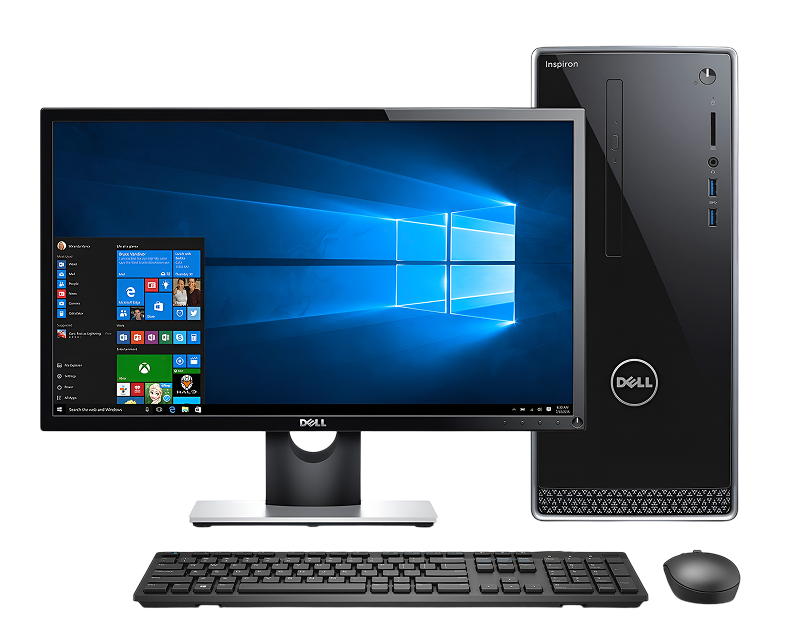
Dell Computer Repair Services
Get fast, reliable, and professional Dell Computer repair services at The Fix — your trusted destination for expert device care.
Common Repairs We Handle Daily


Transform Your Dell Computer With Professional Repair
Dell sells over 40 million laptops annually worldwide, making them one of the most common computers people bring to repair shops. Here's what the statistics tell us: about 35% of Dell laptops older than three years experience at least one hardware failure requiring professional service. That's not a quality issue—it's simply the reality of intensive daily use combined with component aging. Your Dell Inspiron, XPS, Latitude, or Precision wasn't built to last forever, but it was built to be repairable.
If your Dell's battery dies before you finish your morning coffee, the keyboard's got keys that work when they feel like it, or the fan sounds like it's attempting vertical takeoff every time you open a browser, you're experiencing problems we see daily at The Fix. These aren't mysterious failures—they're predictable, well-understood issues with straightforward solutions. Professional Dell Computer repair addresses root causes and gets your laptop back to reliable performance. Let's identify what's happening with your Dell and how to fix it properly.
Is This You? Dell Problem Quiz
Check the symptoms you're experiencing to identify your issues:
Power and Battery (Check all that apply):
- [ ] Battery lasts 2 hours or less
- [ ] Won't charge or charges extremely slowly
- [ ] Only works when plugged in
- [ ] Battery percentage drops suddenly (50% to 5% in minutes)
- [ ] "Consider replacing battery" warning
- [ ] Swollen battery (trackpad raised or bottom case bulging)
- [ ] Won't power on at all
Performance Problems:
- [ ] Takes forever to boot (5+ minutes)
- [ ] Apps freeze constantly
- [ ] Beach ball/loading cursor appears frequently
- [ ] Can barely run modern software
- [ ] Gets slower every week
- [ ] Blue Screen of Death errors
- [ ] Random shutdowns during use
Thermal Issues:
- [ ] Fan constantly at maximum speed
- [ ] Case too hot to rest on lap
- [ ] Performance drops dramatically under load
- [ ] Shuts down unexpectedly during intensive tasks
- [ ] Dust visible in vents
- [ ] Fan making grinding or clicking noises
Display Problems:
- [ ] Screen cracked or physically damaged
- [ ] Flickering at certain angles
- [ ] Lines (vertical or horizontal) on screen
- [ ] Dim even at maximum brightness
- [ ] Black screen but laptop is running
- [ ] Discoloration or spots
- [ ] External monitor works (internal doesn't)
Keyboard/Trackpad:
- [ ] Keys stick or don't register
- [ ] Keys repeat letters unintentionally
- [ ] Trackpad unresponsive or jumpy
- [ ] Visible spill damage
- [ ] Entire keyboard non-functional
- [ ] Backlight not working
Storage/Drive:
- [ ] Clicking or grinding noises from drive
- [ ] "Disk full" warnings constantly
- [ ] Files corrupting or missing
- [ ] Extremely slow file operations
- [ ] SMART errors or warnings
- [ ] Won't boot (no operating system found)
Connectivity:
- [ ] Wi-Fi constantly disconnecting
- [ ] USB ports not working
- [ ] Charging port loose or unreliable
- [ ] HDMI output not working
- [ ] Bluetooth issues
Score Your Results:
- 1-3 symptoms: Early issues—catch them now before they worsen
- 4-7 symptoms: Multiple problems developing—comprehensive diagnostic needed
- 8-12 symptoms: Significant issues but definitely repairable
- 13+ symptoms: Extensive problems—but professional repair can still transform it
Living With the Dell Laptop
Dell's laptop lineup spans budget-friendly Inspirons perfect for students and everyday users, premium XPS models competing with MacBooks and Surface devices, business-focused Latitudes built for durability, and powerful Precisions for creative professionals and engineers. What's consistent across the lineup is Dell's philosophy of building serviceable machines—you can actually open these laptops and replace components, unlike some manufacturers who seal everything permanently.
The Dell XPS series gets attention for build quality and performance. Inspirons offer solid value for everyday computing. Latitudes prioritize reliability and security features for business users. Precisions pack workstation-class power for demanding applications. Each serves different users, but they all share common repair needs as they age.
Here's what matters for repairs: Dell laptops are generally repairable. Many models still have accessible batteries, RAM slots, and storage bays. Service manuals exist. Parts are available. This serviceability means that when something breaks, fixing it is usually straightforward with proper expertise. Your Dell wasn't designed to be disposable—it was designed to be maintained and repaired over its useful life.
Troubleshooting Tree: Follow the Path
Let's systematically identify your problem. Follow this decision tree:
START: What's your primary issue?
→ Won't power on:
- Any lights when you press power button?
- YES → Go to "Powers on but no display"
- NO → Check charging:
- LED on charger lit when plugged in?
- YES → Try different outlet, hold power 30 seconds, try again
- NO → Charger failed or charging port damaged
- Still nothing? → Battery completely dead or logic board issue
→ Powers on but screen stays black:
- Do you hear fan noise or hard drive activity?
- YES → Connect external monitor
- External works? → Internal display or cable problem
- External doesn't work? → GPU or logic board issue
- NO → Stuck in pre-boot state, RAM or logic board issue
→ Battery dies super fast:
- Check battery health: Command Prompt → powercfg /batteryreport
- Design capacity vs. current capacity differ by 40%+? → Battery replacement needed
- Similar capacity but drains fast? → Check Task Manager for runaway processes
- High CPU usage by specific program? → Software issue
- Nothing obvious? → Battery cells failing unevenly
→ Overheating badly:
- Open Task Manager—high CPU usage?
- YES → Identify process, close it or update software
- NO → When does it overheat?
- Only during intensive tasks? → Normal operation, but check temps
- Even during light use? → Cooling system needs cleaning/thermal paste
→ Extremely slow performance:
- Check available storage (File Explorer)
- Under 10% free space? → Clear space immediately (Windows needs breathing room)
- Plenty of space? → Open Task Manager → Performance tab
- Memory at 80-100% consistently? → Need more RAM
- Disk at 100% constantly? → Drive failing or too slow for current OS
- CPU throttling? → Overheating issue causing performance limits
→ Screen cracked or damaged:
- Does touch still work in undamaged areas?
- YES → Just glass cracked, display functional
- NO → Display panel damaged, needs full replacement
→ Keyboard issues:
- Multiple keys affected or single key?
- Single key → Try compressed air, check for debris
- Multiple keys → Ribbon cable or keyboard assembly issue
- External keyboard works? → Internal keyboard hardware failed
- External also problematic? → Software/driver issue (rare)
→ Boot problems (stuck on Dell logo):
- Can you enter BIOS (F2 during startup)?
- YES → Check if drive is detected in BIOS
- Drive shown? → Operating system corrupted
- No drive shown? → Drive failed or connection loose
- NO → Cannot access BIOS → Logic board or RAM issue
This tree gets you closer to diagnosis. If you're stuck or the suggested solution doesn't resolve it, that's when professional Dell Computer repair makes sense.
Why No Laptop Lasts Forever
Every Dell laptop ages over time, regardless of care. Understanding the underlying physics helps you recognize when maintenance is needed.
Think about aquarium glass holding back hundreds of gallons of water. That glass is under constant pressure—it doesn't rest, it doesn't get a break. High-quality glass handles this for years, but it's always under stress. Microscopic imperfections can grow over time from the sustained load. Your Dell laptop's components experience similar constant stress. The processor heats and cools thousands of times, causing thermal expansion and contraction. Circuits experience electrical stress with every operation. Solder joints undergo thermal cycling. Nothing's broken yet, but stress accumulates microscopically. Eventually, components that were within tolerance drift out of specification.
Consider an electrical outlet in your house used daily for years. When installed, the contacts were tight and springy, gripping plugs firmly. After thousands of insertions, the metal contacts have lost some spring tension from repeated stress. The outlet still works, but plugs might feel looser or require jiggling to make good contact. Your Dell's ports experience the same mechanical wear. Every charging cable insertion, every USB device connection creates slight wear on internal contacts. After thousands of cycles, ports can become loose or finicky about cable angles.
Inside your Dell, the battery undergoes chemical changes with every charge cycle. Lithium-ion cells develop internal resistance as the electrolyte degrades and electrode materials change structure. The battery management system tries to compensate, but eventually there's just not enough healthy capacity left for practical use. This happens to every lithium-ion battery—it's electrochemistry, not a defect.
Storage drives face their own challenges. Hard drives have actuator arms positioning read/write heads over spinning platters with nanometer precision at 5400-7200 RPM. After thousands of hours, bearing wear accumulates, heads can develop contamination, and platters show surface degradation. SSDs don't have moving parts, but memory cells wear out from write/erase cycles. Controllers remap to spare cells, but eventually those run out too.
The cooling system relies on thermal paste transferring heat from processors to heatsinks. Fresh paste fills microscopic imperfections in metal surfaces. Over years of thermal cycling, paste hardens and cracks. Heat transfer efficiency drops 15-25%. The system still functions, but runs hotter, which accelerates other aging processes and causes performance throttling.
Keyboard switches compress hundreds of thousands of times. Rubber domes lose elasticity. Metal contacts experience wear. Spring mechanisms experience fatigue. The satisfying tactile response gradually changes. Keys might start feeling mushy or requiring more force.
Display cables running through the hinge bend slightly every time you open and close the laptop. Quality cables handle thousands of cycles, but metal fatigue accumulates. Microscopic conductor breaks can develop, causing flickering or display failures.
This isn't about Dell making poor products. These are well-engineered machines handling diverse workloads. But physics doesn't care about engineering excellence—all materials age under stress. Recognizing when aging requires professional attention keeps your Dell running great for years.
Battery Won't Hold a Charge
What you're experiencing: Your Dell used to run 6-8 hours unplugged. Now you're lucky to get through a single meeting. The battery percentage becomes unreliable—it shows 40%, then suddenly drops to 5% and shuts down. You've become dependent on staying plugged in constantly, essentially using it as a tethered desktop instead of a portable laptop.
Why this happens: Dell laptop batteries are rated for roughly 300-500 charge cycles before significant capacity loss. Daily users hit that in 12-18 months. Each cycle causes microscopic structural changes in the lithium-ion cells. Heat accelerates degradation—laptops used on soft surfaces that block cooling age batteries faster. Eventually the cells can't store enough energy to be useful. In some cases, batteries swell from gas buildup inside—this is hazardous and requires immediate replacement.
What you can try:
- Check battery health using Dell's diagnostic tools (F12 at startup → Diagnostics) or Windows battery report (powercfg /batteryreport in Command Prompt).
- Calibrate: Charge to 100%, use until automatic shutdown, then charge uninterrupted back to 100%.
- Check for physical swelling: If the bottom case bulges or trackpad feels raised, stop using immediately—swollen batteries are dangerous.
- Reduce power consumption temporarily: Battery saver mode, lower brightness, close unnecessary apps.
- Update BIOS: Dell sometimes releases battery management improvements through BIOS updates.
What actually happens with most units: Battery replacement is the most common Dell repair we perform, and customers are consistently amazed at the difference. People adapt gradually to dying batteries—they stay near outlets, carry chargers everywhere, plan their schedules around available power. They forget what normal battery life feels like. After professional battery replacement with a tested, quality component that meets Dell's specifications, they get actual all-day runtime back. The laptop becomes genuinely portable again. It's not just fixing a technical problem—it's restoring the fundamental mobility that makes a laptop worthwhile. We see relief on customers' faces when they realize they can actually work wirelessly again.
Performance Degraded to Unusable
What you're experiencing: Your Dell takes 5-10 minutes to boot when it used to be ready in 30 seconds. Apps hang constantly. Simple tasks like opening folders lag visibly. You can watch the cursor lag behind mouse movements. You're spending more time waiting than working, and it's destroying your productivity.
Why this happens: Performance problems usually involve multiple compounding factors. Storage drives near capacity struggle—Windows needs at least 10-15% free space for temporary files and virtual memory. Hard drives fragment badly over time. Drives approaching failure exhibit severe slowdowns before dying completely. Too many startup programs consume RAM and CPU. Malware or bloatware runs hidden in background. Overheating causes aggressive throttling. Insufficient RAM for modern Windows forces constant disk swapping.
What you can try:
- Task Manager (Ctrl+Shift+Esc): Check what's using CPU, memory, and disk. Sort by usage to find culprits.
- Disable startup programs you don't need: Task Manager → Startup tab.
- Free up disk space: Delete large files, uninstall unused programs, clear temporary files.
- Run malware scan with Windows Defender or your preferred antivirus.
- Check temperatures using HWMonitor—high temps cause throttling.
- Defragment if you have HDD (not needed for SSD): Optimize Drives utility.
In our experience with hundreds of these: Performance issues are rarely just one problem—they're usually several issues piling up. We'll typically find a nearly full hard drive, 30 programs launching at startup, gigabytes of temporary files and cache, dust choking the cooling system, and maybe early drive failure signs. Addressing everything comprehensively makes dramatic differences. Sometimes strategic hardware upgrades transform the experience—RAM upgrade from 4GB to 8GB or 16GB, or replacing a slow, failing hard drive with a fast SSD. We've seen Dell laptops that were frustratingly slow for months suddenly feel fast and responsive after comprehensive service. Boot times drop from minutes to seconds. Apps launch instantly. The entire experience transforms.
Overheating and Loud Fan Noise
What you're experiencing: Your Dell sounds like a jet engine preparing for takeoff. The fan runs at maximum speed constantly, even during basic web browsing. The aluminum or plastic case gets too hot to rest on your lap. Performance tanks during anything intensive—video calls stutter, games lag, rendering crawls. Sometimes the laptop shuts down completely to protect itself from heat damage.
Why this happens: Dell laptops have cooling systems engineered for specific thermal loads. Several factors compromise them over time. Dust is the primary culprit—it accumulates in fans and clogs narrow cooling fins. Thermal paste between CPU/GPU and heatsink dries out and loses effectiveness. Fans wear—bearings degrade and blades accumulate debris. Using the laptop on soft surfaces blocks vents. Demanding modern software generates more heat than the aging cooling system can handle.
What you can try:
- Check Task Manager for processes consuming high CPU—sometimes runaway background tasks generate unnecessary heat.
- Use your Dell on hard, flat surfaces only. Beds and couches block ventilation.
- Clean external vents carefully with compressed air (short bursts, can upright).
- Close unused programs and browser tabs—each generates some heat.
- Update BIOS and drivers—sometimes thermal management improvements come through updates.
Our repair data reveals something interesting: Dell laptops, especially models 2-3+ years old, predictably overheat when cooling systems haven't been maintained. When we open them for service, the cooling fins are typically packed solid with dust and lint forming a barrier that blocks airflow. Thermal paste is dried, cracked, and failing to transfer heat. Fans are struggling—spinning but not moving much air. We disassemble carefully following Dell's service procedures, clean fans and heatsinks thoroughly using compressed air and proper tools, replace thermal paste with quality compound, verify fan operation, and reassemble precisely. Temperature drops are significant—20-35°C reductions under load. Your Dell runs quietly, stays cool, and delivers full performance without throttling. For gaming, video editing, or other demanding uses, proper thermal maintenance is transformative.
First 15 Minutes: Initial Assessment
Let's walk through what happens when you bring your Dell to The Fix for repair. Understanding the process helps you feel confident about professional service.
When you arrive, we start with conversation. What's your Dell doing? When did problems start? Are there patterns—worse at certain times, better in certain situations? What troubleshooting have you already tried? This context is valuable because it guides our diagnostic approach. We know what to look for and can avoid repeating steps you've already taken.
We'll physically inspect your Dell. Is there visible damage? Are vents clogged with dust? Does the bottom case show signs of swelling (battery issue)? Are hinges intact? These visual clues often point us toward specific problems before we even power it on.
Then we boot it up and start diagnostic procedures. For Dells that won't power on, we test the power supply with multimeters, check LED indicators, and determine what's preventing startup. For boot problems, we try accessing BIOS/diagnostics (F2 or F12 at startup) to see if we can bypass the operating system. For performance issues, we open Task Manager, check resource usage, and identify what's consuming CPU, memory, or disk.
Next 30-60 Minutes: Detailed Testing
Once we've got it running or identified why it won't run, we go deeper. Dell has built-in diagnostics accessible at startup (F12 → Diagnostics). We run comprehensive hardware tests: memory check, hard drive test, LCD panel test, keyboard test, battery health check. These tests identify failing components definitively.
We check temperatures under load using monitoring software. Is the CPU hitting 90-100°C doing basic tasks? That's a cooling problem. We check storage drive health using SMART monitoring tools—this reveals impending drive failures before they become catastrophic. We test each RAM module individually if we suspect memory issues.
For intermittent problems, we try to reproduce them under controlled conditions. Screen flickers at certain angles? We move the display through its full range while monitoring the image. Random shutdowns? We stress test to see if we can trigger them.
We're not guessing—we're systematically testing each subsystem to identify the actual problem, not just obvious symptoms.
The Repair: Fixing What's Broken
Once we know what's wrong, we explain it clearly. No jargon, no technical overwhelm—just straightforward explanation of what failed, why it happened, and what fixing it involves. This is where we discuss options.
Maybe your hard drive is failing and you need replacement. You can go with another HDD, or upgrade to an SSD that'll make everything dramatically faster. We explain the pros, cons, and cost difference—you choose what makes sense. Perhaps your Dell needs more RAM. We'll explain the performance improvement for your specific usage and let you decide if it's worthwhile.
The actual repair work requires proper tools and expertise specific to Dell laptops. We use correct Torx and Phillips screwdrivers, plastic spudgers that won't damage components, anti-static equipment, and service manuals for your specific model. Dell laptops generally disassemble in standard ways, but each model has quirks.
For battery replacements, we disconnect power, remove the old battery (some are screwed in, others are clipped), install the new one with correct mounting, reconnect, and calibrate the battery management system. For storage drive replacements, we clone your old drive to preserve all data (if possible), install the new drive, restore the image, and verify boot functionality. For cooling system maintenance, we disassemble to access the heatsink, clean fans thoroughly, remove old thermal paste completely, apply fresh compound in correct amounts, and reassemble.
Final 10 Minutes: Quality Verification
Before we call you, we test everything thoroughly. Does it boot properly? Are temperatures normal under load? Is the battery charging correctly and reporting accurate capacity? Do all ports work? Are keyboard and trackpad responsive?
We run stress tests for systems with new cooling or RAM. We verify data integrity after drive replacements. We don't just fix the immediate problem—we validate that the entire system operates correctly.
When you pick up, we walk you through what we did, show you relevant improvements (temperature readings, boot times, battery health reports, whatever applies to your repair), and answer questions about maintaining your Dell going forward.
Maintain Your Dell: Proactive Care Tips
Do These Regularly:
- Keep Windows and drivers updated through Windows Update
- Back up important files using OneDrive, external drives, or other backup solutions
- Restart at least weekly (many issues stem from never restarting)
- Keep startup disk under 85% full—Windows needs breathing room
- Run antivirus scans weekly
Do These Monthly:
- Check available storage and clear unnecessary files
- Clean keyboard and screen with appropriate cleaners
- Use compressed air on vents to blow out dust
- Check battery health using Dell diagnostics or Windows battery report
Do These Yearly:
- Professional cooling system cleaning (or DIY if comfortable)
- Check all ports for looseness or damage
- Verify backup systems are actually working
- Consider RAM or storage upgrades if performance feels limited
Watch for These Warning Signs:
- Gradual performance degradation
- Battery life decreasing noticeably
- Fan noise increasing over time
- Strange sounds (clicking, grinding, buzzing)
- Screen flickering or dimming
- Keys feeling different or not registering consistently
Catching problems early makes repairs easier and often less expensive. That slightly warm laptop addressed now might just need cleaning. Ignored until it overheats and shuts down constantly? Now we're potentially dealing with thermal damage to other components.
Your Dell Can Run Like New Again
Most Dell Computer problems are totally fixable with proper expertise and quality parts. That dying battery? Replacement restores full-day runtime for a fraction of a new laptop's cost. Performance issues? Cleaning, optimization, and strategic upgrades transform the experience. Overheating? Proper maintenance brings temperatures back to normal. Broken screen? Replacement looks factory-fresh. These repairs extend your laptop's useful life for years.
Ready to fix your Dell Computer? The Fix makes it easy. Walk in anytime for a free assessment—most repairs are same-day, and we'll keep you updated throughout the process. Your device deserves expert care, and that's exactly what we deliver.


Trusted repair solution for mobile phones, tablets, gaming consoles, and computer systems. We provide fast, reliable, and affordable repair services to get your devices back in perfect working condition.
The Fix is an independent repair service provider and is not affiliated with, sponsored by, or endorsed by Apple Inc., Samsung Electronics, Google LLC, or any other device manufacturer. We use high-quality compatible replacement parts unless explicitly stated. All trademarks are property of their respective owners.


© Copyright The Fix Solutions All rights reserved 2026.
Design by Deepcoder