






iPhone 6 Repair Services
Get fast, reliable, and professional iPhone 6 repair services at The Fix — your trusted destination for expert device care.
Common Repairs We Handle Daily


An Expert Analysis of iPhone 6 Repair: Causes & Solutions
Introduction
Picture this: you're trying to reply to a text, but the touchscreen's acting weird. Sometimes it responds, sometimes it doesn't. There's a flickering gray bar at the top of your screen that wasn't there yesterday. Or maybe your iPhone 6 has been a trusty companion for years, but now the battery dies before lunch and you're wondering if it's finally time to let go.
Here's what you need to know upfront: your iPhone 6 is nearly ten years old (launched September 2014), and it has a notorious hardware defect called "Touch Disease" that causes exactly those touch and flickering symptoms. It's not your fault, and it's not something you did wrong. It's a design flaw that Apple eventually acknowledged—though their repair program has long since expired.
The question isn't whether iPhone 6 repair is possible—it definitely is. The question is whether it makes financial sense for a device this old. Sometimes it does, especially if you just need a battery or screen. Sometimes it doesn't, particularly if you're dealing with Touch Disease or multiple failures at once. In this guide, we'll walk through what commonly goes wrong, what's actually fixable, and help you make an informed decision about whether iPhone 6 repair is right for your situation.
Let's Talk About Your iPhone 6 for a Second
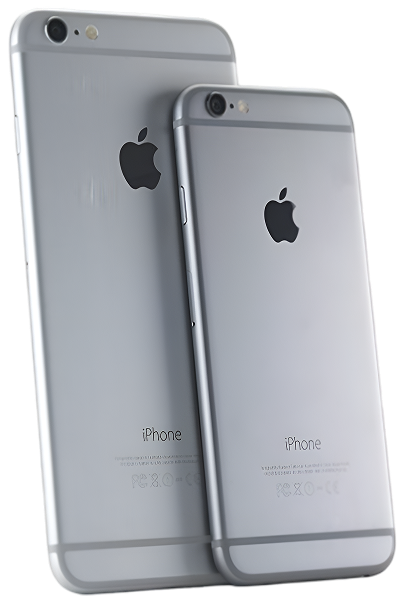
The iPhone 6 launched in September 2014 and was a massive hit—Apple's first phone with a larger 4.7-inch screen after years of smaller displays. It introduced Apple Pay, had a thinner design, and that rounded aluminum body felt premium at the time. Over 220 million units sold, making it one of Apple's most popular iPhones ever.
Nearly ten years later, the iPhone 6 is genuinely ancient by smartphone standards. It maxed out at iOS 12.5.7 and won't get any newer updates. The A8 chip struggles with modern apps. The 1,810 mAh battery was already small when it launched—at ten years old, it's barely functional if it's still the stock battery. The camera is 8MP, which feels primitive compared to today's 48MP+ sensors.
But here's what still works: it makes calls, sends texts, handles basic email and light browsing. For someone who needs a phone for absolute essentials and nothing fancy, the iPhone 6 can still serve that purpose—if it's not suffering from Touch Disease.
That's the critical factor. Touch Disease affects a huge percentage of iPhone 6 devices (and 6 Plus). If your phone has it, repair requires board-level work. If it doesn't, simple repairs like battery or screen can keep it going affordably. Understanding what you're dealing with is the first step.
Why All Smartphones Age This Way
Before diving into specific problems, let's understand why your iPhone 6 is having issues after ten years. This helps set realistic expectations about what repair can and can't accomplish.
Battery Chemistry Is Predictable
Lithium-ion batteries degrade with every charge cycle. After 500 cycles, they typically drop to 80% capacity. If you've charged your iPhone 6 daily since 2014, you've gone through roughly 3,500 cycles. The battery's probably at 40-50% of what it was when new—maybe even less.
Think of it like a rechargeable flashlight that dims over years. The cells can only hold so much charge after thousands of uses. This isn't planned obsolescence—it's just chemistry. Heat accelerates degradation, which is why phones left in hot cars age faster.
Even with a brand new battery, the iPhone 6's 1,810 mAh capacity is tiny by modern standards. For context, current budget phones typically have 3,000+ mAh. You won't get all-day battery life like a modern phone, but a fresh battery should get you through moderate daily use.
The Flexible Circuit Board Problem (Touch Disease)
Here's the big one: the iPhone 6 has a design flaw where the touch controller chips on the logic board lose connection over time. The phone's thin aluminum body flexes slightly in your pocket or when dropped. This flexing causes micro-cracks in solder joints connecting the touch IC chips to the board.
Symptoms of Touch Disease:
- Gray flickering bar at top of screen
- Touchscreen becoming unresponsive or spotty
- Touch working sometimes but not others
- Getting progressively worse over time
This affects both iPhone 6 and 6 Plus. Apple initially denied it was a widespread issue, then later acknowledged it and offered repairs (program now expired). If your phone has Touch Disease, it requires micro-soldering to repair—specialized board-level work.
LCD Display Aging
The iPhone 6 uses an LCD display (not OLED). Over time, the LED backlight dims gradually—you might not notice because it happens slowly, but your display is measurably dimmer than when new. The LCD panel itself can develop dead pixels or backlight bleed after years of use.
Touch sensors also degrade. After millions of touches over ten years, the digitizer layer can develop reduced sensitivity or dead zones. This is separate from Touch Disease—it's just normal wear.
Physical Wear From Ten Years
Your home button's been pressed hundreds of thousands of times. Your charging port's been plugged in thousands of times. The phone's been dropped, bumped, exposed to temperature swings. Seals and adhesives have degraded. Buttons have worn down.
All these small stresses add up over a decade. Mechanical parts wear out. Electronic connections degrade. That's normal aging for any device used daily for ten years.
Software Support Has Ended
iOS 12 is the last version the iPhone 6 will ever get. Most apps still support iOS 12, but developers are starting to drop it. Modern apps are optimized for newer hardware. The A8 chip and 1GB of RAM struggle with demanding apps.
This isn't fixable with repairs—it's the reality of decade-old hardware. Even a perfectly functioning iPhone 6 has limited remaining viable lifespan because software support is fading.
Critical Issues That Need Immediate Attention
Touch Disease: The Gray Bar and Unresponsive Touch
What you're experiencing: There's a gray flickering bar at the top of your screen. Touch works sometimes but fails randomly. You have to press harder than you used to. Sometimes the screen doesn't register taps at all. It's getting worse over time, and now the phone's barely usable.
Why this happens: Touch Disease is a design flaw where the touch IC chips on the logic board lose their solder connection. The iPhone 6's thin body flexes slightly from normal use, causing micro-cracks in solder joints. Over time, these cracks worsen until touch becomes completely unreliable.
This isn't something you caused. It's a predictable failure affecting a huge percentage of iPhone 6 devices. Apple acknowledged it after years of denials and offered repairs through 2018 (program now expired).
What you can try first: Honestly? There's no DIY fix for Touch Disease. Some people report that applying pressure to specific spots on the back temporarily improves touch—that's because you're temporarily re-establishing contact between the chip and board. But it's not a solution.
Restarting the phone, updating iOS, or resetting settings won't fix hardware failure.
The real solution: Touch Disease requires micro-soldering repair. A skilled technician needs to:
- Remove the logic board from the phone
- Re-solder or reinforce the touch IC chips with proper underfill
- Test thoroughly to ensure touch works reliably
This is specialized work that not all repair shops can perform. It requires micro-soldering equipment and expertise.
Here's what we've learned: Touch Disease is the #1 reason iPhone 6 owners come to us. It's frustrating because it makes an otherwise functional phone unusable. The good news is that micro-soldering repair for Touch Disease has a high success rate when done properly—once fixed, it typically doesn't recur because we properly reinforce the chips. The question is whether it makes sense financially. If your iPhone 6 only has Touch Disease and everything else works, repair extends its life affordably. If you're also dealing with dead battery, cracked screen, and charging port issues, the combined investment might not make sense for a ten-year-old phone. We'll help you evaluate that honestly.
Battery Completely Dead or Causing Shutdowns
What you're experiencing: Your phone dies at 40% remaining. Or it won't hold a charge at all—you unplug it and it's dead within an hour. Maybe it shuts down randomly and won't turn back on until plugged in. The phone's basically unusable unless it's constantly charging.
Why this happens: After ten years and 3,500+ charge cycles, your battery's capacity is severely degraded—probably 40-50% of its design capacity, maybe less. The Battery Management System has also lost calibration, so the percentage you see is unreliable.
When you try to do anything intensive (camera, video, games), the worn battery can't deliver enough power and the phone shuts down to protect itself. This is critical battery failure.
What you can try first: Check Settings > Battery > Battery Health if the option still exists on iOS 12. If Maximum Capacity shows below 80%, the battery's critical. Below 60%? It's basically non-functional.
Try recalibrating: let it die completely, then charge uninterrupted to 100% and leave charging 2 more hours. This might improve percentage accuracy but won't restore lost capacity.
The real solution: Battery replacement is mandatory if you're keeping this phone. There's no way around it—a battery this degraded makes the phone unusable for daily tasks.
The good news? iPhone 6 battery replacement is straightforward and affordable since parts are readily available. A quality replacement battery brings the phone back to usable condition for basic tasks.
Here's what we've learned: We see iPhone 6 devices with batteries at 45% health where owners are trying every setting tweak to make it last—it won't work. You can't fix chemistry with software. Battery replacement is non-negotiable at this point. The limitation to understand is that even with a fresh battery, the iPhone 6's 1,810 mAh capacity is small. You'll get through a day with light to moderate use, but don't expect flagship battery life. It's a decade-old phone with a small battery—set expectations accordingly. That said, battery replacement is one of the most cost-effective repairs we do, and if battery's your only issue, it's definitely worth fixing.
Moderate Issues That Need Attention Soon
Screen Cracked With Touch Getting Spotty
What you're experiencing: You've got a cracked screen, and now touch is becoming unreliable. Some areas don't respond. Ghost touches register without you pressing anything. Or touch worked fine at first after the crack, but now it's getting worse.
Why this happens: The iPhone 6 screen has multiple layers—glass, LCD panel, and digitizer for touch. Cracks in the glass can propagate into the digitizer layer over time, especially from the phone flexing in your pocket or from temperature changes.
Important note: If you're also seeing a gray flickering bar with touch issues, you likely have Touch Disease in addition to screen damage. That's a separate problem requiring board-level repair.
What you can try first: Test touch everywhere. Open Notes and scribble all over the screen. Identify where touch doesn't work. If dead zones are small and stable, you've got some time. If they're growing daily or the crack's spreading, don't wait.
Apply a tempered glass screen protector if you haven't. It won't fix the crack but can prevent it from spreading and keeps glass shards contained.
The real solution: Screen replacement is straightforward for the iPhone 6. The display uses LCD technology (not OLED), so replacement parts are affordable and widely available.
Before committing to screen replacement, make sure you don't have Touch Disease. If you do, you need to address that first—there's no point replacing the screen if the underlying touch system on the logic board is failing.
Here's what we've learned: Screen damage on the iPhone 6 is common because the phone's been around so long and has been dropped countless times. Screen replacement is cost-effective if that's your only issue. However, we always test for Touch Disease before recommending screen replacement—about 30% of iPhone 6 devices with touch problems have Touch Disease, not just screen damage. We don't want you to pay for a new screen only to discover touch still doesn't work because the logic board has issues. We test thoroughly first and give you honest advice about what's actually wrong.
Home Button Not Working or Touch ID Failing
What you're experiencing: The home button doesn't click right, or clicking does nothing. Touch ID fails constantly or completely stopped working. You're using AssistiveTouch (the virtual home button) because the physical one's dead.
Why this happens: After ten years and hundreds of thousands of presses, the home button mechanism can fail. The Touch ID sensor surface gets scratched or covered in oils that reduce accuracy. Sometimes it's not the button itself—it's the cable connecting it to the logic board that's damaged.
What you can try first: Clean the button thoroughly with isopropyl alcohol on a microfiber cloth. Let it dry completely. Then try re-registering your fingerprints (Settings > Touch ID & Passcode). Make sure both your finger and the sensor are clean and dry when registering.
If that doesn't help, the button's likely physically worn or damaged.
The critical limitation: The Touch ID sensor is paired to your specific logic board at the factory for security. If we replace the home button, it'll work as a button (you can click it to go home), but Touch ID is permanently lost. Apple designed it this way to prevent fraud.
If your button's broken, you're choosing between a working button without Touch ID or a broken button with non-functional Touch ID anyway. Most people choose the working button.
Here's what we've learned: Home button issues are common on the iPhone 6 because it's been used for so long. The Touch ID limitation is frustrating—we wish we could preserve it, but we can't bypass Apple's security pairing. If your button physically works but Touch ID is spotty, cleaning and re-registering helps about half the time. If the button's completely dead, we can replace it and restore button functionality, but you'll be typing your passcode forever after. We're always upfront about this limitation before doing any work.
Charging Port Only Works at Certain Angles
What you're experiencing: Your charging cable only works when held at weird angles. You've tried multiple cables—they all do the same thing. Sometimes it charges, sometimes it doesn't. You've given up on wired charging and only use wireless charging if you have a pad.
Why this happens: After ten years of daily plugging and unplugging, your Lightning port has accumulated compressed pocket lint deep inside AND the connector pins are worn from use. The securing clip can also weaken, making cables feel loose.
What you can try first: Power off your phone completely. Use a wooden toothpick (never metal—you could damage pins) and gently scrape the bottom and sides of the Lightning port. Go slowly and be thorough.
You'll probably be shocked at how much compressed lint comes out. We're talking years of accumulated pocket debris compacted into a dense mass.
Try a certified cable after cleaning. Some cheap cables have thicker connector housings that don't seat properly in worn ports.
The real solution: If cleaning doesn't help, the port needs replacement. The Lightning port, speaker, and microphone are all on one flex cable that's replaceable. This is straightforward repair work.
Here's what we've learned: About 80% of "broken charging port" complaints we see resolve with thorough cleaning. We spend several minutes removing lint that owners didn't realize was packed in there. For genuinely damaged ports, replacement is affordable and quick. Don't ignore charging issues though—inconsistent power delivery can eventually damage charging circuits on the logic board, which is way more expensive to fix. Port cleaning is free if you stop by, and replacement is cost-effective when needed.
Minor Annoyances Worth Addressing
Camera Won't Focus Properly
What you're experiencing: Photos are blurry even in good lighting. The camera hunts for focus constantly without locking on. Pictures that used to be sharp are now soft.
Why this happens: The iPhone 6's 8MP camera uses a Voice Coil Motor (VCM) to move lens elements for focusing. After ten years, this tiny motor can fail or get misaligned. Dust can also get inside the camera module, affecting focus quality.
What you can try first: Clean the camera lens with a microfiber cloth—fingerprints and smudges definitely affect sharpness. Tap the screen where you want to focus to ensure the camera's targeting the right spot.
Force restart the phone (hold Home + Sleep/Wake until you see Apple logo). Sometimes camera app glitches cause focus issues.
The real solution: If cleaning and restarting don't help, the camera module needs replacement. This is straightforward work—the camera is a self-contained module that swaps out.
Keep expectations realistic though: the iPhone 6's 8MP camera is genuinely outdated. Even with a perfect new camera module, photos won't look like they came from a modern phone. You'll get decent snapshots in good lighting, but low-light photos and overall image quality won't compare to current devices.
Here's what we've learned: Camera issues on the iPhone 6 usually point to VCM motor failure after years of use. Replacement restores focus functionality, but remember you're working with decade-old camera technology. We see people disappointed that their "repaired" camera doesn't match modern phones—that's the sensor and processing limitations, not the repair. Camera replacement makes sense if you use the camera regularly and need working focus for basic photos, but don't expect miracles from 8MP hardware from 2014.
Phone Runs Incredibly Slow
What you're experiencing: Apps take forever to open. The keyboard lags when typing. Everything feels sluggish. You've tried restarting—it helps briefly then gets slow again.
Why this happens: iOS 12 on an A8 chip with 1GB of RAM is genuinely struggling. Modern apps are optimized for newer hardware. Plus, if your storage is full, iOS has to constantly shuffle data around, which kills performance.
What you can try first: Check storage: Settings > General > iPhone Storage. If you're using 90%+ of capacity, that's your problem. Delete unused apps, clear Safari cache (Settings > Safari > Clear History and Website Data), use iCloud Photos with "Optimize iPhone Storage."
Disable Background App Refresh for apps you don't need updating constantly (Settings > General > Background App Refresh).
Turn on Reduce Motion (Settings > General > Accessibility > Reduce Motion) to minimize animations.
Restart weekly—clears memory and stops background processes.
The real solution: There's no repair that makes the A8 chip faster. Hardware limitations are hardware limitations. Optimizing storage and settings helps, but you're fundamentally working with decade-old hardware running an OS it can barely handle.
If slowness is your main complaint and everything else works, the honest answer might be that the phone's reached its practical limit. Software optimization can only do so much.
📊 Repair Investment vs. Keeping Your iPhone 6
Let's be realistic about value. Here's how to think about whether iPhone 6 repair makes sense:
Scenario 1: Battery Only
- Investment Level: Minimal
- Result: Phone becomes usable for daily basics
- Recommendation: Makes sense if everything else works
- Best for: Light users who just need calls/texts/email
Scenario 2: Screen Replacement Only (No Touch Disease)
- Investment Level: Moderate
- Result: Restored display and touch functionality
- Recommendation: Worthwhile if you're keeping the phone another year
- Best for: Users with otherwise functioning phones
Scenario 3: Touch Disease Repair
- Investment Level: Moderate to significant (board-level work)
- Result: Touch functionality restored if successful
- Consideration: Requires specialized micro-soldering
- Best for: If this is your only major issue and you want to keep the phone
Scenario 4: Multiple Issues (Battery + Touch Disease + Screen)
- Investment Level: Significant
- Total value: Questionable for 10-year-old device
- Honest assessment: Probably doesn't make financial sense
- Consider: Budget replacement options instead
Scenario 5: Battery + Port + Minor Issues
- Investment Level: Moderate combined
- Result: Extended usability for 1+ years
- Recommendation: Can make sense for very basic needs
- Best for: Users avoiding phone payments who need basics only
Key Questions to Ask Yourself:
- How much longer do you realistically plan to use this phone?
- Are you comfortable with iOS 12 limitations and fading app support?
- Do you only need it for calls, texts, and basic apps?
- Is the total repair investment less than budget replacement options?
What to Expect When You Bring Your iPhone 6 In
We approach the iPhone 6 differently than newer devices because age creates unique considerations.
Free Diagnostic Plus Honest Value Assessment
We'll run a complete diagnostic—battery health, Touch Disease testing, board-level checks, functionality testing, liquid damage inspection. Then we'll do something important: we'll calculate what repairs you actually need and give you honest advice about whether it makes financial sense.
An iPhone 6 with just a dead battery? Fixing it is obviously worthwhile. Battery plus Touch Disease plus cracked screen? That's when we need to have a candid conversation about whether the combined investment makes sense for a ten-year-old device with limited remaining support.
Clear Explanation of Touch Disease
If your phone has Touch Disease, we'll explain exactly what it is, why it happened (design flaw, not your fault), what repair involves (micro-soldering), and what success rates are (high when done properly). You'll understand the work before committing to anything.
Realistic Expectations About Performance
We're upfront about limitations. Even perfectly repaired, your iPhone 6 won't perform like a modern phone. It's decade-old hardware on its last supported iOS version. It'll handle calls, texts, email, light browsing, basic apps. It won't handle demanding apps, gaming, or anything resource-intensive well.
Setting realistic expectations prevents disappointment after repair.
Quality Work on Legacy Hardware
When we perform iPhone 6 repair, we use quality tested components. Battery replacements use reliable cells. Screen replacements maintain full functionality. Touch Disease repairs get proper micro-soldering with underfill reinforcement.
We don't cut corners just because it's an old phone. You deserve quality work regardless of device age.
Prevention Tips (If You're Keeping It Alive)
If you're committed to keeping your iPhone 6 running, here's what helps:
Replace the battery if you haven't. Below 80% capacity, the phone's barely usable. Fresh battery is mandatory.
Keep storage under 90%. When full, performance tanks. Delete aggressively, use iCloud optimization.
Use Low Power Mode whenever needed. Turn it on proactively, not just at 20%.
Protect it physically. Get a case that fully covers the back and has raised edges. The phone's fragile at ten years old.
Clean the charging port every few months. Wooden toothpick, gentle scraping. Prevents charging issues.
Restart weekly minimum. Clears memory, stops slow processes.
Avoid heat completely. Heat accelerates battery aging and can worsen Touch Disease. Keep it cool always.
Accept the limitations. No more iOS updates ever. App support fading. Hardware genuinely outdated. Know what you're working with.
Your iPhone 6: Realistic Assessment Time
Let's be completely honest: your iPhone 6 is ten years old with a known design flaw (Touch Disease), no future iOS support, and hardware that's genuinely outdated by modern standards.
If you're dealing with just battery or just screen damage, iPhone 6 repair can extend its life another year or so at minimal cost. That's worthwhile if you just need a phone for basics and aren't ready to upgrade.
If you're dealing with Touch Disease, the repair is doable but requires board-level work. Success rate is high, but you need to weigh the investment against the phone's remaining viable lifespan.
If you've got Touch Disease plus battery death plus screen damage plus charging port issues—honestly, the combined repair investment probably doesn't make sense for a device this old with fading software support.
Come by The Fix for a free diagnostic. We'll identify exactly what's wrong, explain what's fixable, calculate total investment needed, and give you genuinely honest advice about whether repair makes sense or if it's time to consider alternatives. We handle iPhone 6 repair daily and understand both its potential and its limitations. You'll get straight talk about what makes sense for your specific situation.


Trusted repair solution for mobile phones, tablets, gaming consoles, and computer systems. We provide fast, reliable, and affordable repair services to get your devices back in perfect working condition.
The Fix is an independent repair service provider and is not affiliated with, sponsored by, or endorsed by Apple Inc., Samsung Electronics, Google LLC, or any other device manufacturer. We use high-quality compatible replacement parts unless explicitly stated. All trademarks are property of their respective owners.


© Copyright The Fix Solutions All rights reserved 2026.
Design by Deepcoder