






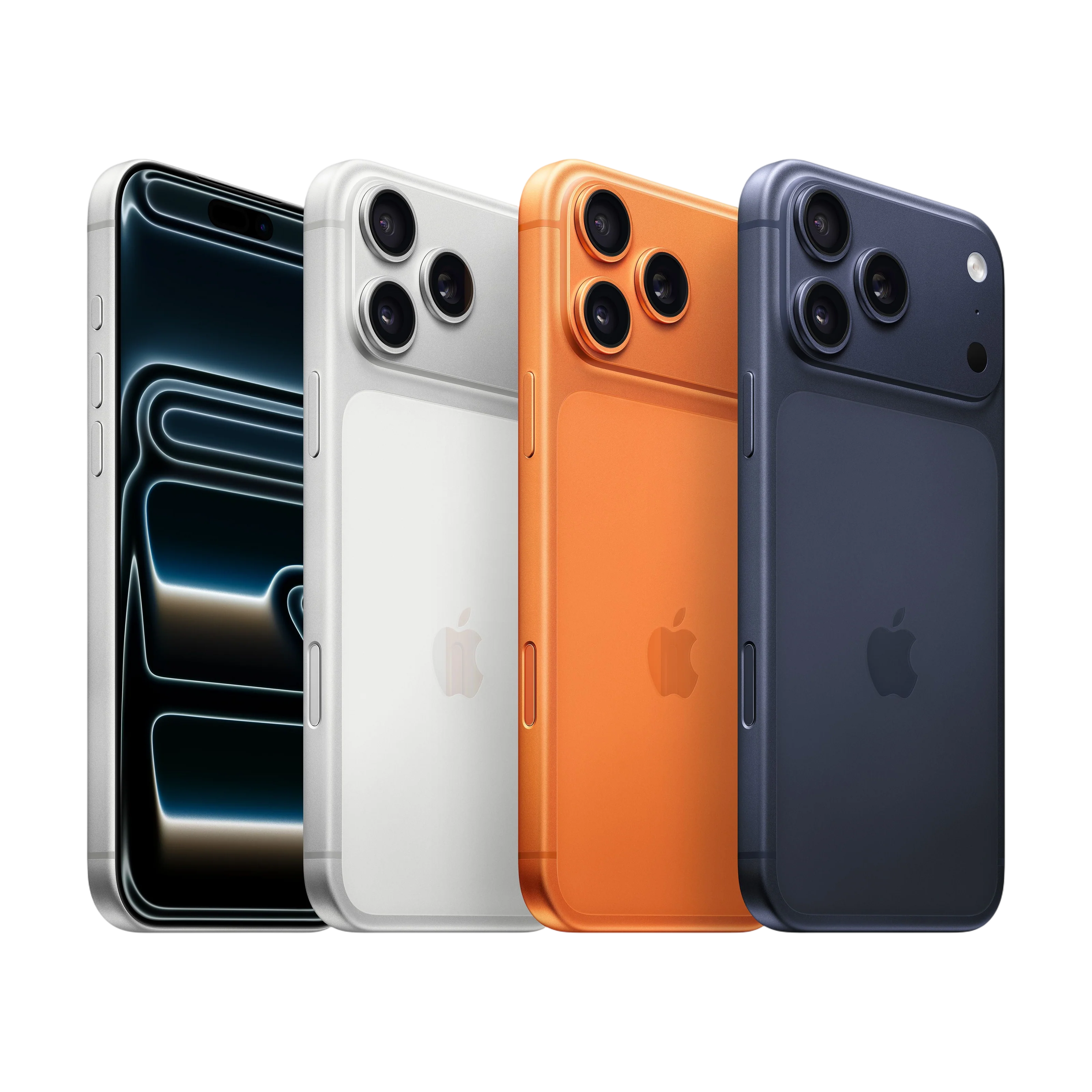
Get Your iPhone Fixed Today
Your iPhone isn’t just a phone – it’s your camera, your planner, and your connection to the world. When it suffers from a cracked screen, battery issues, or water damage, it can disrupt your daily life. At The Fix, our expert technicians specialize in iPhone repairs, ensuring your device runs like new again. Fast, reliable, and professional – we’ve got your iPhone covered.

Search By Brand:

Common iPhone Repairs

Camera Repair
Solutions for focus issues, blur, or non-functioning front/rear cameras.

Data Recovery & Backup
Retrieve lost files and set up secure backups.

Charging & Port Repair
Repairs for loose, broken, or non-charging iPhone charging ports.

Battery Replacement
Solutions for iPhone battery draining quickly, overheating, or failing to hold a charge.

Back Glass Replacement
Replacement of cracked or shattered iPhone back glass.

Audio Repair (Speaker & Microphone)
Address distortion, low volume, or mic not picking up sound.
We Fix Every Device - Fast, Reliable & Hassle-Free

Cracked Screen Image
Get your screen replaced quickly with premium parts.

Battery Issues Image
Extend your device’s life with a new battery.

All Brands & Models Image
From iPhone to Android, laptops to tablets, we service them all.
An Expert Analysis of iPhone Repair: Causes & Solutions
Apple sells over 230 million iPhones annually worldwide, and here's what the repair data tells us: approximately 29% of iPhone users will experience a cracked screen at some point during ownership. Battery degradation affects nearly 100% of iPhones after 2-3 years of daily use. Charging port issues impact about 15% of devices, especially models with Lightning connectors that have seen thousands of cable insertions. These aren't random failures—they're predictable patterns we see daily at The Fix.
If your iPhone's screen is cracked, the battery barely makes it through the morning, or the charging port only works at specific angles, you're dealing with problems we diagnose and fix constantly. From iPhone 6 to iPhone 15 and everything in between, professional iPhone repair addresses these issues at the root cause and restores reliable operation. At The Fix, we specialize in iPhone repairs across all generations and models. Let's analyze exactly what goes wrong with iPhones and how we fix them properly.
Why People Love (and Depend On) iPhones
iPhones have become essential tools—not just phones, but cameras, payment systems, communication hubs, entertainment devices, work tools, and more. People trust them for important moments—capturing family photos, managing finances, staying connected with loved ones, running businesses. When your iPhone breaks, it's not just an inconvenience—it disrupts daily life significantly.
What makes iPhones unique from a repair perspective is Apple's tight hardware-software integration. Everything's designed to work together seamlessly—the A-series chips, iOS optimization, camera processing, Face ID or Touch ID security. This integration creates amazing user experiences when everything works, but it also means repairs require specific expertise.
The iPhone lineup has evolved dramatically over generations. Early models with smaller screens and simpler components. The iPhone X introducing Face ID and OLED displays. iPhone 12 adding MagSafe and Ceramic Shield. iPhone 14 removing the SIM tray. iPhone 15 switching to USB-C. Each generation brings new features and new repair considerations. At The Fix, we've worked on them all—from iPhone 6 to the latest models. We understand generation-specific quirks, component variations, and optimal repair approaches for each.
Why Modern Phones Have These Issues
Every iPhone ages over time, regardless of how carefully you treat it. Understanding the underlying causes helps you recognize when repair is needed.
Think about an electric toothbrush you've used twice daily for years. When new, it held charge for weeks and delivered consistent power. After thousands of recharge cycles, it barely makes it through a few days and the power feels weaker. The motor's fine, the bristles work, but something inside has changed. That's lithium-ion battery degradation—it happens to every rechargeable device including your iPhone. The chemistry changes microscopically with every charge cycle. Electrode materials develop internal resistance. Electrolyte degrades. After 500-1000 cycles (roughly 18-36 months for daily users), you'll notice significantly reduced battery life.
Consider a USB drive you've plugged in and removed hundreds of times. When new, the connector fit snugly and maintained solid contact. After years of use, it's slightly looser—the metal housing has worn microscopically from repeated insertions. Your iPhone's Lightning port (or USB-C on iPhone 15) experiences similar mechanical wear. Every time you plug in a charging cable—and you do this daily for years—internal contacts experience slight abrasion. After thousands of charging cycles, ports can become loose or develop poor connections.
Inside your iPhone, components face constant stress. The display generates heat with every use. The A-series chip cycles between high performance and low power states thousands of times daily. Thermal expansion and contraction happen with every use cycle. Adhesives holding the screen assembly weaken slightly from heat cycling. Tiny solder joints on the logic board experience microscopic stress.
The screen assembly includes incredibly thin flex cables connecting the display, digitizer, and Face ID components to the logic board. These cables bend slightly when you open a phone for repair. They're engineered for limited flex cycles during manufacturing and maybe a few authorized repairs—not dozens of flex cycles. This is why proper repair technique matters so much.
This isn't about iPhones being poorly made. They're actually remarkably durable considering the technology packed into such thin, portable packages. But physics doesn't care about engineering excellence—all materials age under use and stress. Recognizing when aging requires professional attention keeps your iPhone running great for years.
Screen Cracked or Shattered
What you're experiencing: Your iPhone's screen has spider-web cracks spreading across it. Maybe you dropped it getting out of your car, it fell off the table, or something heavy landed on it in your bag. The display might still work perfectly aside from the cracks, or maybe parts of the touchscreen don't respond anymore. You're cutting your fingers on sharp glass edges every time you use it.
Why this happens: iPhone screens are engineering marvels—thin glass protecting OLED or LCD displays underneath, with touch digitizers integrated into the assembly. They're strong against normal use but vulnerable to impacts. Drop physics are unforgiving—even a 3-foot drop onto concrete can crack screens. The edge-to-edge designs on newer iPhones mean less bezel protection. Ceramic Shield on iPhone 12 and newer helps, but it's not indestructible.
What you can try:
- Stop using it if glass is badly shattered—sharp edges can cut you and glass fragments can work into components.
- Apply clear packing tape over cracks as a temporary measure to hold glass together and protect your fingers.
- Back up to iCloud immediately if the damage is getting worse—complete screen failure could happen suddenly.
- Don't attempt DIY screen replacement unless you're experienced—iPhone screens require specific tools, proper adhesive, and attention to Face ID components.
From our experience fixing thousands of these: Cracked screens are the most common iPhone repair we handle across all models. The repair process varies by generation—iPhone 6, 7, 8 use LCD displays with different adhesive than the OLED displays in iPhone X, 11, 12, 13, 14, 15. iPhone X and newer require careful handling of Face ID components that are paired to the logic board. iPhone 14 Pro's Dynamic Island adds complexity. At The Fix, we stock screens for all iPhone generations and understand the specific requirements for each. After professional screen replacement, your iPhone looks and functions like new—no cracks, full Face ID or Touch ID functionality, proper True Tone color calibration, responsive touch across the entire screen. The repair costs a fraction of buying a new iPhone and you keep your device, your data, and everything set up exactly how you like it.
Battery Dying Ridiculously Fast
What you're experiencing: Your iPhone used to last all day easily. Now you're at 20% by lunch. The battery percentage drops suddenly—showing 60% one minute, then 15% the next and shutting down. You're constantly hunting for chargers, carrying battery packs, planning your day around available outlets. Your iPhone's essentially become a very expensive wired device.
Why this happens: iPhone batteries are rated for 500 charge cycles before dropping to 80% of design capacity. Daily charging means hitting that in 18-24 months. Each cycle causes microscopic chemical changes in the lithium-ion cells. iOS Battery Health (Settings → Battery → Battery Health) shows you the percentage—when it's below 80%, you're experiencing significant capacity loss. Heat accelerates degradation—using your iPhone while wireless charging, gaming for extended periods, or leaving it in hot cars ages batteries faster.
What you can try:
- Check Battery Health: Settings → Battery → Battery Health & Charging. If Maximum Capacity is below 80%, replacement is recommended.
- Enable Optimized Battery Charging: This feature learns your charging routine and slows charging past 80% until you need it, extending battery lifespan.
- Reduce power consumption: Lower brightness, close background apps, disable features you're not using.
- Avoid extreme temperatures—both hot and cold environments accelerate battery aging.
- Check for battery-draining apps in Settings → Battery.
Here's what we've learned from the repair bench: Battery replacement is the second most common iPhone repair after screens. The transformation is immediate and dramatic. People adapt gradually to dying batteries—staying near outlets, carrying multiple chargers, keeping power banks in bags—and forget what normal battery life feels like. After professional battery replacement with a tested component meeting Apple's specifications, they get actual all-day use back. Their iPhone becomes genuinely mobile again. We see relief on customers' faces when they realize they can go through an entire day without charging anxiety. For older iPhones—6, 7, 8, SE generations—battery replacement breathes new life into devices that are otherwise perfectly functional. For newer models—11, 12, 13, 14, 15—proper battery replacement includes resetting Battery Health data so iOS accurately tracks the new battery's condition.
Charging Port Issues
What you're experiencing: You have to hold your Lightning cable (or USB-C on iPhone 15) at a specific angle to get your iPhone to charge. Sometimes it charges, sometimes it doesn't. You're constantly jiggling the cable, propping your iPhone up with books to maintain the magic angle. Or maybe the port stopped working entirely—cable goes in but nothing happens.
Why this happens: iPhone charging ports endure constant mechanical stress. Every time you plug in a cable—and you do this daily for years—internal contacts experience slight wear. After hundreds or thousands of insertions, ports can become loose. More commonly, lint, dust, and pocket debris accumulate inside the port, preventing proper cable connection. The Lightning connector's thin profile means debris compacts inside easily. USB-C ports on iPhone 15 are slightly more resistant but still accumulate debris.
What you can try:
- Inspect the charging port with a flashlight—you'd be amazed how much lint accumulates in there.
- Carefully clean the port using a wooden toothpick (not metal—you can short circuits). Gently scrape out compacted lint and debris.
- Try a different Lightning or USB-C cable and charger—sometimes it's the cable that's failed, not the port.
- Wireless charging (if your iPhone supports it) works as a temporary workaround while you arrange repair.
- Don't force cables in at angles—that causes more damage to already-compromised ports.
What we tell customers who come in: Charging port issues are extremely common across all iPhone models. Sometimes thorough cleaning is sufficient—we've removed shocking amounts of compacted lint that prevented cable insertion. But often the port itself needs replacement. iPhone 6, 7, 8 have charging ports that replace relatively easily. iPhone X and newer integrate the port with other components on the lower flex cable assembly—more involved but still very repairable. iPhone 15's USB-C port is new territory, but the principles are the same. At The Fix, we've replaced thousands of iPhone charging ports across every generation. After repair, your cable clicks in firmly, charges reliably every time, and data transfer works properly. No more cable gymnastics, no more charging anxiety.
Camera Not Working or Taking Poor Photos
What you're experiencing: Your iPhone camera launches but shows a black screen, or photos are blurry no matter how many times you tap to focus. Maybe the camera app crashes when you try to switch between lenses on models with multiple cameras. The selfie camera has a weird haze or spots. Photos look worse than they used to, even in good lighting.
Why this happens: iPhone cameras are incredibly sophisticated—lenses, sensors, autofocus mechanisms, image processing all working together. Drops can misalign camera modules or damage optical image stabilization (OIS) mechanisms. Scratches on the sapphire crystal lens cover degrade image quality. Moisture infiltration causes internal condensation. Software glitches corrupt camera app data. On iPhones with multiple rear cameras (11, 12, 13, 14, 15), individual lenses can fail independently.
What you can try:
- Clean the camera lens with a microfiber cloth—fingerprints and smudges cause surprisingly bad image quality.
- Force quit the camera app: Swipe up, swipe Camera away, relaunch.
- Restart your iPhone—this resolves many software glitches.
- Check for iOS updates: Settings → General → Software Update. Camera improvements often come through updates.
- Test in different lighting—if it only fails in certain conditions, it might be a software processing issue.
After repairing these daily: Camera issues divide between software and hardware. Software problems—crashes, slow performance—often resolve with app resets or iOS updates. Hardware problems—blurry photos from damaged OIS, scratched lenses, failed camera modules—require component replacement. At The Fix, we've replaced camera assemblies across every iPhone generation. iPhone 6, 7, 8 have simpler single-camera systems. iPhone X, XS, 11, 12, 13 have dual or triple camera systems with different modules for wide, ultra-wide, and telephoto lenses. iPhone 14 Pro and 15 Pro have advanced 48MP main cameras requiring careful calibration after replacement. After professional camera repair, your iPhone takes sharp, properly focused photos again. Colors look accurate, autofocus works reliably in all conditions, and you can actually use your iPhone's camera capabilities properly.
Face ID or Touch ID Not Working
What you're experiencing: Face ID won't recognize your face anymore, constantly asking for your passcode. Or Touch ID won't read your fingerprint, forcing you to type your passcode every time. These biometric systems were working fine, then suddenly stopped.
Why this happens: For Face ID (iPhone X and newer), the TrueDepth camera system includes multiple sensors that must be precisely aligned and properly connected. Screen replacements with improper handling can damage Face ID components. Drops can misalign sensors. For Touch ID (iPhone 5s through 8, SE models), the home button is paired to the specific iPhone—replacement home buttons won't work for Touch ID, only as physical buttons.
What you can try:
- For Face ID, go to Settings → Face ID & Passcode → Reset Face ID, then set up again. Sometimes recalibration helps.
- For Touch ID, Settings → Touch ID & Passcode → delete fingerprints and add them fresh. Ensure fingers are clean and dry.
- Clean the Face ID sensors at the top of the screen or the Touch ID home button.
- Check for screen protectors or cases interfering with sensors.
- Update iOS—sometimes biometric issues resolve with software updates.
A common pattern is: Face ID failures after screen repairs usually indicate damage to TrueDepth components during the repair. At The Fix, we're meticulous about preserving Face ID functionality during screen replacements. The components must be carefully transferred from the damaged screen to the new one, maintaining proper alignment and connections. For Touch ID, we always inform customers that if the home button is damaged, Touch ID cannot be restored (though the physical button can be replaced for mechanical function). After professional repair that preserves biometric systems, Face ID recognizes you instantly in all lighting conditions, Touch ID reads your fingerprint reliably every time.
What Tools We Use for iPhone Repair
Behind-the-scenes at The Fix, we use specialized equipment specifically for iPhone repairs. These aren't casual fixes with generic tools—we're using professional-grade equipment because iPhones demand precision.
Our workbenches have anti-static mats because iPhone logic boards are incredibly sensitive to static discharge. We use pentalobe and tri-point screwdrivers for the specific screws Apple uses. We have plastic pry tools that won't scratch aluminum or damage components. For screen work, we use heat guns and iSclack tools to carefully open phones without damaging Face ID flex cables.
We have professional-grade adhesive—not generic stuff but pre-cut adhesive strips matching each iPhone model's exact specifications. This ensures proper waterproofing after repair. We have microscopes for inspecting tiny components and connections. We use multimeters to test voltage and diagnose charging issues at the component level.
For screen replacements, we have proper True Tone programming equipment. True Tone is a feature that adjusts display colors based on ambient lighting—it's calibrated at the factory and needs reprogramming after screen replacement to maintain functionality. We also stock high-quality proximity sensor brackets and Face ID components for phones that come in with these damaged from previous improper repairs.
Quality control is constant. After battery replacement, we verify proper charging curves and Battery Health reporting. After screen replacement, we test touch response across the entire surface, verify Face ID or Touch ID works, check True Tone functionality, and ensure proper brightness and color accuracy. After camera replacement, we test autofocus, verify all lenses work, and check photo quality.
This level of care matters because iPhones are sophisticated devices with features that depend on proper calibration and installation. They deserve professional repair with correct tools, tested components, and expertise that comes from working on thousands of iPhones across all generations.
Prevention Tips Worth Following
Smart care extends your iPhone's lifespan and prevents repair needs:
Screen protection: Use tempered glass screen protectors and quality cases. They're cheap insurance against expensive screen replacement. For iPhone 14 Pro and 15 Pro especially, cases that protect the camera bump prevent lens damage.
Battery care: Enable Optimized Battery Charging. Don't leave your iPhone plugged in at 100% overnight constantly. Charge to 80-90% for daily use. Avoid wireless charging when wired charging is available—it generates less heat. Don't let it die completely regularly.
Port care: Clean your Lightning or USB-C port monthly with a wooden toothpick. Insert cables straight in, don't force at angles. Use Apple-certified cables or quality third-party options. Consider MagSafe charging for iPhone 12 and newer—it reduces port wear.
Keep it cool: Heat ages components faster. Don't leave your iPhone in hot cars. Take breaks during extended gaming sessions. Remove the case when fast-charging to help heat dissipate.
Software hygiene: Keep iOS updated through Settings → General → Software Update. Updates include performance improvements, security patches, and bug fixes. Restart weekly. Back up to iCloud regularly.
Physical care: Use two hands when handling—iPhones are slippery and expensive. Don't carry loose in pockets with keys or coins. Use the wrist strap if you're active. Don't sit on it in your back pocket.
Watch for warning signs: Battery draining faster, screen responsiveness changing, charging becoming unreliable, camera quality degrading. Catch problems early for simpler repairs.
Most Issues Are More Fixable Than You Think
Most iPhone repair needs are totally fixable with professional expertise. That cracked screen? Replacement looks factory-fresh with full Face ID functionality. Dying battery? Replacement restores all-day use. Charging port issues? Repair means reliable charging again. Camera problems? Component replacement brings back sharp photos. These repairs extend your iPhone's life for years at a fraction of buying new.
Drop by The Fix for a free diagnostic. We'll run comprehensive tests on your iPhone, identify exactly what's happening, and give you honest recommendations. No pressure, no upselling—just straightforward guidance from technicians who work on iPhones every day, from iPhone 6 to iPhone 15 and everything in between.
FAQs
The Fix Stores repair many types of electronic devices. Check out all the details below.


Trusted repair solution for mobile phones, tablets, gaming consoles, and computer systems. We provide fast, reliable, and affordable repair services to get your devices back in perfect working condition.
The Fix is an independent repair service provider and is not affiliated with, sponsored by, or endorsed by Apple Inc., Samsung Electronics, Google LLC, or any other device manufacturer. We use high-quality compatible replacement parts unless explicitly stated. All trademarks are property of their respective owners.


© Copyright The Fix Solutions All rights reserved 2026.
Design by Deepcoder